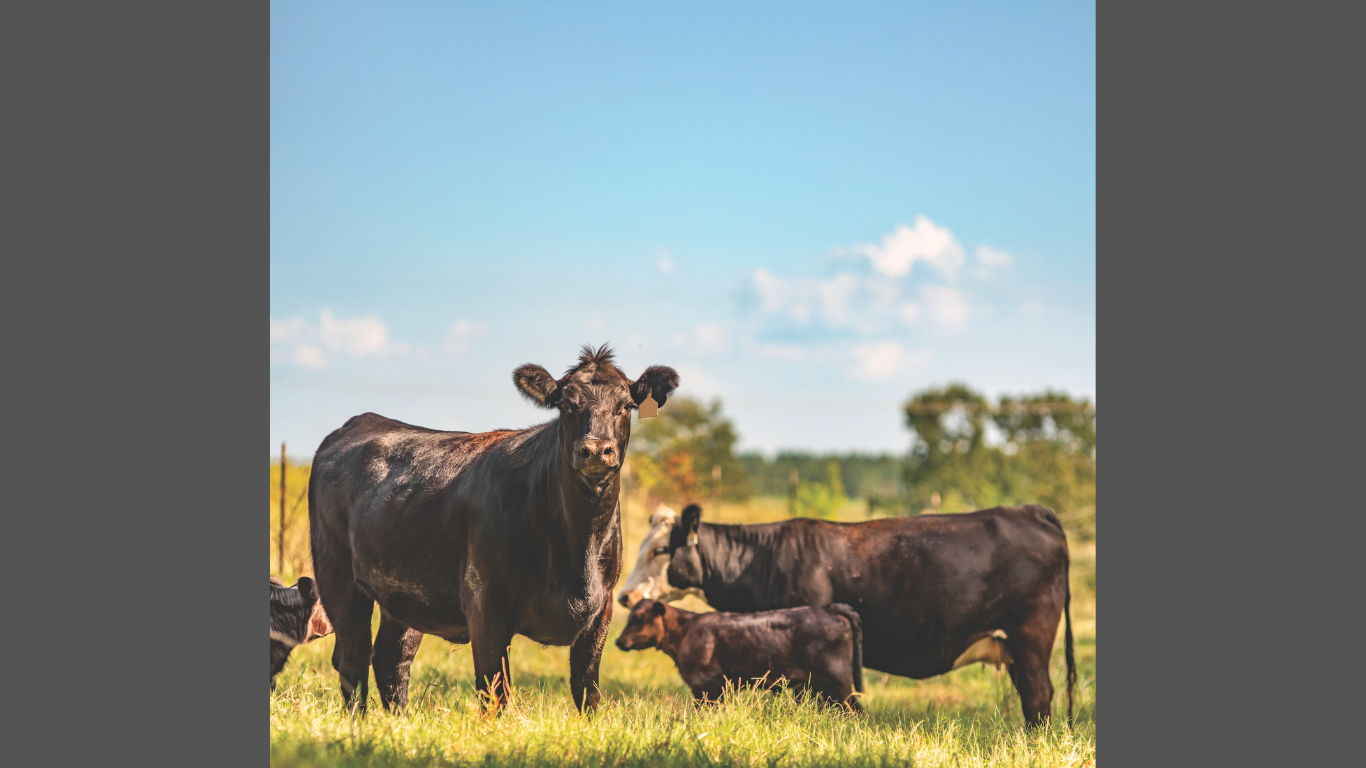
In the rolling pastures of Switzerland, where tradition meets innovation, a fast-growing agritech company is rewriting the story of cattle farming. Headquartered in Lugano, Ticino, VetosEurope has emerged as a pioneer in natural feed supplements designed to reduce methane emissions while enhancing productivity.
VetosEurope was founded 11 years ago by combining the expertise and tactfulness in live cattle trade and the technical and scientific knowledge of scientists and researchers. Its experts specialise in the research and development of natural feed supplements and nature-identical substances for cattle.
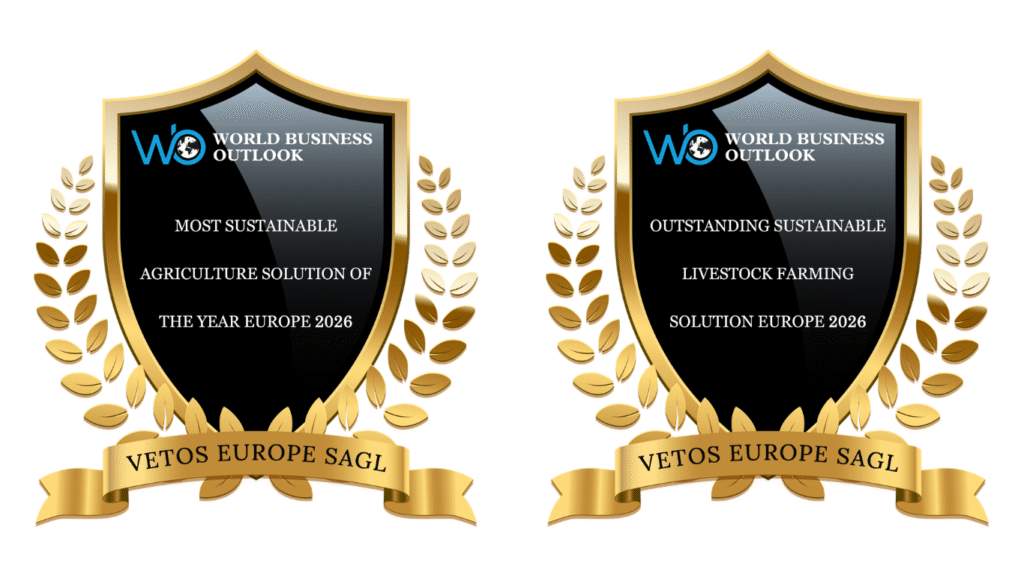
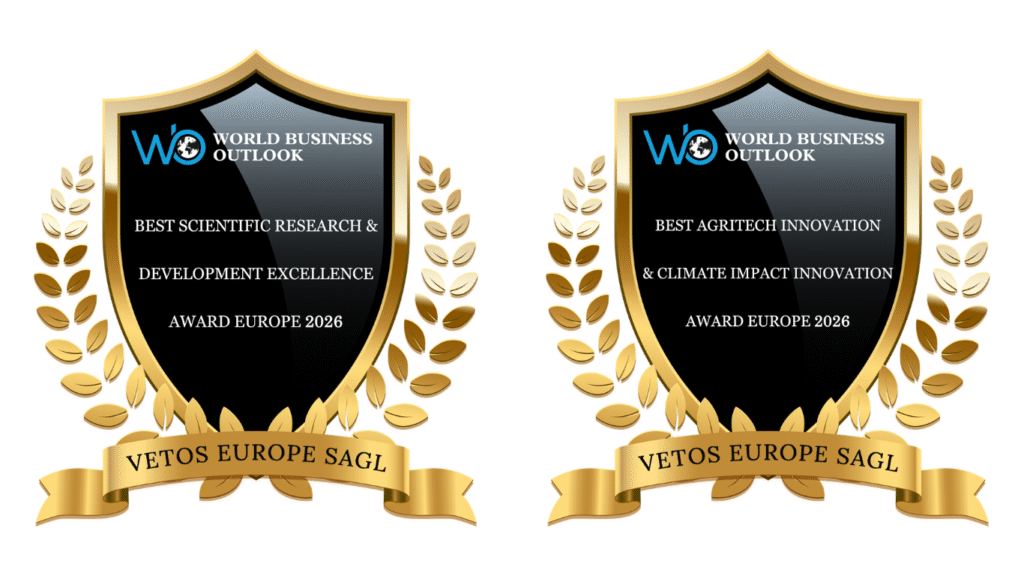
The main purpose of the company was to increase production while at the same time reducing methane and CO₂ emissions. Recognising their extraordinary initiatives in this direction, VetosEurope was honoured with multiple accolades by World Business Outlook Magazine in 2026. The four awards the company bagged are:
- Best Agritech Innovation and Climate Impact Innovation Award, Europe 2026.
- Most Sustainable Agricultural Solutions of the Year Award, Europe 2026.
- Best Scientific Research and Development Excellence Award, Europe 2026.
- Outstanding Sustainable Livestock Farming Solution Europe 2026.
VetosEurope, an agritech company that is like a beacon in the industry, was recognised for its outstanding and impactful work. The company was awarded for its efforts to address climate impact, coming out with workable solutions in sustainability, and for its efforts in conducting deep research and development work and finding good solutions for promoting sustainability.
With four awards in its cap, the company, at a time when agriculture faces mounting pressure to balance profitability with sustainability, positions itself as a bridge between science, commerce, and climate responsibility.
From Trade to Technology
VetosEurope’s journey began over a decade ago, founded by the Ghizzoni brothers, whose family heritage was steeped in the global live cattle trade. Their insight was simple yet profound: the livestock industry needed solutions that were both economically viable and environmentally responsible. By partnering with universities in Italy and Brazil, they sought to develop feed additives that mirrored natural compounds, offering farmers a way to improve yields without compromising ecological balance. This vision crystallised into VetosEurope’s guiding philosophy: “Inspired by nature, to help nature.”
Anavrin, the game-changer
This dual benefit – climate impact plus productivity – is VetosEurope’s competitive edge, a methane-inhibiting feed supplement. Methane, a greenhouse gas 28 times more potent than CO₂, is a major by-product of ruminant digestion. The company realised that tackling this challenge is critical to meeting global climate targets. So, it came out with a workable solution.
- Methane Reduction: Independent trials conducted by various universities in the world, including the University of Wageningen in the Netherlands, the University of Sassari and the University of Milan in Italy, Universidad de la República in Uruguay, and the Federal University of Santa Maria in Brazil, demonstrated reductions of 10 – 20% in methane emissions.
- Carbon Trust Validation: The UK-based Carbon Trust formally validated Anavrin’s effectiveness, giving the product international credibility.
- Productivity Gains: Beyond emissions, Anavrin boosts cattle performance – increasing meat yield by 70 grams/day and milk output by 1.5 litres/day.
This dual benefit of climate impact plus productivity has proved to be VetosEurope’s competitive edge and award-winning streak.
According to the company, Anavrin is involved in the Verra Protocol. Verra is the world’s leading voluntary carbon credit standard setter, and Anavrin is involved in their Verified Carbon Standard (VCS) Programme for generating voluntary carbon credits globally. According to the company’s official website, the important benefits of Anavrin are that it helps in the reduction of methane emissions by up to 21%, an increase in meat production by up to 6.8%, and an increase in milk yield by up to 3.8%.
Business Model and Market Reach
VetosEurope operates with a lean team, but its influence extends globally through partnerships and distribution networks. The company’s model is built on three pillars:
- Scientific Credibility: Peer-reviewed research and certifications underpin every product claim.
- Global Distribution: Supplements are marketed across Europe, Latin America, Australia, North Africa, the Middle East and Asia.
- Farmer-Centric Approach: Products are designed to integrate seamlessly into existing feed systems, minimising adoption barriers.
Sustainability and Climate Impact
VetosEurope’s work aligns with the United Nations Sustainable Development Goals (SDGs), particularly those addressing climate action and responsible consumption. By offering farmers a practical tool to reduce emissions, the company contributes to climate-smart agriculture, a growing global movement. Anavrin works in two different ways:
- For policymakers, Anavrin represents a tangible solution to meet emission reduction targets.
- For farmers, it offers a way to future-proof their operations against tightening environmental regulations.
Competitive Landscape
Worldwide, the agritech sector is crowded with feed supplement companies. There are approximately 29,800 companies in the global agritech sector as of April 2026, with over 6,300 funded, generating $81.1 billion in capital. These companies focus on IoT, AI, precision farming, and supply chain technologies, but VetosEurope distinguishes itself through:
- Scientific Validation
- Dual Value Proposition
- Global Partnerships
According to the company, for the past 11 years, more than 2,500,000 cattle worldwide have been fed Anavrin in total, a product whose performance is validated by 20 scientific research projects carried out, both in laboratories and in the field.
Methane Reduction Project in Italian Livestock
The company also carried out a methane reduction project in Uruguayan and Italian livestock. This project was launched to significantly reduce methane emissions from cattle farming by targeting the inhibition of enteric methanogenesis in ruminants. Enteric methanogenesis is a natural digestive process in ruminant mammals (cattle and sheep) where microorganisms, specifically methanogenic archaea, ferment feed in the gut, producing methane (CH₄) as a by-product. The work focused on implementing scientifically proven strategies that are both practical for farmers and compliant with international carbon certification standards.
The project is certified under the Verra Verified Carbon Standard (VCS) and structured as a grouped project aimed at:
- Incorporation of natural/nature-identical feed supplements that reduce methane production in the rumen. Field application on beef and dairy farms.
- Monitoring, reporting, and verification (MRV) of methane reductions using recognised methodologies.
- Technical assistance and training for participating farmers.
- Access to financial incentives through the generation and sale of carbon credits.
Opportunities on the Horizon
The business opportunities, however, are vast. VetosEurope is exploring the possibility of extending this for expansion to:
- Other Ruminants: Sheep and goats present untapped markets
- Carbon Credit Integration in other countries: Farmers using Anavrin could potentially earn carbon credits, adding financial incentives
- Government Partnerships for collaborations with ministries of agriculture could accelerate adoption.
Future Outlook
VetosEurope, with innovation as its forte, appears to be well-positioned to benefit from the global push toward climate-smart agriculture. As methane reduction becomes a regulatory and market priority, products like Anavrin could become mainstream. Its scientific credibility and niche expertise provide a strong foundation for growth.
Key strengths of VetosEurope
As a company that believes in minimising carbon footprints and increasing productivity with quality, it has some strong strengths. The company places importance on using natural raw materials and ingredients as well as nature-identical substances; ensures sophisticated production by using industrial technologies exclusively developed in Switzerland; controls the entire supply chain – from sale to the end user; operates all over the world through a network of international sales; and has in-depth knowledge of the international bovine market.
The company also actively encourages farmers to be a part of the process and asks farmers to voluntarily take part in their project and apply certified feed strategies. Verified reductions are issued as carbon credits on the voluntary market. Revenues from credit sales are redistributed to participants, with a compensation scheme that may include both fixed and performance-based components.
VetosEurope has a collaboration with two climate advisors, Climit and Rete Clima. The collaborative project aims for decarbonisation of the livestock sector through the use of the animal diet developed by VetosEurope. According to ISPRA data (the Joint Research Centre is a European Commission infrastructure that offers science and knowledge services), enteric fermentation, i.e., the digestive processes of ruminant animals, generates 70.2% (as of 2020) of methane emissions in the agriculture sector. Limiting methane emissions is therefore essential to achieve the targets set by the European Commission of reducing greenhouse gases by at least 55% by 2030 and achieving emission neutrality by 2050.
The company assists beef and dairy farmers in adopting natural or nature-identical feed supplements to reduce methane production in the rumen. This includes conducting field applications on farms, providing technical assistance, and delivering training for participation. This allows farmers to adopt innovative and sustainable feeding practices, contribute to climate change mitigation and receive financial returns linked to verified emission reductions.
Article by Imtiaz Ahmad Sheriff