A knock in a car park or a minor crash is stressful enough without the guesswork that follows. Who fixes the car, what does your insurer cover, and will the repair hold up? Use this checklist to shortlist a fair, safe repairer without the runaround.
First, check your policy and your rights in Victoria
Before you book a repair, check what your policy allows. Many comprehensive policies include a ‘choice of repairer’ option, which lets you nominate your own repairer instead of using the insurer’s network. Your Product Disclosure Statement (PDS) is where the detail lives.
Your rights do not end with a warranty. Under the Australian Consumer Law, consumer guarantees apply automatically and can last longer than a business’s repair warranty. That safety net matters if something goes wrong after the job is done.
If your car is still under manufacturer warranty, Victoria’s consumer agency also advises checking the warranty conditions for choice of repairer and manufacturer specifications before authorising any work.
If you drive for work or manage a couple of vehicles, insurers weigh your risk differently. This piece on fleet safety programs explains how documented driver monitoring and incident records shape commercial premiums, and that record-keeping habit helps at a personal renewal too.
Panel beating or paintless dent removal: which do you need?
Not every ding needs a full repair. Paintless dent removal (PDR) reshapes the metal from behind the panel without repainting. It suits small dents where the paint is still intact, such as a shopping-trolley knock or minor hail.
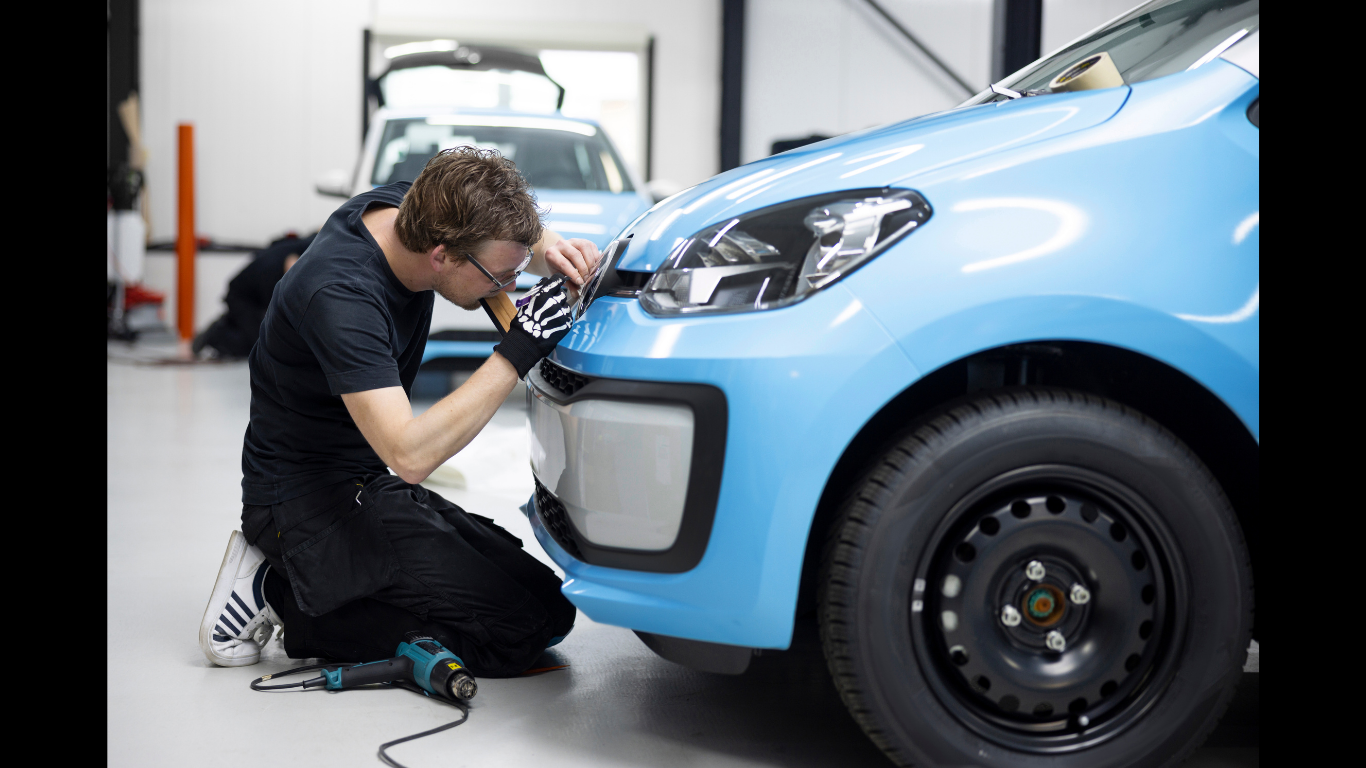
Traditional panel beating comes in when the paint is cracked, an edge is sharp, or there is structural damage that PDR cannot safely fix. Getting the method right can save money and protect the finish.
For a local starting point, Autobody Prestige Melbourne’s page on panel beaters Melbourne explains when PDR may be suitable, when full panel repair is safer, and how insurance paperwork is usually handled. Treat it as one option to compare, not an automatic choice.
Shortlist the quality signals that matter
Once you know your rights and the likely repair method, focus on the shop itself. Consumer Affairs Victoria suggests choosing repairers that belong to associations such as VACC or RACV, whose members must follow a code of conduct. It also recommends confirming that staff are qualified and properly equipped.
Whether you are considering an insurer network repairer or another local shop, ask for evidence rather than slogans. Useful proof includes trade qualifications, calibrated equipment, recent repair examples and a written workmanship warranty.
Reviews help, but read them for detail rather than star ratings. Comments that mention timelines, communication and how the shop handled a problem tell you more than a one-line rave.
Ask about ADAS scans and calibration
Modern cars carry driver-assistance systems such as automatic braking and lane keeping, known as ADAS. Cameras and sensors sit behind bumpers, windscreens and mirrors, so many collision and windscreen repairs need recalibration afterwards to work correctly.
A national ADAS Industry Code of Conduct was launched in 2025 to give workshops and collision repairers practical guidance. It is a reasonable benchmark to raise when you are comparing shops.
You do not need to be an expert here. Ask whether your repair needs ADAS calibration, whether the shop does it in-house or sublets it, and how they verify the results. Clear answers are a good sign.
Compare quotes the smart way
Price matters, but it is not the whole story. Ask for a written, itemised estimate so you can see what you are paying for. Confirm the paint system and colour-matching process, clarify whether parts are genuine or aftermarket, and check how long the workmanship warranty runs.
Watch for quotes that look unusually cheap. A low figure often means fewer hours allowed for preparation and blending, or a plan to repair a panel that really needs replacing.
A calmer way to decide
You do not need to be a mechanic to decide well. Sort your policy rights first, match the damage to the right repair method, and ask direct questions about ADAS calibration and warranties. Those steps quickly separate careful workshops from the ones to skip. Get two or three itemised quotes, keep the paperwork, and you will feel far more in control of the outcome.
Article received via email