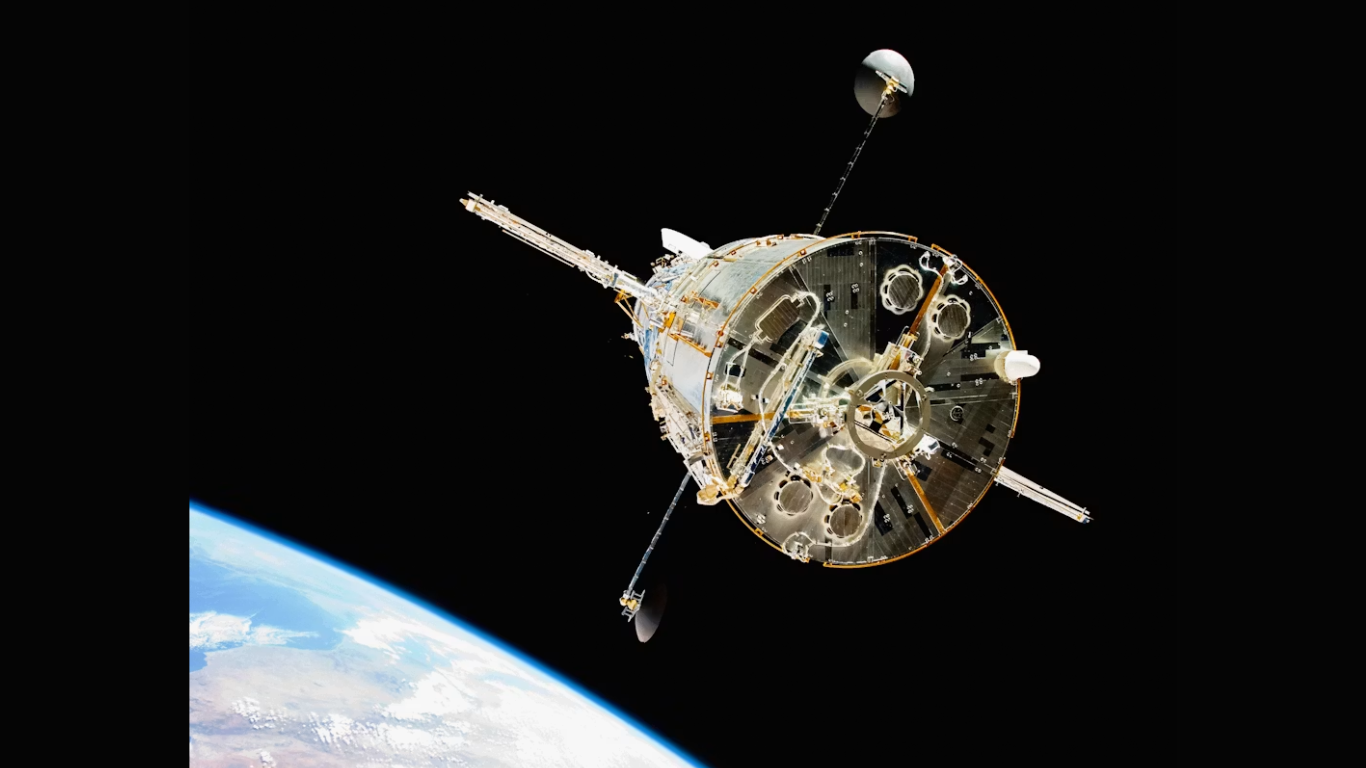
Imagine a satellite racing over a wildfire zone. Smoke billows across forests while emergency teams wait for clear images. In the past, the craft simply captured raw data and waited for the next ground pass. Today the story has changed. An advanced onboard computer can process those images in real time and flag the most urgent frames before they ever leave orbit.
We see this shift happening across low Earth orbit constellations. The brain of the spacecraft, known as the onboard computer, now handles far more than basic commands. It turns satellites into smart observers that can think while they fly. This capability rests on a reliable obc satellite that balances power, speed, and radiation tolerance.
What Is OBC Satellite Meaning in Modern Missions
What is obc satellite technology at its core? The onboard computer serves as the central nervous system of any spacecraft. It receives commands from Earth, manages power, controls attitude, and routes data from every sensor.
In earlier designs the unit mainly stored housekeeping data and waited for ground instructions. Modern systems go further. They run complex software that can analyze payload information while the satellite remains out of contact. This evolution defines the true obc satellite meaning for operators who need speed and autonomy.
How an OBC for Satellite Handles Image Data
High-resolution cameras generate enormous files in seconds. Sending every pixel to the ground would overwhelm limited downlink windows. An effective obc for satellite solves this problem by processing images onboard.
The computer can crop interesting regions, compress files, or run simple detection algorithms. Clouds can be discarded. Ships or fire fronts can be highlighted. Only the valuable results travel down the radio link. Operators receive useful information faster and save precious bandwidth for other tasks.
OBC in Satellite Operations Enables Autonomy
An obc in satellite systems also supports real-time control loops. Attitude sensors feed data to the computer, which adjusts reaction wheels or thrusters within milliseconds. Stable pointing keeps the camera locked on target even as the spacecraft moves at seven kilometers per second.
When radiation or power issues appear, the same unit detects the problem and switches to safe modes. Fault detection, isolation, and recovery routines keep the mission alive without constant human oversight. We observe that this autonomy becomes essential as constellations grow larger and contact times grow shorter.
Key Capabilities of a Modern OBC Satellite
| Capability | Traditional Approach | Modern OBC Satellite Approach | Main Benefit |
| Image Handling | Store all raw data for later downlink | Process, filter, and compress on orbit | Faster delivery of useful results |
| Decision Making | Wait for ground commands | Autonomous prioritization and alerts | Reduced latency for urgent events |
| Attitude Control | Basic pointing loops | High-fidelity real-time AOCS with FDIR | Sharper images and stable tracking |
| Data Volume Management | Full downlink of every frame | Selective transmission of key insights | Lower bandwidth demand |
| Fault Response | Manual recovery after contact | Automatic detection and safe-mode switching | Higher mission resilience |
This comparison shows why operators now treat the onboard computer as a critical enabler rather than a simple controller.
Real-Time Processing in Action
Consider an Earth-observation satellite tasked with monitoring illegal fishing. The camera snaps continuous frames across ocean regions. The onboard computer scans each image for vessel shapes and wakes the high-rate transmitter only when a match appears.
Ground teams receive alerts within minutes instead of hours. Similar logic applies to disaster response, agricultural surveys, and maritime traffic. The ability to decide in orbit changes the value of every pass.
Choosing Reliable Hardware for the Task
Not every computer can survive the radiation and thermal swings of low Earth orbit. Flight-proven designs combine dual-core processors, error-correcting memory, and robust interfaces. In the middle of this demanding field, teams can find a capable obc satellite built for microsatellite platforms.
Such units support full software suites that include high-fidelity attitude control and advanced data handling. They arrive with high technology readiness levels and remain free of certain export limits. These practical advantages help commercial operators move from prototype to constellation without long delays.
Looking Toward Smarter Orbits
The next generation of missions will push onboard processing even further. Machine-learning models trained on Earth will run directly on the spacecraft. Optical inter-satellite links will share processed results across a network.
We believe the combination of powerful computers and smart algorithms will redefine what satellites can deliver. Real-time insight will become the standard rather than the exception. Success still depends on hardware that can process images while surviving years in the harsh space environment.
Article received via mail