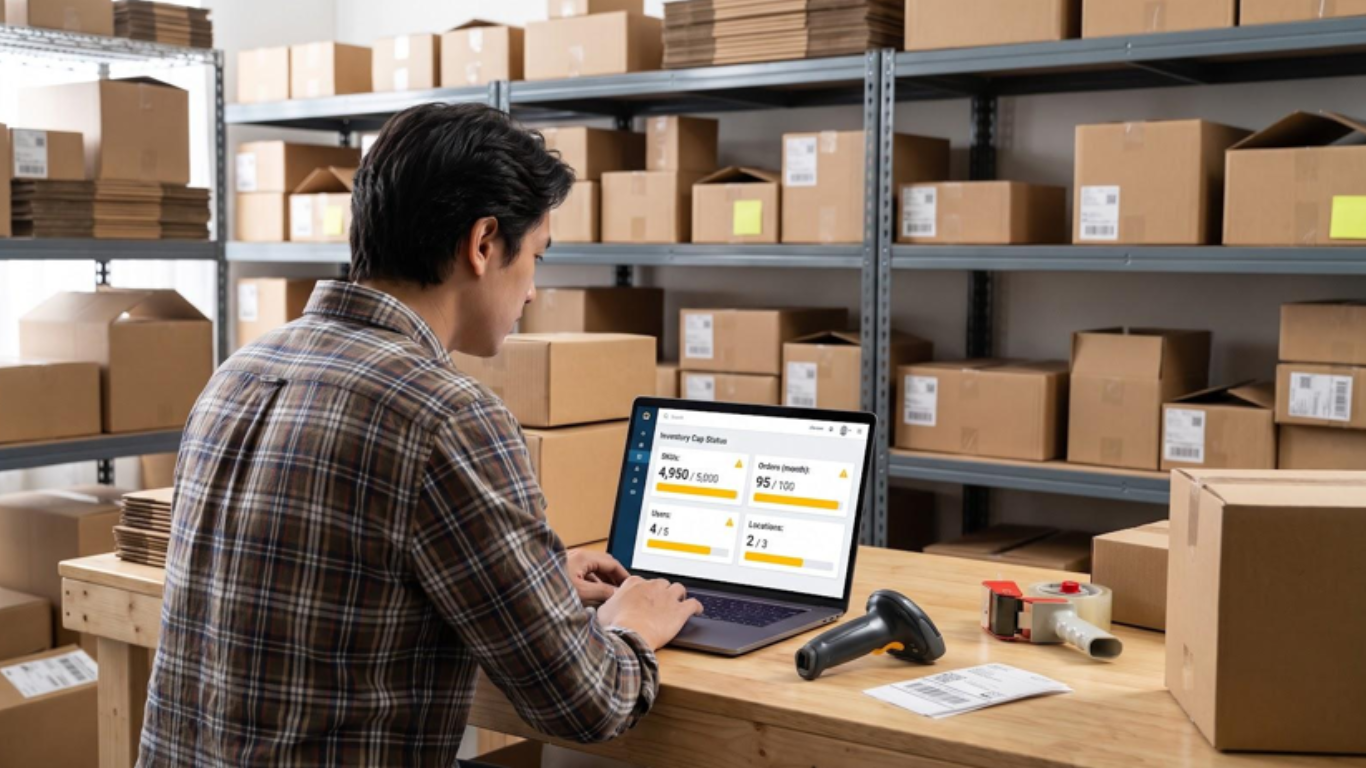
Spreadsheets work, until a rush of orders turns every stock update into a manual slog. Sixty-two percent of businesses that still rely on spreadsheets say efficiency is their top pain point, according to Capterra.
This guide ranks the best inventory software for small businesses by the hidden limits that force your first paid upgrade: SKU caps, order ceilings, per-seat fees and gated features. Every price below was verified on August 25, 2026.
The five limits that can force an upgrade
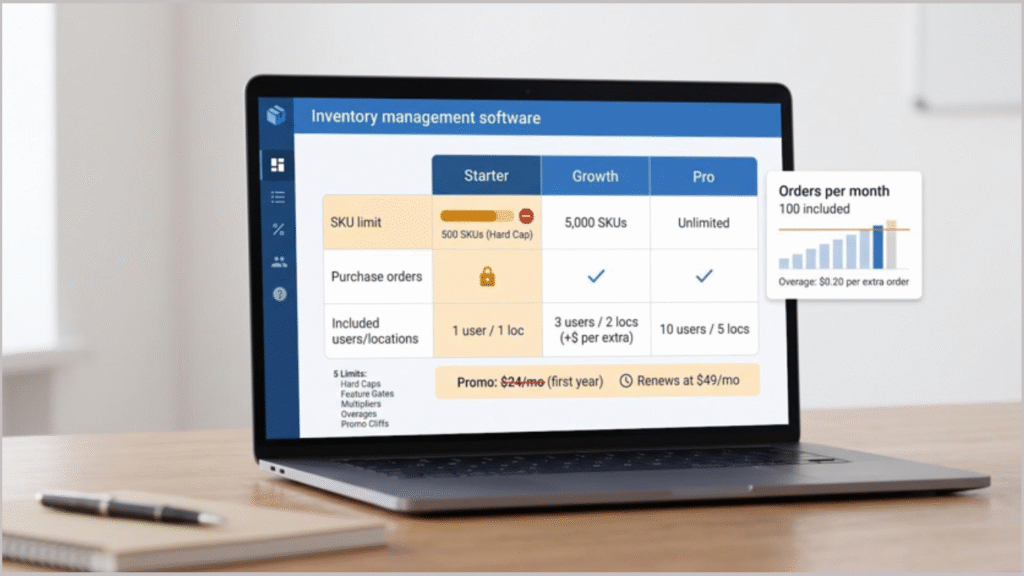
1. Hard usage caps. Some entry tiers stop cold once you pass a published number. Katana’s free plan allows 30 SKUs; item 31 triggers an immediate move to the USD 299 Core tier. No overage, no grace period.
2. Feature gates. Basic tiers often track quantities only, while purchase orders, barcode labels and forecasting sit one column to the right. Square Retail unlocks purchase orders and vendor management only on its Plus plan at USD 49 per location.
3. User and location multipliers. Some vendors hold the starter price steady but meter every extra seat or warehouse. Odoo’s One App plan is free for unlimited users until you add a second module or need the external API.
4. Soft overage fees. Instead of blocking you, some tools add micro-charges. inFlow’s entry plan includes 100 sales orders a month; order 101 costs USD 0.20. A December surge to 400 orders adds USD 60, enough to make the next tier cheaper.
5. Promotional cliffs. Half-price trials feel friendly until renewal. Sortly’s Advanced plan runs USD 24 a month for the first year, then reverts to USD 49. Always blend the discount into a twelve-month cost before you celebrate the saving.
1. Organizely: best for Shopify-first teams and Stocky migration
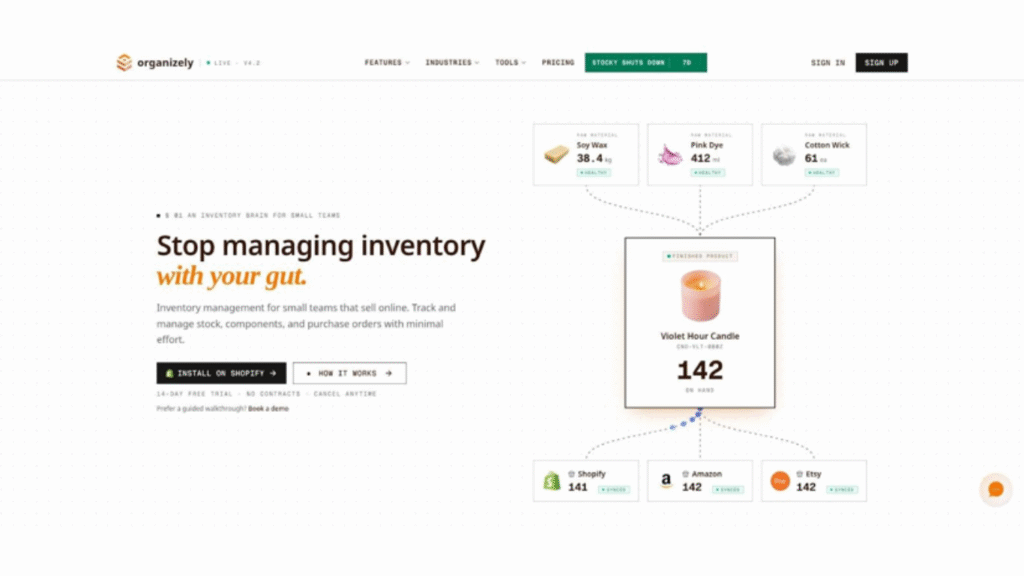
Organizely Shopify-first inventory and Stocky migration screenshot
Shopify merchants facing Stocky’s August 31 shutdown will find Organizely matches the same purchase-order and stock-take workflows, then adds bills of materials, work orders, an AI assistant and bin-level warehouse control that Stocky never offered.
Pricing and caps. Stocky Plan USD 13 for three months then USD 26, with 5,000 SKUs and unlimited orders. Pro USD 50 then USD 99, with 15,000 SKUs and 2,000 monthly orders. Scale USD 125 then $250, with unlimited SKUs and 7,000 orders.
Why the caps matter here. Unlimited orders on the entry tier removes the ceiling most rivals hit first. Unlike Stocky, which required Shopify POS Pro, Organizely runs on any Shopify plan, and stock-takes count committed and reserved stock rather than on-hand units, so counts stay accurate without cancelling open orders. The company reports processing over 1.1 million orders and tracking 140,000 SKUs https://organizely.io/.
Watch-outs. Shopify is the only published integration and independent reviews are still scarce. Bills of materials, work orders and AI features start at Pro. Confirm the Pro order cap before peak season.
2. Zoho Inventory: best general-purpose value
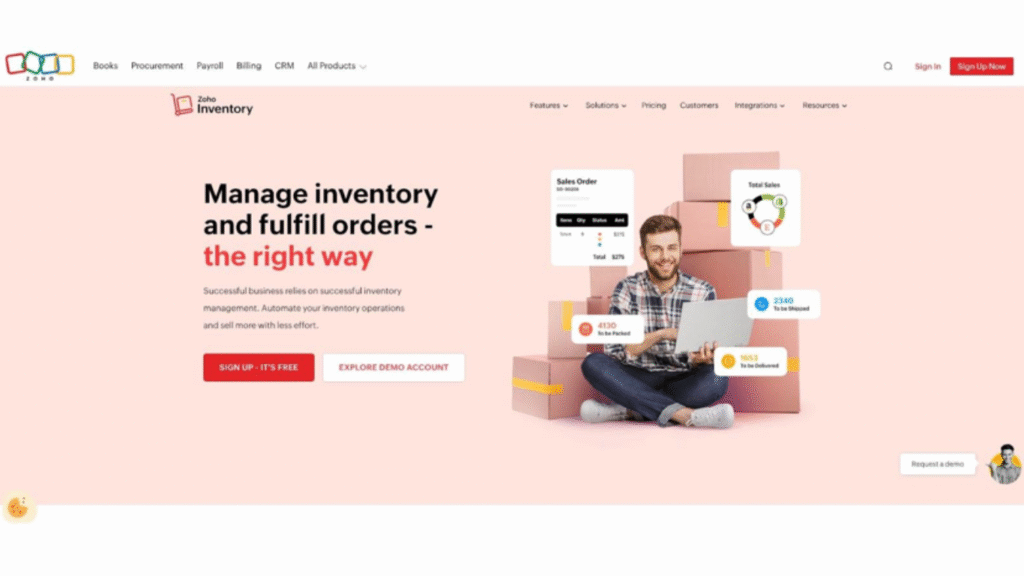
Zoho Inventory general-purpose multichannel hub screenshot
If you juggle web orders, marketplace sales and the occasional phone invoice, Zoho acts as an air-traffic tower for stock.
Pricing and caps. Free covers 50 orders, one user, one location. Standard is $29 for 500 orders, three users and two locations. Premium adds barcode generation at 3,000 orders, and Plus reaches 7,500.
The cap that bites. Order 51 stops the free plan dead, and holiday sellers burn through the 500-order Standard tier quickly. Zoho does publish every ceiling on its pricing page, so at least you can see the meter.
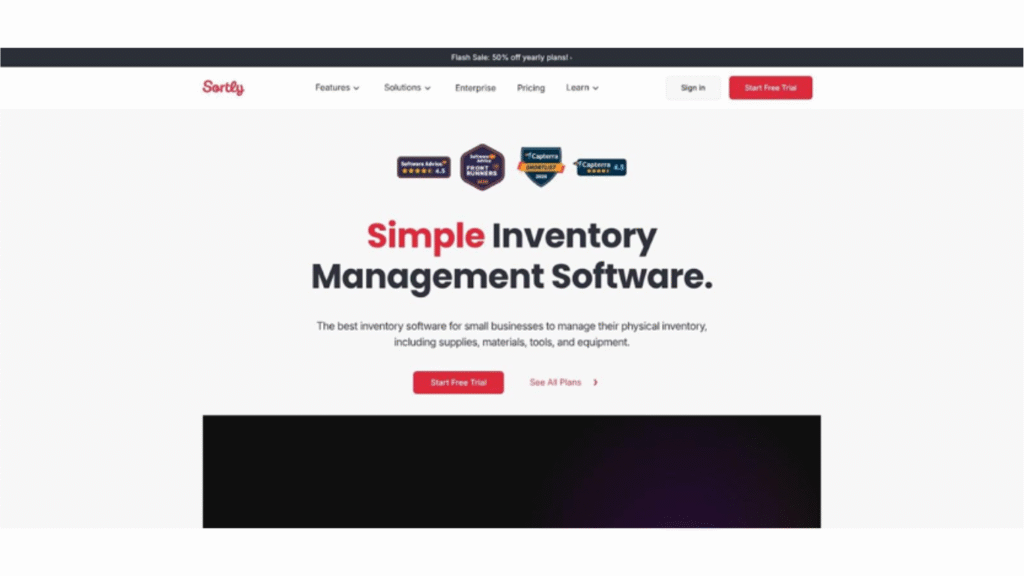
3. Sortly: best for visual, mobile-first tracking
Sortly visual mobile-first inventory tracking screenshot
If your stock lives in bins, trucks or backstage prop rooms, Sortly turns inventory into a swipeable photo gallery. Snap an item, tag it with a QR or barcode, and manage folders that feel closer to Pinterest than ERP.
Pricing and caps. Free covers 100 items, one user and two active jobs. Advanced is USD 49 for 500 items and two users. Purchase orders, QuickBooks sync and API access stay locked in higher tiers.
The cap that bites. Two of them, in fact. You pay at item 101 or at your second user, and the first-year promo roughly halves Advanced before it reverts on day 366.
4. Katana: best for light manufacturing
Katana suits shops that assemble rather than resell, with visual production scheduling, bills of materials and a native Shopify connector.
Pricing and caps. Free covers 30 SKUs and three locations. Core starts at USD 299 a month with unlimited SKUs, and add-ons for warehouse management and forecasting can push the bill considerably higher.
The cap that bites. This is the steepest free-to-paid cliff on the list. SKU 31 takes you from nothing to USD 299 with no intermediate step, so treat the free tier as a prototype sandbox rather than a starting plan.
5. inFlow Inventory: best for wholesale and B2B
inFlow handles purchase orders, barcode receiving and B2B pricing without demanding an ERP rollout, which makes it a common landing spot for distributors leaving spreadsheets.
Pricing and caps. Entry pricing starts near USD 129 a month billed annually, covering one location and one integration, with 100 sales orders included each month.
The cap that bites. Order 101 costs USD 0.20 and the meter keeps running. That sounds trivial until a seasonal spike quietly makes the next tier the cheaper option, which is exactly the kind of maths worth doing before you sign.
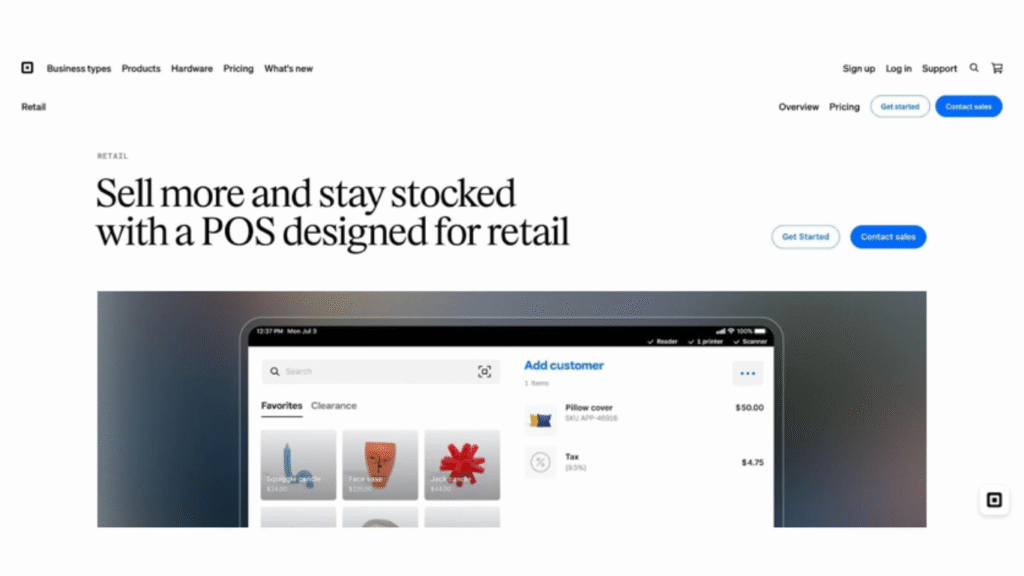
6. Square: best for small retailers running POS and stock together
Square retail POS and inventory screenshot
If you sell across a counter as well as online, Square keeps takings and stock on one system, which spares you reconciling a separate till against a separate inventory tool.
Pricing and caps. Free covers basic retail stock tracking with no subscription. Retail Plus runs $49 per location per month and is where purchase orders, vendor management and cost tracking appear.
The cap that bites. This one is a feature gate rather than a number. You can track quantities free forever, but the moment you want to raise a purchase order or manage a supplier you are on Plus, and Plus is billed per location. Two shops means $98 a month before you have added a single seat.
Which ceiling will you hit first
Work out which number moves fastest in your business, then read across.
SKUs climbing. Katana Free stops at 30, Sortly Free at 100. Organizely carries 5,000 on entry and Zoho publishes no SKU ceiling.
Orders spiking. Zoho Free stops at 51. inFlow meters past 100 at USD 0.20 each. Organizely leaves entry uncapped.
People or sites. Square bills USD 49 per extra location. Zoho and inFlow bundle few seats before per-user pricing starts.
Conclusion: choose on the first cap, not the first price
Inventory software fails in two ways. It is missing on day one, or it freezes the day you finally need it. The tier worth paying for is the one that still breathes when orders double, new variants launch, or a second location opens.
Start with limits rather than logos. Identify the metric you push hardest, whether that is SKU count, orders, seats or sites, then shortlist only the products that leave that number plenty of runway. Compare dashboards and AI extras afterwards, once the upgrade maths works.
Each tool here wins on a different ceiling. Organizely removes the order cap, Zoho publishes every threshold, Sortly suits visual catalogues that stay small, Katana buys manufacturing depth at a steep price, inFlow trades hard limits for metered overages, and Square couples the till to the stock count if you also sell in person. Match the ceiling to your growth, do the maths once, and get back to selling.
Prices and limits verified August 25, 2026.
Blog received via E-mail