A capital request for lab equipment looks simple on a slide. One number, one signature. What it actually buys is a decade of operating behavior—the part finance committees never price.
The stakes keep rising. The 2025 EU Industrial R&D Investment Scoreboard found the world’s top 2,000 corporate research investors committed EUR 1,446 billion to R&D in 2024, with capital expenditure up 7.7 percent. The question is no longer whether to invest, but how to make each instrument earn its keep across a full asset life.
The answer has less to do with buying better boxes and more to do with buying lab automation equipment that talks to itself.
The Real Cost of a Standalone Instrument
Every lab has one: the excellent machine that connects to nothing. It generates good data, and then a scientist carries that data across the room on a memory stick.
That walk is the real cost—not the purchase price, but the accumulated hours of manual transfer, re-keying, and reconciliation no capital model captures. Multiply it across four instruments and three shifts, and a facility has quietly hired a full-time employee to move files between screens.
Integration rewrites that arithmetic. When an instrument writes directly into a shared data layer, transcription disappears, errors go with it, and the audit trail builds itself. Finance teams file this under soft benefits. It is not soft. It surfaces in headcount, review cycles, and how quickly a study closes.
Downtime as a Balance Sheet Problem
An idle instrument does not stop costing money. It depreciates on schedule, occupies expensive conditioned floor space, and holds a queue of work that cannot easily move. The invoice arrives whether the deck runs or sits.
Most unplanned downtime traces back to decisions made long before delivery. Systems specified without a qualification plan take longer to bring online—and far longer to recover after failure. ISPE’s Baseline Guide argues that a science and risk based approach applied during design keeps a system suitable for its purpose across its working life.
Buy for the install date and you optimize a week. Buy for the requalification cycle and you optimize a decade. The second choice is rarely the cheaper quote, and almost always the cheaper asset.
Standardization as an Investment Thesis
Heterogeneity feels like flexibility. Every team picks a preferred vendor; the catalog grows. Then the facility tries to run one shared workflow across nine control softwares and discovers it owns nine training burdens, nine spare parts inventories, and nine integration projects.
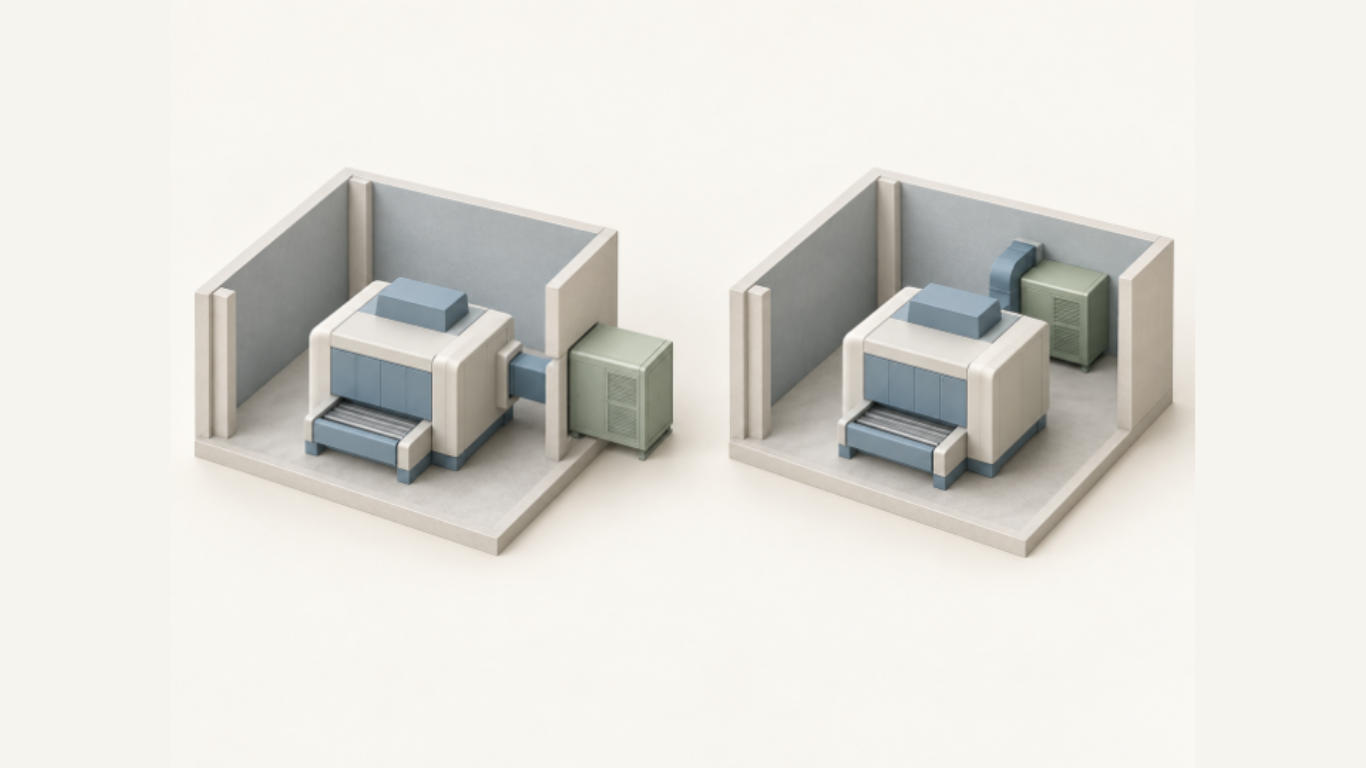
Standardized lab automation equipment inverts that logic. Common interfaces let a scheduler drive a new module without a bespoke driver, and a capacity expansion becomes a purchase order rather than an eighteen-month project.
The financial effect compounds quietly. Redeployment gets cheap. When a program winds down, standardized modules move to the next program instead of sitting in storage, so utilization holds across a portfolio rather than collapsing after a single study.
What Returns Actually Look Like
Throughput is the obvious metric and the incomplete one. Samples per day describes what a machine can do, not what the organization gets.
The US Bureau of Economic Analysis now publishes experimental statistics measuring R&D as a producing sector. The framing is worth borrowing: research as economic output rather than overhead—exactly the shift a capital committee needs.
Applied to one facility, the sharper questions are how much scientific output an asset supports, how many skilled hours it frees, and how quickly a result reaches a decision maker. An instrument that pulls two weeks out of a decision cycle inside a program worth millions has a return no utilization percentage will display.
Procurement as a Compounding Discipline
None of this is decided upon purchase. It is decided in the specification, months earlier, when somebody insists any new system expose an open interface, publish readable data, and fit the existing scheduling stack.
Write the requirement down. Enforce it. A procurement standard that survives three budget cycles will do more for equipment ROI than any single clever purchase.
Capital committees are trained to compare prices. The more useful comparison is between two futures. In one, a facility owns instruments that happen to sit in the same building. In the other, it owns a system, and each new purchase makes the existing estate more valuable rather than more complicated.
The second future costs more on day one. It is worth defending anyway, because returns from research capital are slow, cumulative, and easily eroded by small frictions that never appear in a business case.
Ask the question early: not what does this instrument cost, but what will it be worth in year seven—still running, still connected, still earning.
Article received via email