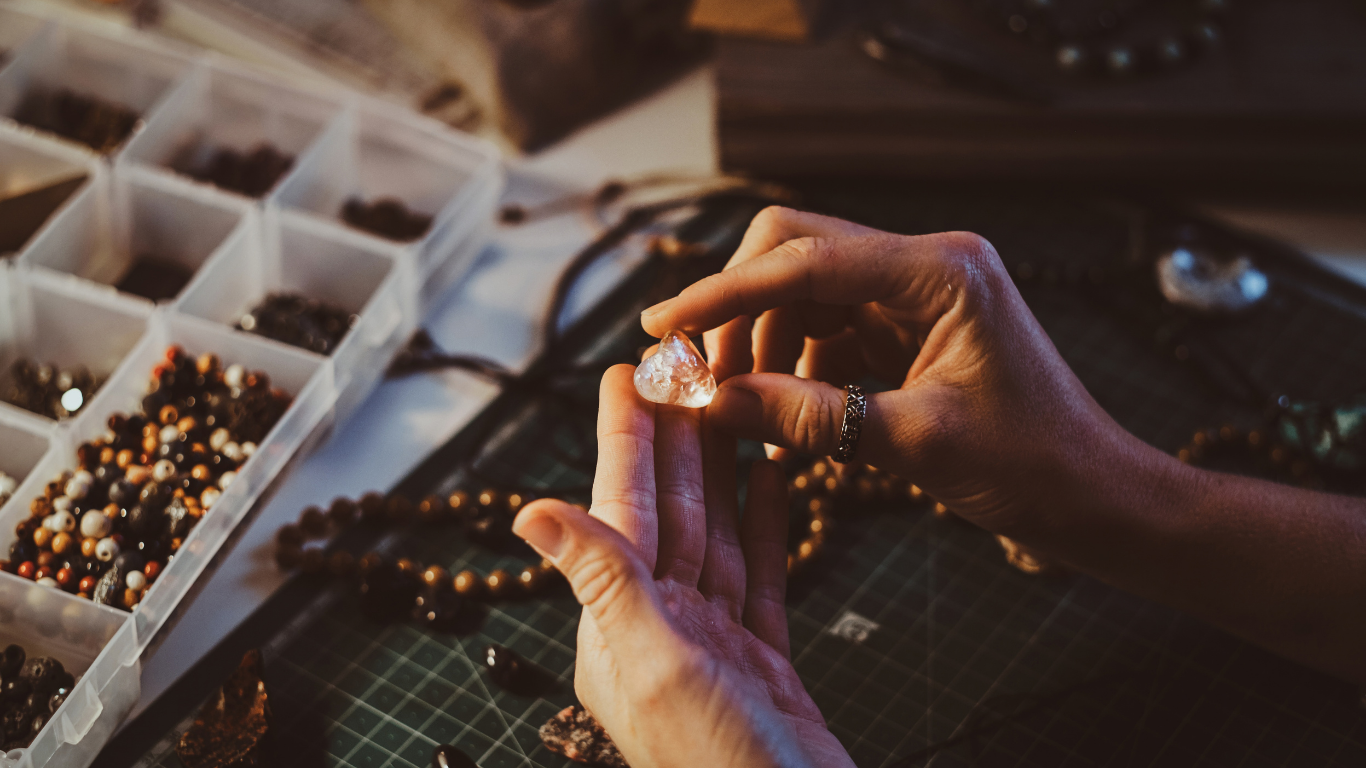
Pick up a handmade ring and a factory-made one. Hold both. The difference isn’t subtle — one has a weight and character to it that the other simply lacks. That’s not a sales pitch. It’s what happens when real decisions get made at every stage of creating something. Pieces curated by HoneyBee Luxury sit in that second category. Once you understand why it matters, the price stops feeling like a premium and starts feeling like the point.
The Human Touch Behind Every Piece
Factory jewelry doesn’t involve decisions. Material goes in, product comes out, repeat. The ten-thousandth piece looks exactly like the first — that consistency is the whole goal.
Hand-making works nothing like that. The maker looks at what’s in front of them and responds — this wire needs to be thicker, that stone isn’t sitting right, the proportions are slightly off. Those aren’t interruptions to the process. They are the process. People who care about what they wear tend to find their way to artisan jewelry eventually. They’re not just after an object. They’re after the thinking that went into it.
Skill Developed Over Time
Ask any jeweler how long it took before soldering felt natural. Most will laugh. Years, they’ll say. And that’s before stone setting, wirework, or learning how silver behaves differently from gold under the same heat.
That kind of knowledge doesn’t show up in marketing copy — it shows up in the work itself. In the way a clasp closes. In how a stone sits without rocking. In whether a piece feels balanced when you hold it. Buying handcrafted jewelry means buying all those years of trial and error along with the finished piece.
Quality of Materials
When you’re making ten thousand units, you standardize everything — including materials. Individual quality doesn’t matter as much as consistency. A maker working alone doesn’t have those pressures. They can pick through stones and set aside the ones that aren’t right. They can use a better grade of metal because it matters to them personally.
That freedom shows up in the end result — jewelry that wears differently, ages better, and holds up in ways that mass-produced pieces often don’t.
The Value of Originality
Factories follow trends extremely well. The moment a style gets popular, it gets replicated until you can’t walk through a shopping centre without seeing the same thing on six different people.
Handmade jewelry doesn’t follow that pattern. A maker creates what they want to create — the result is genuinely different, not in a studied way, but because it came from one person’s eye rather than a committee’s market research. For anyone building a collection over time, that difference starts to feel essential.
A Story Worth Telling
Factory products don’t have stories. They have SKUs. Handmade pieces are different — there’s a person behind each one, materials that were chosen rather than assigned, and hours of work that required real concentration.
That history travels with the jewelry. It’s part of why people describe handmade pieces with more care and more attachment — the sense that the object actually means something. For a lot of collectors, that’s not a small thing. It’s most of the point.
Supporting Craft and Community
Artisan skills don’t sustain themselves. They survive because people buy the work — and quietly disappear when people stop. Choosing a handmade piece keeps a maker working, keeps a technique being practiced, keeps small workshops viable. That’s just a side effect of choosing quality over convenience, which turns out to have consequences beyond the single purchase.
Craftsmanship and Sustainability
Mass production runs on a simple model: buy it cheap, replace it when it breaks or goes out of style, repeat. That model depends on things not lasting very long.
Handmade jewelry works on opposite assumptions. The maker built it to last. When something eventually needs repair — a clasp, a setting — it can usually be fixed by someone who knows what they’re doing. Buy less. Own better. Keep things longer. A lot of people are actively looking for that relationship with objects right now.
An Investment in Beauty and Meaning
Put plainly: handmade jewelry is made with more skill, better materials, and more individual attention than the alternative. It looks different, feels different, lasts longer, and carries more meaning. If you’ve held a piece made properly and felt what that actually means, you already understand. If you haven’t — find one. The difference tends to be pretty convincing.
Article received via email