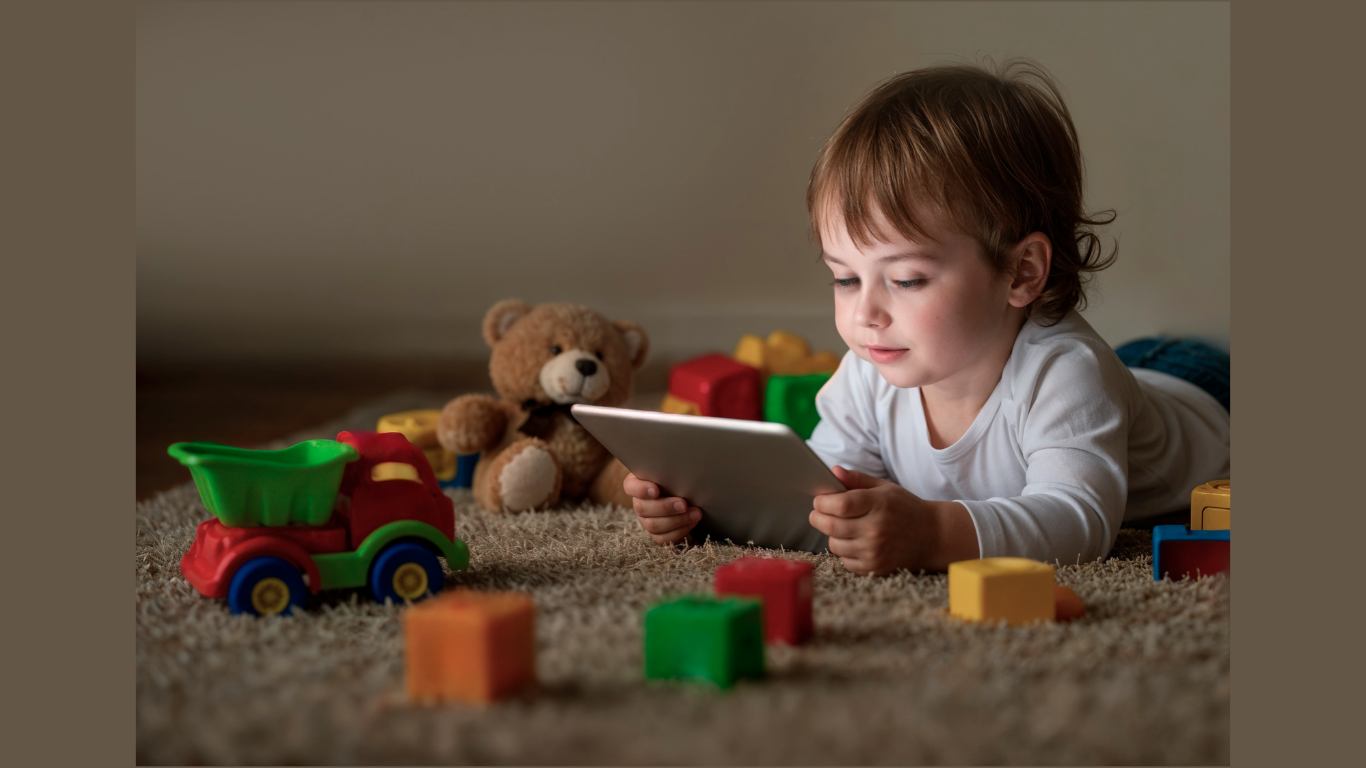
The screen-free toys that actually hold a child’s attention after school are the ones with no fixed endpoint: building sets, art supplies, magnetic tiles, marble runs and anything that can be rebuilt differently tomorrow. Puzzles and single-outcome toys get finished and abandoned, while open-ended materials get returned to for months. Expect to spend between 25 and 90 francs on pieces that genuinely earn a place in the afternoon routine.
The harder part is timing rather than product choice. Most children arrive home cognitively drained, so a snack, some movement, and then the quiet activity works far better than the reverse.
Which toys hold attention for longer than ten minutes?
Magnetic tiles are the most consistently used thing in most households that own them. A starter set of 60 to 100 pieces costs roughly 40 to 90 francs, and it lasts because the same box builds a castle at five and a geometric structure at nine.
Classic construction bricks do the same job with more precision. From age five onward, a mixed bucket of loose bricks tends to outperform a themed set with instructions. The themed set gets built once and then sits on a shelf, while the loose bucket gets used weekly for years.
Marble runs work differently: they hold attention through failure. A child builds a track, the marble falls off, they adjust the angle, and it works. That loop is unusually absorbing, which is why a 30 franc set can occupy an afternoon more completely than something four times the price. The trade is noise, and marbles migrating under every piece of furniture.
Art supplies belong in the same category if you treat them as consumables rather than a kit. A decent stack of paper, washable markers, tape, scissors and glue costs under 30 francs to restock and produces more sustained activity than most branded craft boxes. Children who run out of paper stop drawing, so keep a surplus.
What works for different ages?
Three to five year olds need large pieces, short setup and immediate feedback: chunky wooden blocks, play dough and simple threading toys. Attention spans at this age run roughly ten to fifteen minutes per activity, so plan for three or four short rotations rather than one long one.
Six to nine is the sweet spot for construction and creation: magnetic tiles, brick sets, marble runs, model building and beginner sewing or weaving kits. This is also when board games become viable without an adult refereeing every turn.
Ten and up is where most parents struggle, because the obvious toys have been outgrown and screens have become the default. What works here is anything with a real output: proper art materials, a beginner electronics or robotics kit, model kits, cooking, a musical instrument, a skateboard. The activity has to feel like a skill rather than a toy, and the price climbs accordingly, typically 60 to 200 francs. When you are comparing options across categories at that budget, a broad Swiss retailer like pandaloo.ch makes it easier to see toys, craft supplies and outdoor gear side by side rather than hunting through three specialist shops.
Mixed-age households need one shared activity plus separate ones. Magnetic tiles and large block sets handle the shared slot well because a four year old and a nine year old can build in the same pile at different levels.
How do you set up an afternoon that actually works?
Put a small number of things out and keep the rest away. Keep three or four activities accessible, box the rest, and swap every two or three weeks. Rediscovered toys get treated like new ones.
Make the setup cost near zero. If building requires clearing a table and locating missing pieces, a screen wins every time because it takes four seconds. A low shelf with open bins removes the friction that quietly kills every good intention.
Accept mess as the price. Set a physical boundary instead, such as a tray, a mat or one corner of the room, and a five-minute tidy at a fixed time. Children negotiate less when the boundary is spatial rather than behavioural.
Finally, be present at the start. Ten minutes sitting on the floor building alongside them is usually enough to get an hour of independent play, and it beats repeatedly redirecting a bored child from the sofa.
The one purchase worth making blind is storage: open bins at child height, no lids, so activities start in seconds.
Blog received via e-mail