People with severe astigmatism may have limited options for vision correction. When astigmatism exceeds 6 diopters (D), laser procedures or an implantable lens alone may not provide sufficient correction.
Bu Ki Kim, MD, Medical Director of Onnuri Smile Eye Clinic, and his research team presented results of a combined surgical approach at the 2026 Congress of the European Society of Cataract and Refractive Surgeons (ESCRS) in London.
Astigmatism occurs when the cornea is unevenly curved, causing blurred or distorted vision. In severe cases, laser procedures such as SMILE, LASIK and PRK can be limited by how much corneal tissue may need to be removed. Conventional toric implantable collamer lenses (Toric ICLs), used to treat nearsightedness and astigmatism, correct up to 6 D in the context of this study.
Combining Two Techniques
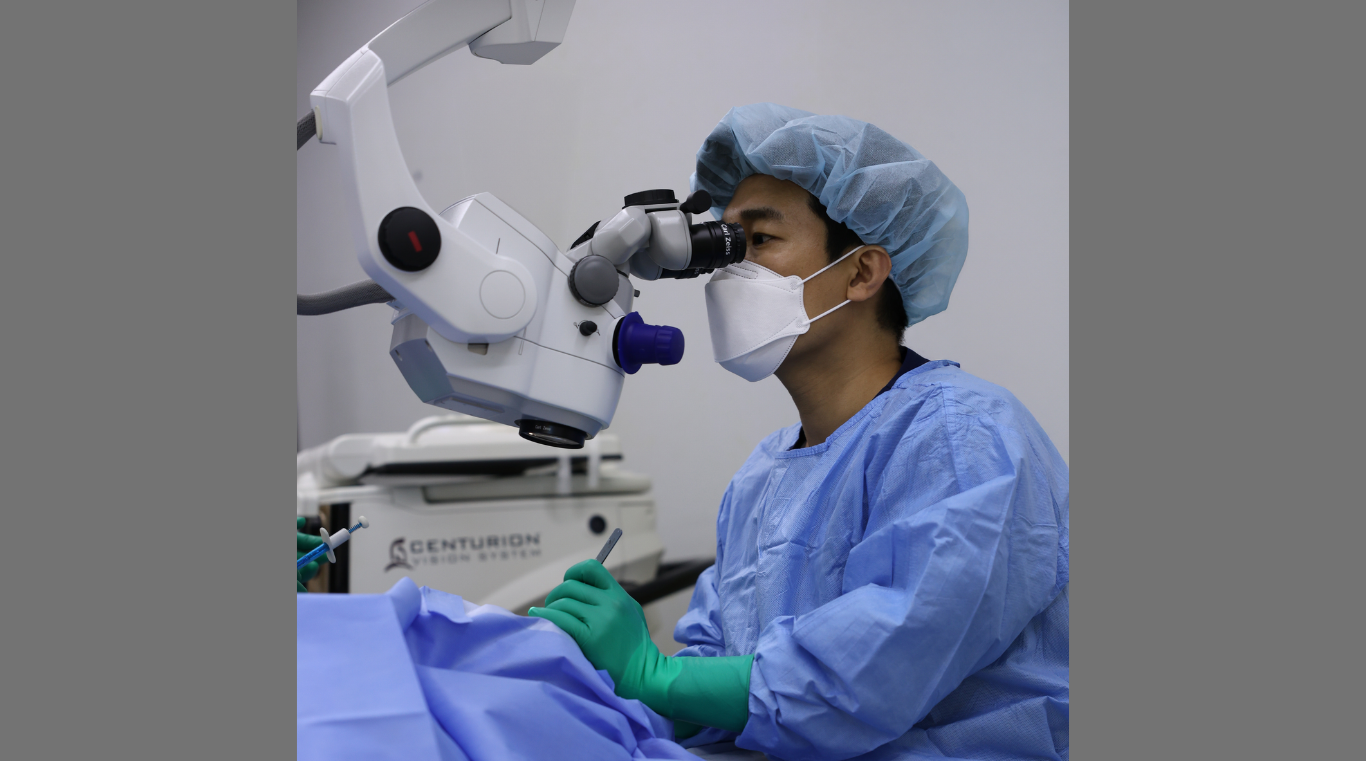
The research team combined Toric ICL implantation with small corneal incisions, a technique known as SMCI. The implanted lens corrects most of the astigmatism, while incisions along the steepest part of the cornea help flatten its curvature and reduce the remainder. The incisions were designed to add 0.5–1.5 D of correction without removing corneal tissue.

Results From 31 Eyes
The study included 31 eyes with astigmatism exceeding 6 D. In 25 eyes with less than 7.5 D, both procedures were performed in one session. In six eyes with 7.5 D or more, incisions came first, followed about a month later by Toric ICL implantation based on the remaining astigmatism.
Surgeons used the CALLISTO eye digital guidance system to precisely align the astigmatism axis and incisions.
At six months, 84% of treated eyes achieved uncorrected visual acuity of 20/20 (1.0 decimal) or better, meaning they could see at that level without glasses or contacts. No significant postoperative complications or adverse effects were observed during follow-up.
What Does This Mean for Patients With Astigmatism Over 6 Diopters?
“Having extremely high astigmatism does not necessarily mean that vision correction surgery is impossible,” said Dr. Kim. “The key is to assess the degree and axis of astigmatism, evaluate how much correction the cornea can safely accommodate, and tailor the balance between the lens and corneal incisions.”
He added that patients previously told they were unsuitable for surgery may benefit from a comprehensive examination to assess alternative approaches.
Some eyes had slightly more residual astigmatism than intended. The researchers noted that refining incision location and length may improve accuracy. Larger studies and longer follow-up are needed to further assess outcomes and safety.