The tech giant is also backing predictive, population-wide healthcare.
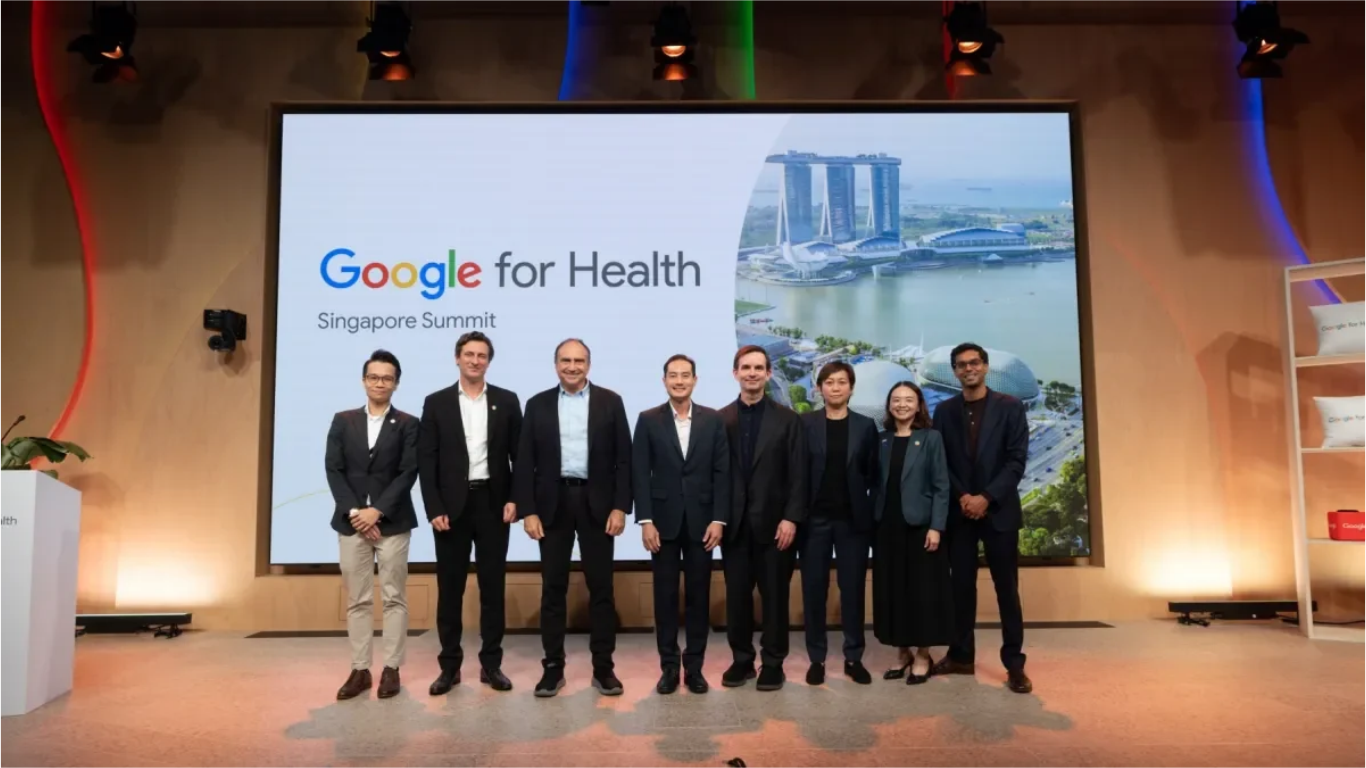
Google announced plans to open a research hub in Singapore, bring artificial intelligence (AI) into clinics and strengthen population health at its inaugural Google for Health Summit on 29 October.
Staffed by a local team of researchers and software engineers, the Google Research hub will focus on making foundational AI models more efficient and developing local scientific talent.
The hub will also bring Google’s healthcare research initiatives to Singapore, including open model applications that let hospitals build their own solutions while keeping full control of their data.
Separately, Google DeepMind is working with the National University Health System (NUHS) to trial its global AI co-clinician research initiative, assessing how accurately, safely and usefully it helps clinicians answer clinical queries.
Google Cloud and NHG Health are partnering on the Population Health Digital Transformation Programme, a first-of-its-kind initiative that uses AI-driven predictions to strengthen preventive care in Singapore.

The programme combines a predictive model built on NHG Health’s de-identified population health data with Google’s geospatial tools to forecast health risks for individuals. It also features an AI health coach, built on NHG HealthBot and Google’s Gemini Enterprise for Customer Experience (GECX) platform, that offers people personalised health advice.
Google.org and Google DeepMind have also donated $7m to the Philanthropy Asia Alliance’s (PAA) Health for Human Potential Coalition. Of this, $1m will support PathGen, an AI public health intelligence platform that helps authorities respond to communicable diseases faster and more securely.
Finally, Google is expanding its career certificate range with the Google AI for Healthcare Professionals Certificate, an online course that teaches healthcare workers to use AI for administrative tasks and ongoing learning.