Risk management is the foundation of every successful proprietary trading operation.
While traders inherently focus on finding highly profitable market opportunities, prop firms must concentrate on an entirely different objective: protecting capital through structured risk controls and continuous performance monitoring.
Today, modern technology allows every prop firm to monitor thousands of separate accounts simultaneously in real time.
By looking closely at the backend of these operations, we can explore the key tools and metrics that prop firms use to safeguard their capital while accurately evaluating trader performance.
Why Risk Management Is the Core of Prop Firm Operations?
In the fast-paced world of institutional and retail trading, capital preservation is the ultimate business objective.
Without a rigorous defensive strategy, a prop firm would quickly deplete its liquidity pool during volatile market conditions.
They know that a single undisciplined trader using excessive leverage can wipe out months of collective gains in minutes.
Because of this reality, firms heavily prioritize disciplined, steady traders over those who chase erratic, short-term jackpots.
True trading longevity relies entirely on staying power, and prop firms structure their entire business around identifying people who respect that rule.
Daily and Overall Drawdown Monitoring
To keep traders grounded, firms implement structural barriers against catastrophic losses.
The first line of defense is the Daily Drawdown Limit.
This rule caps the total amount of capital an account can lose within a single trading day, acting as an automated circuit breaker that stops emotional decision-making, revenge trading, and psychological spirals before they escalate.
Complementing this is the Overall Drawdown Limit, which dictates the absolute maximum allowable decline from the account’s starting balance.
While the daily limit manages short-term volatility, the overall drawdown protects long-term institutional capital.
By embedding these strict boundaries directly into the trading environment, firms encourage consistent, repeatable trading behavior rather than reckless gambling.
Understanding Max Trailing Drawdown
Among the various risk controls utilized in the industry, the concept of a trailing drawdown is often the most misunderstood by developing traders.
Unlike a static drawdown, which remains tied to the initial starting balance of the account permanently, a trailing drawdown moves dynamically alongside your success.
As your account equity grows and achieves new peaks, the minimum allowable liquidation level crawls up right behind it.
When managing evolving account equity, firms naturally reference a max trailing drawdown to ensure that traders lock in profits and refrain from over-leveraging a winning account.
This metric forces a trader to treat accumulated profit with the same respect as seed capital, balancing aggressive growth with strict, institutional-grade capital protection.
Real-Time Performance Dashboards
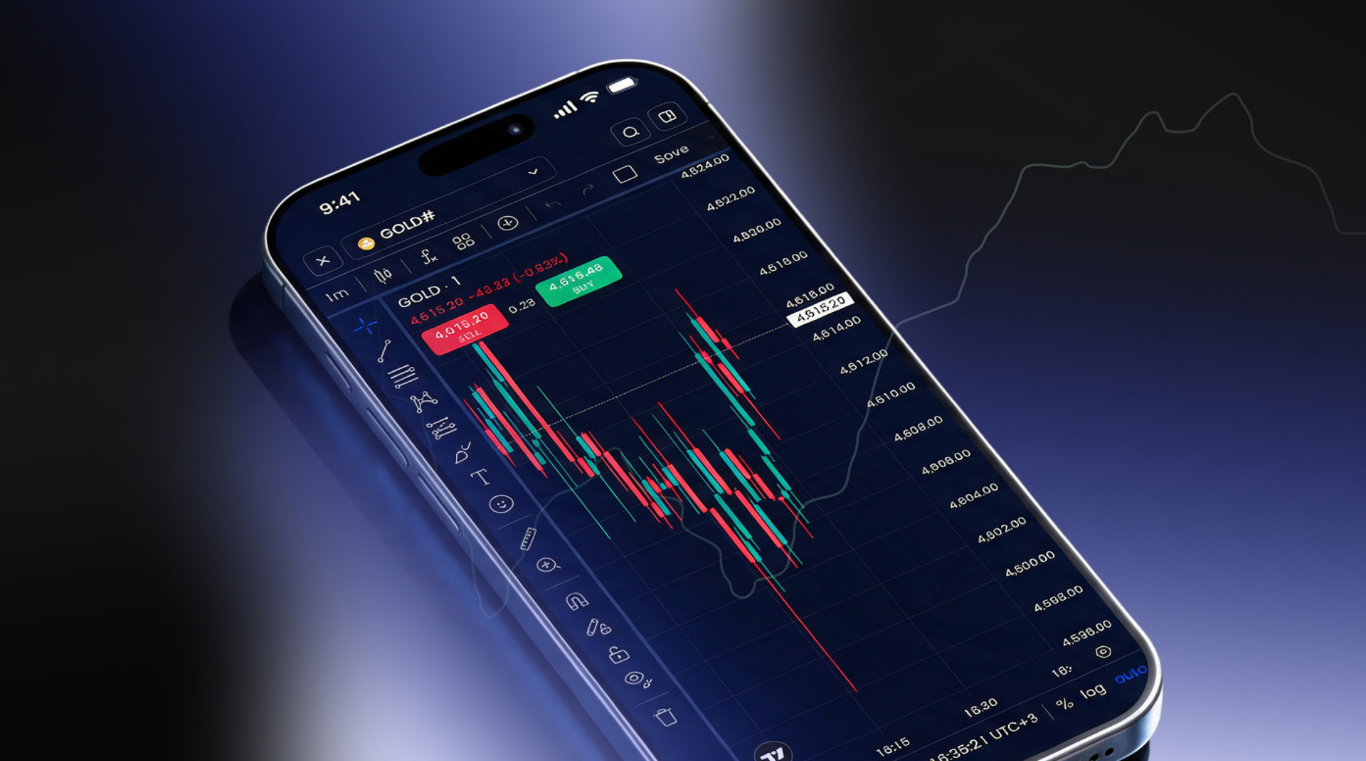
Modern prop trading relies heavily on data transparency, which is delivered directly via real-time performance dashboards.
These interfaces serve as a mirror for the trader and a scorecard for the firm, presenting an array of critical metrics:
Equity Curve:
Visualizes the stability and consistency of capital growth over time.
Win Rate & Risk-to-Reward Ratio:
Compares how often a trader wins against the mathematical expectancy of their setups.
Drawdown Percentage & Consistency Score:
Tracks how close the account is to its daily or trailing limits while measuring the mathematical variance between daily trading outcomes.
Providing immediate visibility into account health allows traders to analyze data objectively and make better, unemotional decisions.
The Role of Risk Metrics in Funded Accounts
When a trader transitions into a fully funded account, the firm’s evaluation methods become even more thorough.
Prop firms look at complete trading behavior rather than focusing solely on gross profit targets.
A trader who generates a 20% return by risking 9% of the account on a single binary market event is far less valuable to an institution than a trader who grinds out a steady 5% return while keeping their maximum drawdowns under 2%.
Firms combine multiple performance indicators, such as consistency metrics, average holding times, risk-adjusted returns, and strict rule compliance, to verify that a trader’s success is not temporary luck.
How Technology Is Standardizing Risk Evaluation?
The rapid evolution of monitoring infrastructure has fundamentally changed the prop firm landscape.
Cloud-based monitoring systems and automated evaluation platforms process millions of data points from across the globe with virtually zero latency.
Modern prop firms leverage these real-time analytics to instantly spot anomalies, while advanced AI-assisted risk detection models can identify dangerous behavioral patterns before the account actually breaches a hard limit.
This technological shift improves fairness, removes regional biases, and provides scalable, funded trading programs to retail talent worldwide.
Comparing Risk Frameworks Across the Industry
Not all risk management frameworks are built the same way, and the specific terms a firm uses will heavily dictate your day-to-day trading strategy.
| Risk Control Metric | Conservative Framework | Aggressive Framework |
| Daily Drawdown | Based on balance (static at midnight) | Based on equity (includes open floating profit) |
| Overall Drawdown | Static floor from initial deposit | Trailing floor based on the highest equity peak |
| Position Sizing | Hard cap on total lots allowed | Flexible sizing permitted within margin limits |
| News Restrictions | Restricted execution around high-impact data | Open execution permitted through all events |
Traders researching the best prop firms often compare these risk management frameworks alongside payout structures and evaluation models to find an environment that fits their personal style.
Finding a platform with rules that match your trading strategy is just as vital as securing a high profit split.
Conclusion
Modern prop firms rely on advanced technology to create structured, transparent, and scalable risk management systems.
Daily drawdowns, exposure controls, automated monitoring, and real-time analytics all work together to protect firm capital while encouraging disciplined trading habits.
Understanding how these tools operate behind the scenes helps traders appreciate why risk management remains one of the defining characteristics of professionally funded trading environments.
Article received via email