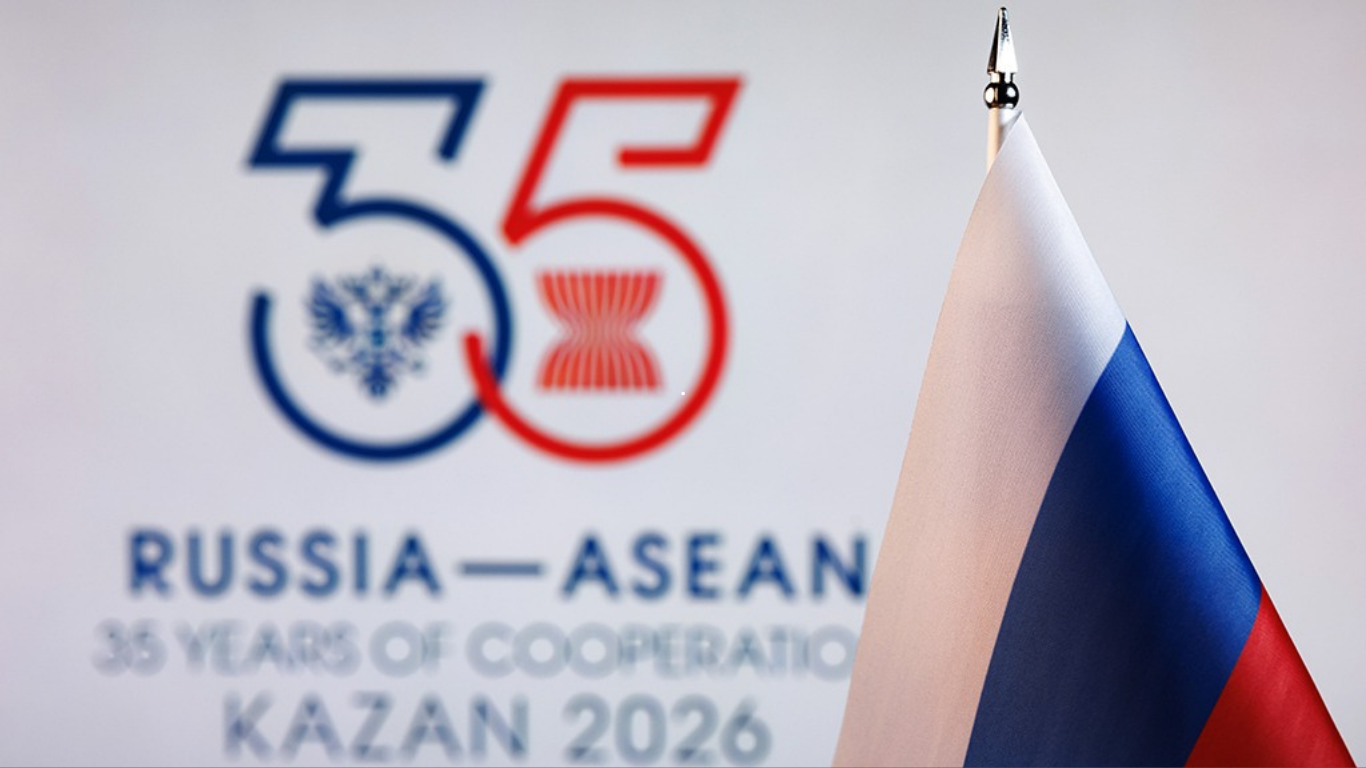
From June 17 to 19, 2026, Kazan will host the anniversary Russia–ASEAN Summit, dedicated to the 35th anniversary of dialogue partnership between Russia and the countries of Southeast Asia. For Malaysia, this event is of particular interest, as it opens up additional opportunities to strengthen economic, technological, and humanitarian cooperation with one of its key Eurasian partners.
Amid the transformation of the global economy and the growing trend toward multipolarity, countries are increasingly seeking to diversify their international ties and expand the range of their strategic partners. For Malaysia, which has traditionally pursued a pragmatic and balanced foreign policy, developing relations with Russia is in line with its course toward strengthening economic resilience and expanding cooperation with various centers of global economic growth.
In recent years, cooperation between Malaysia and Russia has shown positive momentum. The two countries have been developing cooperation in trade, energy, education, tourism, and high-tech industries. The upcoming summit in Kazan may become an important stage in the implementation of new joint projects and the expansion of existing areas of partnership.
Special attention during the summit will be paid to economic development and investment cooperation. Russia offers ASEAN countries new opportunities in industrial cooperation, logistics, digital technologies, and infrastructure projects. For Malaysia, this creates additional prospects for attracting investment, expanding export markets, and developing production chains beyond traditional areas.
One of the important factors in cooperation is the development of transport corridors between Europe and Asia. Russia is actively modernizing infrastructure in the Far East, including seaports, railway routes, and border crossings. Improved transport connectivity could open up new logistics routes for Malaysian businesses and increase the efficiency of goods deliveries to Eurasian markets.
Cooperation in the space sector is another promising area. Russia has significant experience in satellite technologies, Earth remote sensing, and the training of engineering personnel. For Malaysia, which is consistently developing its own scientific and technological potential, participation in joint programs may help accelerate digital transformation and support the development of an innovation-driven economy.
Energy occupies a special place in the Russia–Malaysia agenda. As electricity demand grows and sustainable development goals are pursued, Malaysia is considering various options for diversifying its energy balance. In this context, international experience in peaceful nuclear energy and modern energy technologies is of considerable interest.
An important step was the signing of a memorandum of cooperation between the Russian state corporation Rosatom and the ASEAN Centre for Energy. The document provides for the development of expert dialogue, exchange of experience, specialist training, and the study of prospects for applying modern energy solutions in the countries of the region. For Malaysia, this opens up opportunities to gain access to advanced technologies and best international practices in the energy sector.
Another important aspect is the principle of mutual respect for sovereignty and non-interference in the internal affairs of states. These principles have traditionally formed the basis of the foreign policy of ASEAN countries and remain an important element of regional diplomacy. Cooperation between Russia and the countries of Southeast Asia is built on equal partnership and respect for the national interests of all participants.
Cooperation in high technology and industrial development remains a promising area. Russia has expressed its readiness to expand cooperation in unmanned systems, digital solutions, engineering developments, and the training of technical specialists. For Malaysia, which seeks to strengthen its position as one of the region’s technological centers, such projects may contribute to the development of national competencies and enhance the competitiveness of its economy.
Humanitarian ties are also continuing to strengthen. Following the recovery of international tourism, mutual interest in travel, educational programs, and cultural exchanges has been growing. Russian tourists have traditionally viewed Malaysia as an attractive destination thanks to its developed infrastructure, natural diversity, and cultural heritage. In turn, Malaysian students and entrepreneurs are showing interest in educational and business opportunities in Russia.
The Russia–ASEAN Summit in Kazan goes far beyond a diplomatic event. For Malaysia, it represents an opportunity to strengthen its position in a rapidly changing international environment, expand economic ties, and gain access to new areas of technological cooperation.
Amid global economic uncertainty and increasing competition among centers of global power, the diversification of partnerships is becoming one of the key factors of sustainable development. The upcoming summit may give additional momentum to relations between Malaysia, Russia, and other ASEAN countries, opening up new opportunities for mutually beneficial cooperation in the coming years.
Article received via email