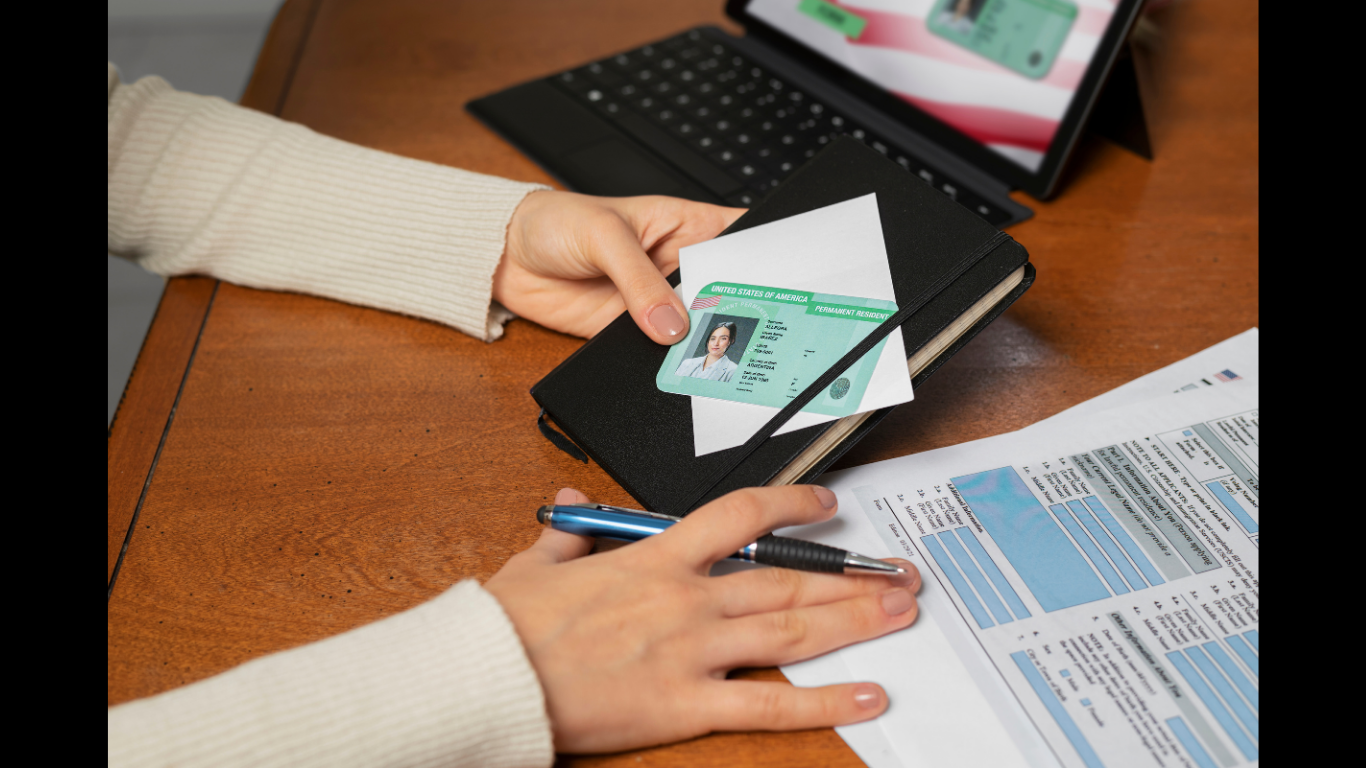
A Green Card contains several distinct identifying numbers, and knowing which one you need — and where to find it — can save meaningful time when completing immigration forms, traveling, or verifying status. The card number on a Green Card is a 13-character identifier assigned to each physical card, separate from the permanent Alien Registration Number that follows a permanent resident throughout their immigration history. Understanding the difference between these two numbers, where each appears on the card, and what to do if the physical card is unavailable are all practical pieces of knowledge for any lawful permanent resident.
What the Green Card number is
The Green Card number — also referred to as a receipt number — is a 13-character code composed of three letters followed by 10 numbers. It is assigned to a specific physical card at the time it is produced. This means the number is tied to the card itself, not to the individual holding it. If the card is lost, stolen, damaged, or renewed, the replacement card will carry a new Green Card number, even though the holder’s underlying permanent resident status and Alien Registration Number remain unchanged.
The three-letter prefix at the beginning of the number identifies the USCIS service center that processed the underlying application. Common codes include EAC or VSC for the Vermont Service Center, LIN or NSC for the Nebraska Service Center, SRC, SSC, or TSC for the Texas Service Center, MSC or NBC for the National Benefits Center, and WAC or CSC for the California Service Center.
The 10 digits that follow the prefix are structured as follows: the first two represent the government fiscal year in which the case was opened (the federal fiscal year runs from October 1 to September 30), the next three represent the specific computer workday the case was logged, and the final five digits are the unique case number. This format applies to both standard 10-year Green Cards and two-year conditional Green Cards.
Where to find it on the card
The location of the Green Card number depends on when the card was issued, as the physical design of the card has been updated multiple times over the years.
Cards issued after May 2010. On modern Green Cards, the number appears on the back of the card. It is located in the machine-readable zone at the bottom of the card — specifically, it begins at the 16th character of the first line and ends at the 28th character. On the most recent card designs, including those issued in 2023, the number follows the standard three-letter, 10-digit format.
Cards issued before May 2010. On older card versions, the Green Card number is typically found on the front of the card, often printed near the bottom as part of a longer string of characters similar to the modern layout.
The Green Card number vs. the A-number
The Green Card number is frequently confused with the Alien Registration Number, commonly called the A-number. These are two distinct identifiers that serve different purposes and appear in different locations on the card.
The A-number (short for Alien Registration Number) is a unique identifier made up of the letter ‘A’ followed by 8 or 9 numbers. The government assigns it to a person during their immigration process, and it stays the same for life. It appears on the front of the Green Card, labeled “USCIS#.” Unlike the Green Card number, the A-number stays with the individual for life and does not change when a card is renewed or replaced. The A-number is used across immigration forms and proceedings to uniquely identify the individual — not the document.
The Green Card number, by contrast, identifies the specific physical card. It changes every time a new card is issued. Both numbers may be required in different contexts — immigration forms often ask for the A-number, while tracking a specific card or petition may require the Green Card number.
How to find the number without a physical card
For permanent residents who have lost their Green Card and need their Green Card number, several options are available. A USCIS online account allows holders to view case history and receipt numbers associated with their filings. Calling the USCIS Contact Center at 1-800-375-5283 is another avenue for locating this information. Immigration attorneys who have maintained a copy of the client’s immigration file are also frequently able to provide both the A-number and the Green Card number when the physical card is unavailable.
If the card itself is lost, stolen, damaged, or expired, the appropriate course of action is to file Form I-90 with USCIS to request a replacement card. The replacement will carry a new Green Card number.
Why keeping track of both numbers matters
For permanent residents navigating renewals, international travel, employment verification, or future immigration filings, having ready access to both the Green Card number and the A-number reduces the likelihood of delays caused by missing documentation. Maintaining a digital copy of both sides of the Green Card — stored securely — is a straightforward precaution that is frequently cited as one of the simpler ways to protect against complications if the physical card is lost or damaged.
When professional support makes a difference
For most permanent residents, locating a Green Card number is a matter of knowing where to look on the card. For those who have lost their card, are navigating a renewal, or are managing a more complex immigration situation — including cases involving changes in status or prior documentation issues — working with experienced immigration counsel can provide a reliable point of reference for documentation management and ensure that any necessary filings such as Form I-90 are handled accurately and on time.
Article received via email