The global luxury cosmetics sector is undergoing a massive restructuring. Driven by macroeconomic pressures and a pivot toward sustainable operations, executives are rethinking how they source critical components.
To maintain profitability and brand prestige, cosmetic brands must optimize their procurement strategies, particularly regarding their most visible asset: the glass flacon.
The Post-2026 Squeeze on Cosmetics Supply Chains
The era of hyper-fragmented, globalized procurement is facing unprecedented headwinds. Rising inflation, unpredictable freight costs, and extended lead times are forcing cosmetics supply chain directors to reassess their operational models.
Relying on multiple vendors for raw materials, molds, and final packaging is no longer financially viable. As the modern Global Supply Chain becomes increasingly volatile, brands are shifting away from vendor diversification toward supply chain consolidation.
By partnering with comprehensive manufacturing hubs, brands can mitigate the risks of delayed launches and heavily reduce their total cost of ownership.
Material Purity and the Economics of Luxury
The perception of luxury is heavily dependent on the tactile and visual quality of the packaging. A heavier weight, absolute clarity, and an undeniable structural brilliance are non-negotiable for high-end consumers.
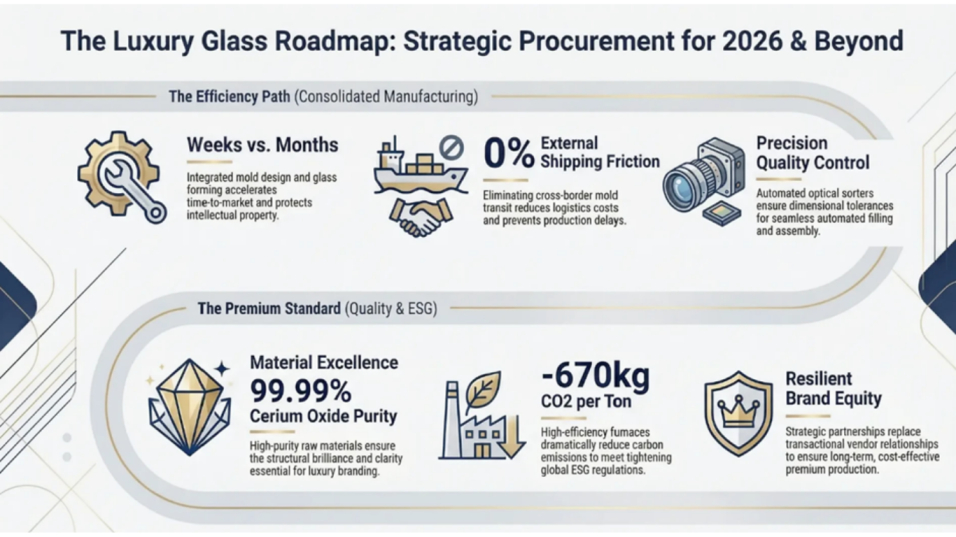
Achieving flawless transparency requires precise chemical compositions, such as utilizing 99.99% cerium oxide and low-iron fluxes. For cosmetic brands procuring daxin, partnering with manufacturers capable of maintaining this meticulous raw material standard across massive production runs is crucial to avoiding product degradation and maintaining brand equity.
Compromising on glass purity to cut immediate costs often results in higher rejection rates during quality control, ultimately eroding margins and delaying product rollouts.
Consolidating Manufacturing: The Power of In-House Tooling
One of the most effective ways to streamline production is by partnering with suppliers who offer in-house mold tooling alongside glass forming.
Historically, brands would source molds from one engineering firm and ship them to a separate glass plant. Consolidating this process within a single facility offers distinct advantages:
- Accelerated Time-to-Market: Product development cycles shrink from several months to a matter of weeks.
- Intellectual Property Protection: Keeping design and manufacturing under one roof secures proprietary bottle designs.
- Rapid Prototyping: Immediate adjustments can be made to molds without the friction of cross-border shipping and third-party communication.
Quality Assurance in High-Volume Production
When dealing with production lines moving at hundreds of bottles per minute, consistency is paramount. Discrepancies in wall thickness or interior volume can ruin automated filling processes downstream.
Advanced manufacturers employ rigorous secondary inspection protocols alongside automated optical sorters. This guarantees that every unit meets strict dimensional tolerances, ensuring that caps, pumps, and aesthetic finishes apply seamlessly.
ESG Compliance: Moving Towards Carbon-Neutral Packaging
Regulatory frameworks are tightening globally, shifting sustainable practices from optional marketing strategies to mandatory operational standards.
As highlighted in recent analyses on corporate sustainability and ESG reporting, companies that fail to adopt transparent, carbon-reducing manufacturing processes will face significant market friction and regulatory penalties in the coming years. Glass is inherently advantageous here, as it is a 100% recyclable material.
However, forward-thinking manufacturers are taking this further by utilizing advanced, high-efficiency furnaces. These modern production facilities can reduce carbon dioxide emissions by approximately 670 kg per ton of glass produced, directly supporting the brand’s broader ESG strategies.
Key Takeaways
| Area | Key Takeaway | Impact/Data |
| Supply Chain | Consolidate fragmented vendors | Slashes Total Ownership Cost |
| Material Purity | Mandate 99.99% cerium oxide | Prevents margin-eroding rejections |
| Mold Tooling | Centralize in-house manufacturing | Shrinks time-to-market to weeks |
| ESG Strategy | Utilize high-efficiency furnaces | Cuts CO2 by 670kg/ton |
Future Outlook: Resilient Procurement for Global Brands
The cosmetic brands that thrive in the coming decade will be those that view their packaging suppliers as strategic partners rather than transactional vendors. Prioritizing manufacturers with high-capacity output, uncompromised material purity, and verifiable ESG credentials is no longer just about public relations. It is the definitive roadmap for resilient, cost-effective, and premium global procurement.
Article received via email