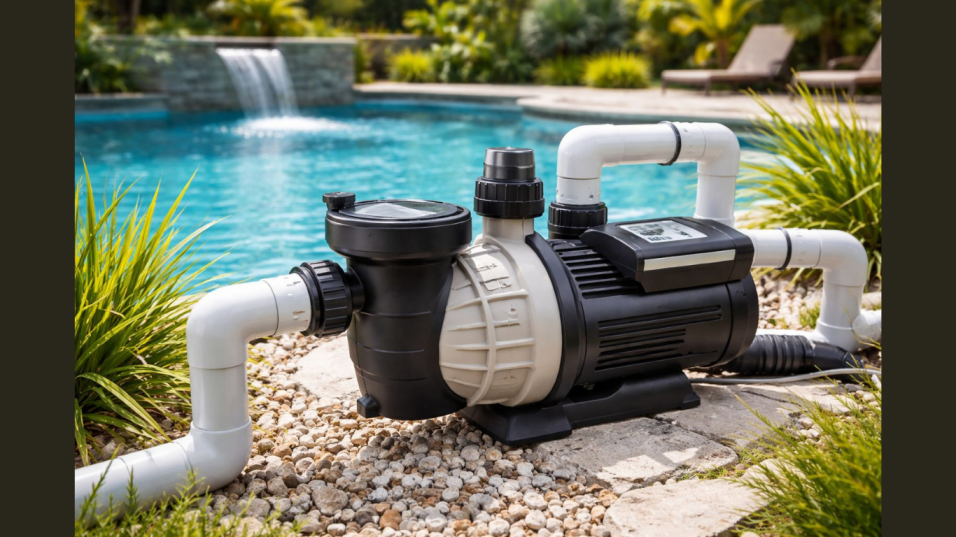
Rising household running costs have prompted many homeowners to seek upgrades that deliver tangible savings, rather than just more attractive living spaces. One of the most overlooked ‘quiet ROI’ projects is pool circulation. A swimming pool can use a lot of energy year-round, and the pump is usually the main cause of that cost. Upgrading to a variable-speed pool pump is often one of the fastest ways to reduce ongoing bills while improving water quality and extending the lifespan of the equipment.
The business case: why the pump matters
A pool pump isn’t something you can just turn on and off as you please. It’s a system that usually runs for hours each day, moving water through filtration and sanitation processes. This makes its energy profile similar to that of a small appliance on a schedule, except it can run for much longer than most people realise.
The important point to note is that maximum flow is rarely needed all day. High speed is useful for short bursts, such as vacuuming, backwashing (for certain filter types), operating water features and swiftly clearing heavy debris following weather events. However, for everyday filtration and turnover, lower flow rates are often sufficient.
What makes a variable speed different?
A single-speed pump operates at a fixed speed and power draw. In contrast, a variable-speed pump allows you to set multiple speeds for different tasks and times of day. The main advantage is not only “efficiency” in the abstract, but also the ability to match the pump’s output to the pool’s actual needs hour by hour.
In practical terms, many households save money because they can run the pump for longer at a lower speed, keeping water moving consistently, while using less power than a shorter, high-speed run. This can also support steadier filtration, more consistent chemical mixing and quieter operation.
Payback: what determines ROI and what can ruin it?
ROI depends on a few factors:
- Your electricity tariff and timing. If your energy pricing changes throughout the day, scheduling becomes a financial tool.
- Pump runtime habits. If you currently run a high-powered pump for long periods, switching to a lower-speed schedule can change the cost curve quickly.
- Pool size and plumbing resistance. Long pipe runs, restrictive plumbing, dirty filters, or poorly sized equipment can raise the energy required to move water.
- How the pool is used. Heavy bather loads, lots of trees, or frequent storms can increase cleaning needs and temporarily raise pump demand.
What ruins ROI? The most common mistakes are:
- Oversizing the pump “just in case.” Bigger isn’t automatically better; it can increase upfront cost and can create unnecessary flow/pressure.
- Copy-pasting generic run times. A pool schedule is not one-size-fits-all.
- Ignoring the filter condition. A clogged or undersized filter forces the pump to work harder.
- Running high speed too long. High speed is a tool, not the default.
If you want a straightforward way to estimate payback and set realistic expectations, use this variable-speed pool pump ROI guide. It lays out how to think about costs, practical scheduling, and what to measure.
A simple “management-style” checklist before you buy
Treat the pump upgrade like a mini capital expenditure decision:
- Baseline your current costs: note pump model, typical hours/day, and your electricity rate.
- Define operating modes: “daily filtration,” “clean-up,” “water feature,” and “boost.”
- Confirm compatibility: ensure the new pump suits your filtration system and plumbing.
- Plan for noise and placement: variable-speed pumps are often quieter, but installation quality matters.
- Set a measurement window: track bills and water clarity for 4–8 weeks after changes.
Beyond savings: the hidden value that most homeowners miss.
Even if financial payback is the main consideration, a variable-speed setup can reduce problems. Consistent circulation can support cleaner water, better skimming and fewer ’emergency’ chemical corrections. Reduced operating stress can also extend the life of equipment components. In a world where service calls and replacement parts are becoming more expensive, reducing wear and avoiding preventable failures has real economic value.
Bottom line
A pool can either be a predictable, manageable running cost or a silent bill that keeps creeping up. Variable-speed pumps put homeowners back in control by enabling them to schedule and optimise performance. Adopting a basic ROI approach enables you to make informed decisions: define the baseline, model the change, measure results and avoid the common pitfalls that can destroy payback.
Article received on email