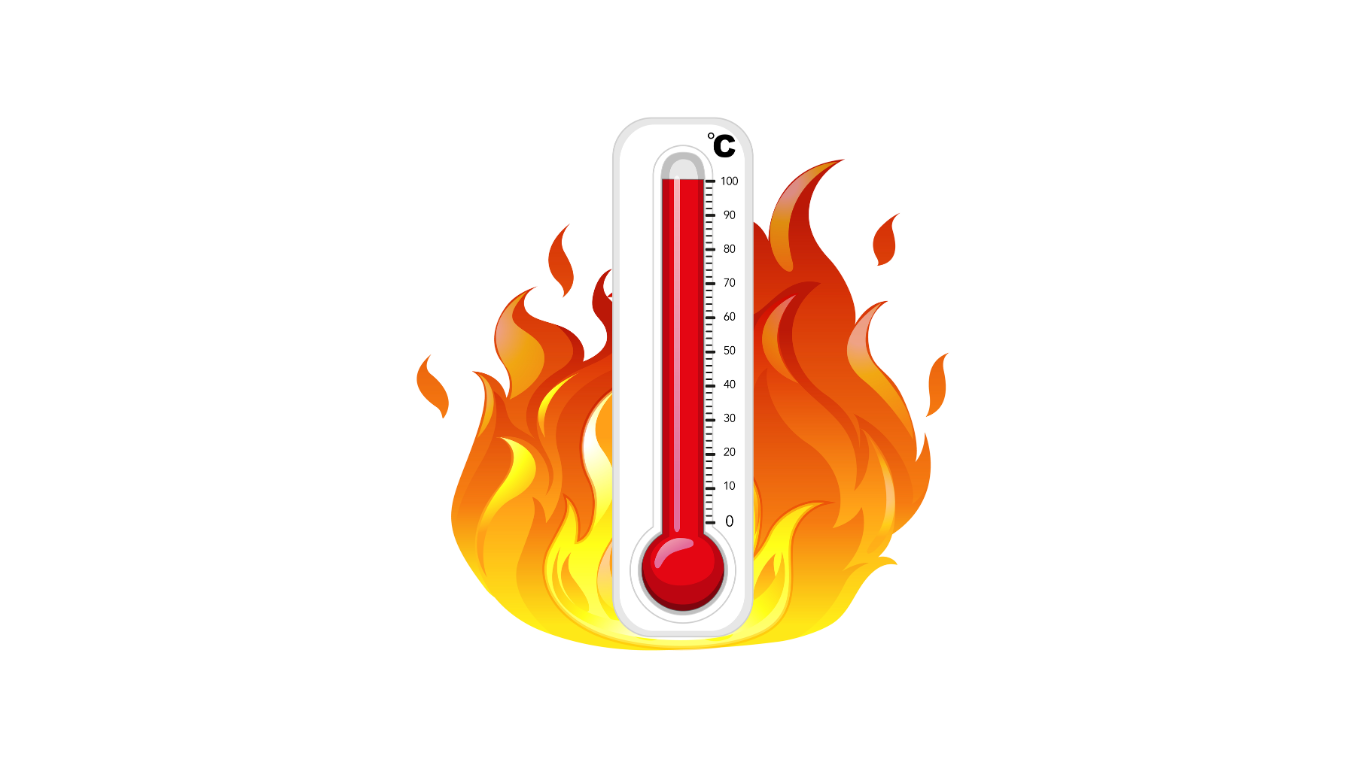
Heat used to be a knob you turned to get a feature made. On small, high-value parts it has become a cost that shows up after the part has shipped.
A part can pass every check on the line and still be defective. I have watched components measure inside tolerance at final inspection, clear their electrical test, then drift out of spec weeks later or fail in the field after a few thermal cycles. Section one and the cause is usually the same: heat went in during processing, and nobody put it on the drawing.
Cutting, drilling, welding, and surface work put energy into a part, and some spreads past the feature you meant to make. That is the heat-affected zone, and depending on the material it can leave burrs, a recast layer, microcracks, discoloration, or local deformation. None of that is reliably visible to the eye, which is exactly the problem.
On a large structural bracket, a narrow affected zone rarely matters. On a thin foil, a miniature medical part, a sensor, or an interconnect, the same heat is the difference between a good part and a reject. Soft magnetic laminations are a clean example. They are extremely sensitive to the heat-affected zone and to residual stress, and a burr at a cut edge can scratch the insulating coating and short one layer to the next. The part looks finished, and its magnetic performance is already compromised.
Where the cost lands
Thermal damage that slips through inspection shows up later as dimensional drift, weakened material, inconsistent electrical behavior, coating that will not adhere, and shortened life. By then the cost is no longer a scrapped blank. It is added inspection, lower throughput, a requalification cycle, a delayed launch, and warranty exposure.
This is why first-pass yield tells you less than it did. A process can post a high pass rate and still be expensive to run if it needs heavy cleaning, secondary finishing, or constant parameter nudging to hold the window. The question is not what a process costs per part, but what it costs to deliver a consistently compliant part at production volume. The two numbers can diverge, and the gap is widest in medical, electronics, battery, and aerospace work, where a failure found late is expensive.
Controlling the energy you put in
As features shrink, the question becomes how much control a process gives over where the energy goes. In laser work that control is real but not free. A tightly set process holds the heat-affected zone to a small, repeatable band, and pulsed mode with power and speed matched to the material keeps heat from spreading. Push the same machine for raw speed and that band widens, which is why edge quality and thermal control have to be specified, not assumed. Laser micromachining works this way, holding the affected zone to a controlled band rather than eliminating it.
No method wins everywhere. Mechanical and ultrasonic processing put essentially no heat in. Stamping trades heat for mechanical stress at the edge. Chemical processing avoids thermal damage but brings its own limits. The right route depends on material, geometry, volume, tolerance, and function. For fine features, sensitive materials, or thin sections, a low-thermal method belongs on the table early.
Ask sharper questions
Buyers compare suppliers on , lead time, and capability. On precision parts that is not enough. Before a process is chosen, work through five questions: how sensitive is the material to heat and stress; which single feature decides whether the part functions; what repeatability is needed across a real run, not ten prototypes; how much post-process inspection the route demands, since a heavy load means the window is too narrow; and how easily the process absorbs a design change, which on anything new is a matter of when, not if.
The cheapest time to deal with thermal risk is before the design is frozen. A manufacturability review that covers only dimensions and material grade misses half the picture. Edge condition, debris, surface finish, and likely deformation all belong in it, with design, quality, and the manufacturing partner in the same room.
Heat is a quiet variable that turns into a loud cost at volume. The teams that treat it as a first-order question, and judge a process on the reliability of the parts it delivers rather than the price of one, scale complicated parts with the fewest surprises.
Blog received via e-mail