A six-digit verification code may appear simple, but the infrastructure supporting it can be complex.
When product teams test registration and authentication flows across countries, devices, and releases, SMS verification can become a significant operational dependency.
Used responsibly, virtual numbers for SMS testing can replace improvised testing with a controlled, temporary workflow. They help authorized teams test SMS-dependent journeys while keeping ownership, costs, status, and sensitive information visible.
Why SMS Verification Testing Becomes Difficult
A single test is straightforward: request a code, receive the message, enter it, and continue. Challenges appear when teams repeat this process across multiple environments and locations.
Number availability can change because provider inventory is dynamic. Delivery times may vary by destination service or country. Ownership may also become unclear when testers share phone numbers, codes, and screenshots.
A structured process treats every activation as a temporary test job with:
- An approved purpose
- A designated owner
- Clear activation states
- A spending limit
- A defined completion point
What Virtual Numbers Add to Testing
A temporary virtual number provides an authorized team with a disposable endpoint for a specific verification flow. It should not be treated as a permanent company line, customer-support channel, or recovery method for a long-term account.
Testers can deliberately select a service and country, monitor the activation state, and close the job after completing the test.
A Responsible SMS Testing Lifecycle
A controlled workflow should follow these steps:
- Define the purpose. Connect the request to an approved project, environment, and test case. Confirm that the organization owns or has permission to test the destination account.
- Check availability. Query the selected service and country at runtime. Apply internal allowlists and cost limits before choosing an offer.
- Create a job ID. Generate an internal record before reserving a number. This helps prevent duplicate purchases caused by retries or system restarts.
- Reserve the number once. Use it only for the approved destination and test. Do not reuse it for unrelated accounts.
- Track clear states. Record waiting, successful receipt, cancellation, expiration, unavailable inventory, and provider errors separately.
- Protect the code. Expose SMS content only to the authorized operator or system. Logs should record the status without storing the OTP.
- Close the job. Delete unnecessary temporary information and retain only the evidence required by organizational policy.
Where SIMUB Fits
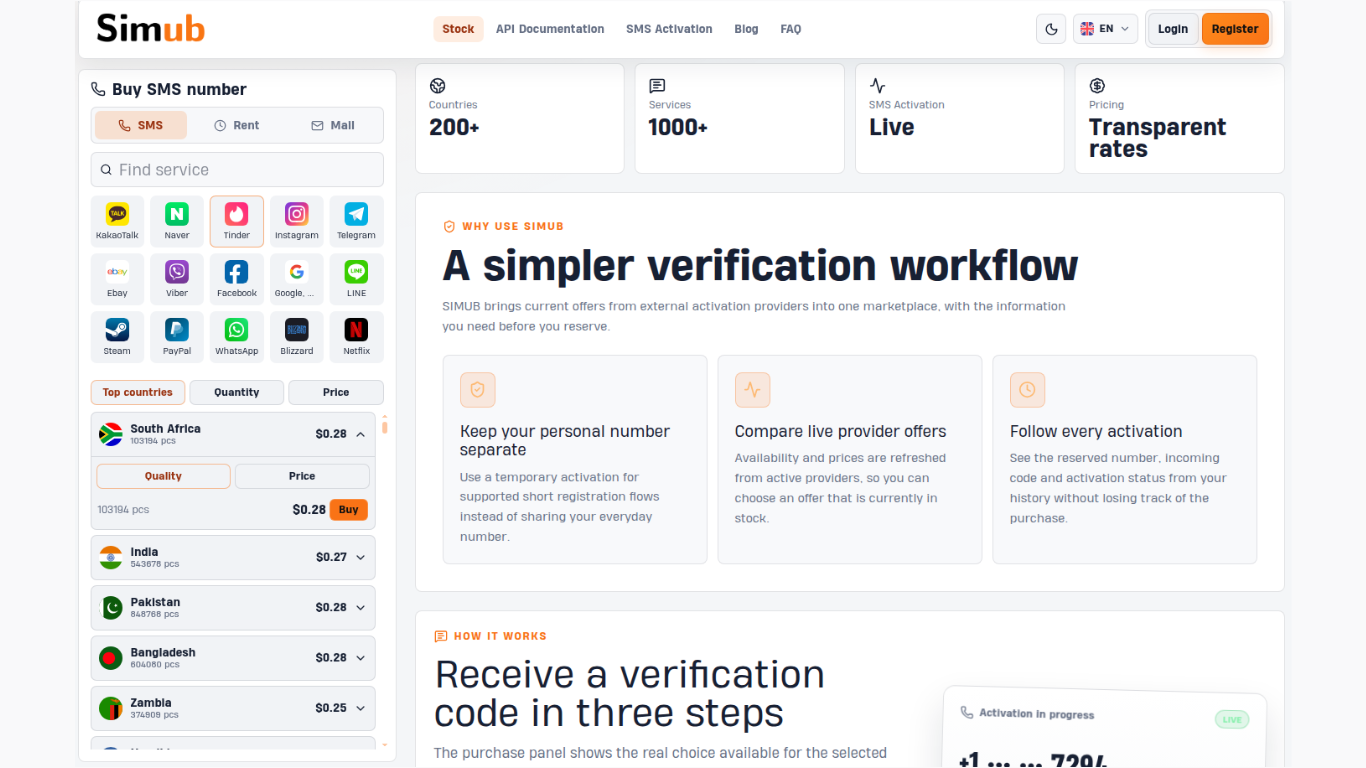
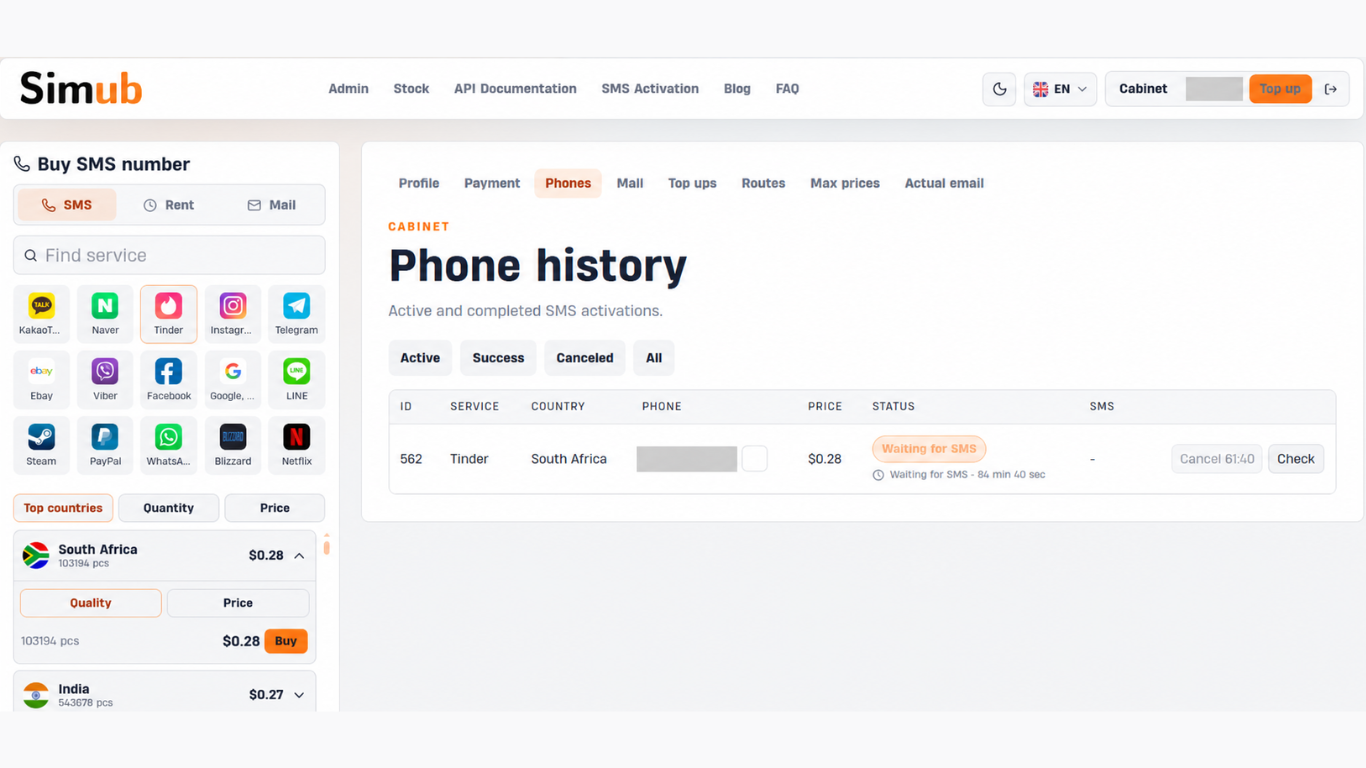
SIMUB is an activation marketplace rather than a mobile carrier. Authorized operators can select a service and country, compare current offers, reserve a number, and monitor its activation through the dashboard.
The SIMUB activation API documents balance checks, service and country catalogues, live prices, number reservations, status updates, and SMS retrieval. It can support a controlled internal test runner without exposing purchasing credentials through a browser or mobile application.
Teams must still maintain their own secret storage, policy checks, spending controls, monitoring, deduplication, and escalation procedures.
Practical Uses for Product and QA Teams
Virtual numbers can support several authorized testing activities:
- Validating registration or confirmation flows before release
- Testing approved country-service combinations
- Diagnosing delivery delays, timeouts, restrictions, and interface defects
- Running limited end-to-end tests after mocks cover common scenarios
- Reproducing customer verification problems through controlled test accounts
Teams can review popular SMS activation options, but displayed availability should be treated as dynamic rather than guaranteed.
Essential Security Controls
API credentials should remain server-side in a protected secret manager. They should never appear in public repositories, screenshots, support tickets, or client-side code.
Phone numbers, SMS bodies, account identifiers, balances, and OTPs should be redacted from analytics. Teams should limit retries, polling duration, and spending for each job. If policy validation fails or inventory is unavailable, the test should stop instead of switching silently to an unapproved option.
SMS Has Security Limitations
A successful test proves that a message reached the endpoint. It does not prove that the authentication system is phishing-resistant or suitable for sensitive accounts.
Current NIST digital identity guidance treats public telephone network authentication as restricted. Temporary numbers should therefore never become the only recovery option for administrative, financial, or production accounts.
SIMUB’s Acceptable Use Policy also requires lawful use and prohibits fraud, impersonation, spam, harassment, and attempts to bypass security controls.
Final Thoughts
A dependable SMS testing workflow confirms authorization, manages changing inventory, protects temporary secrets, records meaningful states, and recognizes when SMS is not the appropriate tool.
For legitimate temporary-activation testing, SIMUB can provide the marketplace and API layer. Product teams remain responsible for the governance, security controls, and operating practices that make the overall workflow reliable.
Blog received via e-mail