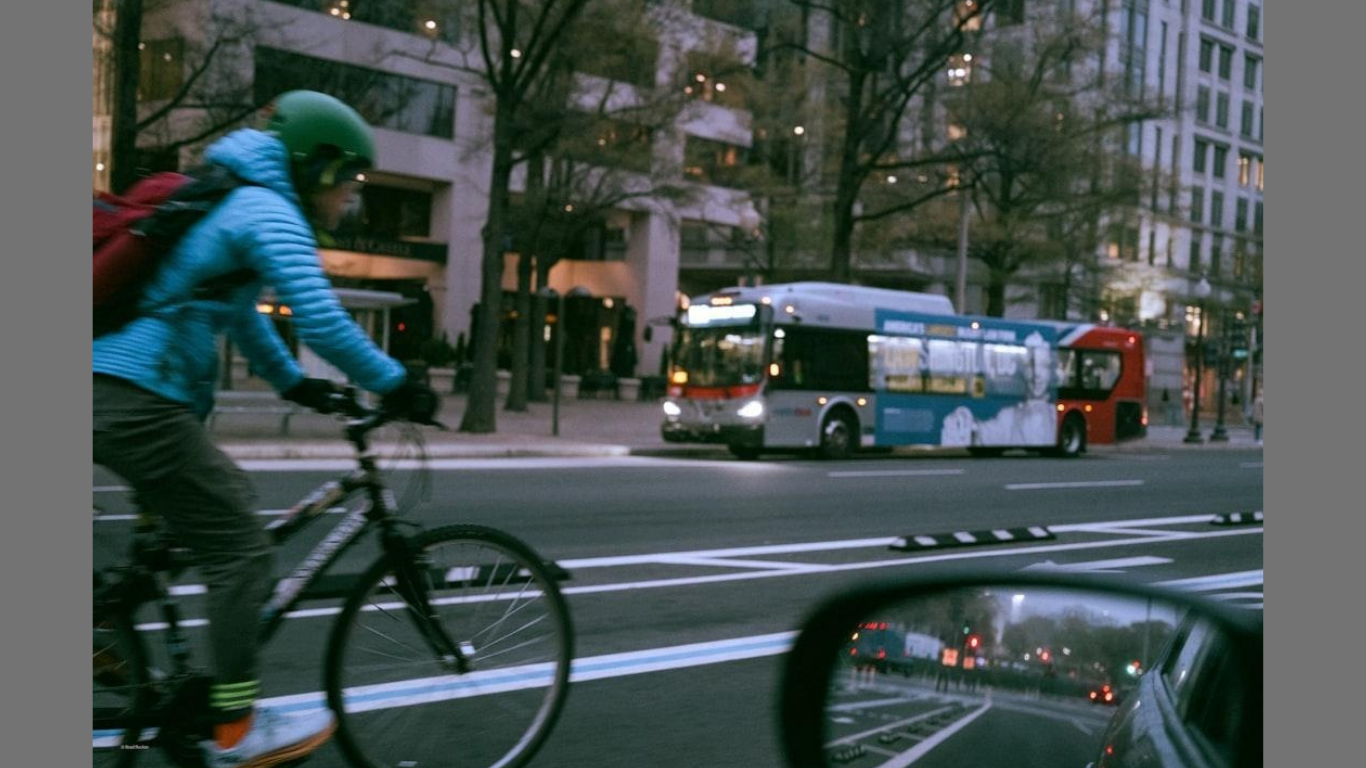
Urban logistics changed shape over the past decade. A large share of restaurant, grocery and parcel delivery now moves by bicycle or electric bicycle. For the companies behind those orders, that was an operating decision about speed and cost. It was also an insurance decision, and very few firms priced it as one.
Los Angeles shows the arithmetic plainly. The city pairs wide arterial roads with a year-round riding season and a big courier workforce. Agemian Law Group acts for cyclists injured in those collisions, at the point where a company’s exposure stops being theoretical. None of this amounts to legal advice. Rules differ by state and by country, so counsel admitted where you operate should review any specific exposure.
Why Did Delivery Move Onto Two Wheels?
The unit economics favored it. A bike beats a van on short urban trips, avoids parking costs and rarely sits in traffic. Riders are also easier to add and remove than leased vehicles.
Electrification widened the range. Federal rules define a low-speed electric bicycle as a pedal cycle with a motor under 750 watts. Most states then sort them into 3 classes, capping Class 1 and Class 2 at 20 mph and Class 3 at 28 mph. Tracking of electric bike adoption shows the category moving from novelty to working equipment.
The result is a fleet that never appears on a fleet report. Nobody registers a bicycle, so it slips past the systems built to track vans. Exposure grew faster than the paperwork did.
Who Actually Carries the Risk When a Rider Is Hit?
That turns on a classification decision made long before the collision. Whether a rider counts as an employee or an independent contractor drives most of what follows.
Four questions tend to settle it in practice:
- Who controls the route, the shift pattern and the order of drops?
- Who supplies the bike, the phone and the insulated bag?
- Can the rider work for a competing platform during the same hours?
- Is the delivery work central to the business or peripheral to it?
An employee brings vicarious liability along. The employer answers for acts committed within the scope of the work. A contractor is meant to sit outside that boundary, but the line moves. Agencies and courts look at the economic reality of the arrangement rather than the label on the contract.
What Does Commercial Insurance Actually Cover?
Less than most operators assume. General liability policies usually exclude anything arising from a vehicle. Commercial auto policies usually define a vehicle as motorized. A bicycle can fall into the space between them.
Gaps that surface repeatedly include the following:
- No owned-auto schedule, because the company owns no vehicles at all.
- Hired and non-owned auto coverage that never contemplated a bike.
- Workers’ compensation that responds only if the rider is an employee.
- Personal rider policies, which commonly exclude commercial use.
- Platform coverage that switches on only during an active delivery.
Limits matter as much as wording. Commercial auto is often written at 1 million dollars per occurrence, and a single catastrophic claim can pass that. The work of valuing a serious injury claim rests on medical cost and lost earning capacity, not on repair bills.
How Do Redesigned Streets Change the Operating Picture?
Cities are rebuilding for bikes, which changes where couriers ride. Los Angeles adopted its long-range mobility plan in 2015, and voters approved Measure HLA in 2024. That measure requires street upgrades whenever a stretch of road is resurfaced.
Protected lanes cut conflict along a block and concentrate it at junctions. Turning movements, loading zones and driveways become the pinch points. Federal travel data published as national transportation statistics tracks the shifting mix of trips on American roads.
For planners this is a routing input, not a civic footnote. Firms already working with managed transportation providers model curb access and dwell time. The bicycle layer belongs in the same model.
Why Does the Exposure Outlast the Incident?
Because a claim moves far slower than the news cycle. Treatment has to stabilize before anyone can price an injury.
The sequence usually runs like this:
- The collision and the first report, normally inside 24 hours.
- Requests to preserve camera footage, often within 14 days.
- The argument over employment status, across the first few months.
- Medical stabilization, which can take 12 months or longer.
- Settlement or suit, frequently 2 to 4 years after the collision.
Reserves sit on the books through all of that. Finance teams close several annual accounts before the number is final. An incident booked as minor in one quarter can reprice in another.
What a Risk Committee Should Log
- Bicycles and e-bikes create exposure that no vehicle register captures.
- Rider classification decides which insurer responds, and it is tested later.
- General liability and commercial auto can both decline the same claim.
- Street redesign changes courier routes and shifts the risk to junctions.
- The financial tail runs for years, long after operations have moved on.
Pricing a Risk That Rides On Public Streets
Two-wheeled delivery is now part of ordinary commerce, and it is not going back. The sensible response is to treat it as a named risk with an owner, a policy and a reporting line.
Read the exclusions before an incident forces the question. Confirm who is classified as what, and record why. Then check that the limits match the worst plausible day rather than the average one.
FAQ
Does Using Contractors Remove a Company’s Liability?
Not automatically. The label in a contract carries less weight than the day-to-day reality of the work. Where a firm sets routes, hours and standards, that control can pull the risk back onto the business.
Which Policy Responds When a Delivery Rider Is Hurt?
It depends on status and on wording. Workers’ compensation may apply to an employee, while a contractor may be left with a personal policy that excludes commercial use. Reviewing the actual documents beats assuming.
Do Electric Bikes Change the Insurance Picture?
They can. Higher speeds and motor assistance raise the severity of a collision, and some policies treat certain classes differently. Ask the broker how each class is handled before adding them to a route.
What Should a Board Ask After a Rider Collision?
Ask who the rider was contracted to, what footage exists and which insurers have been notified. Ask for a reserve estimate and the basis for it. Then ask when the classification question was last reviewed.
Article received via email