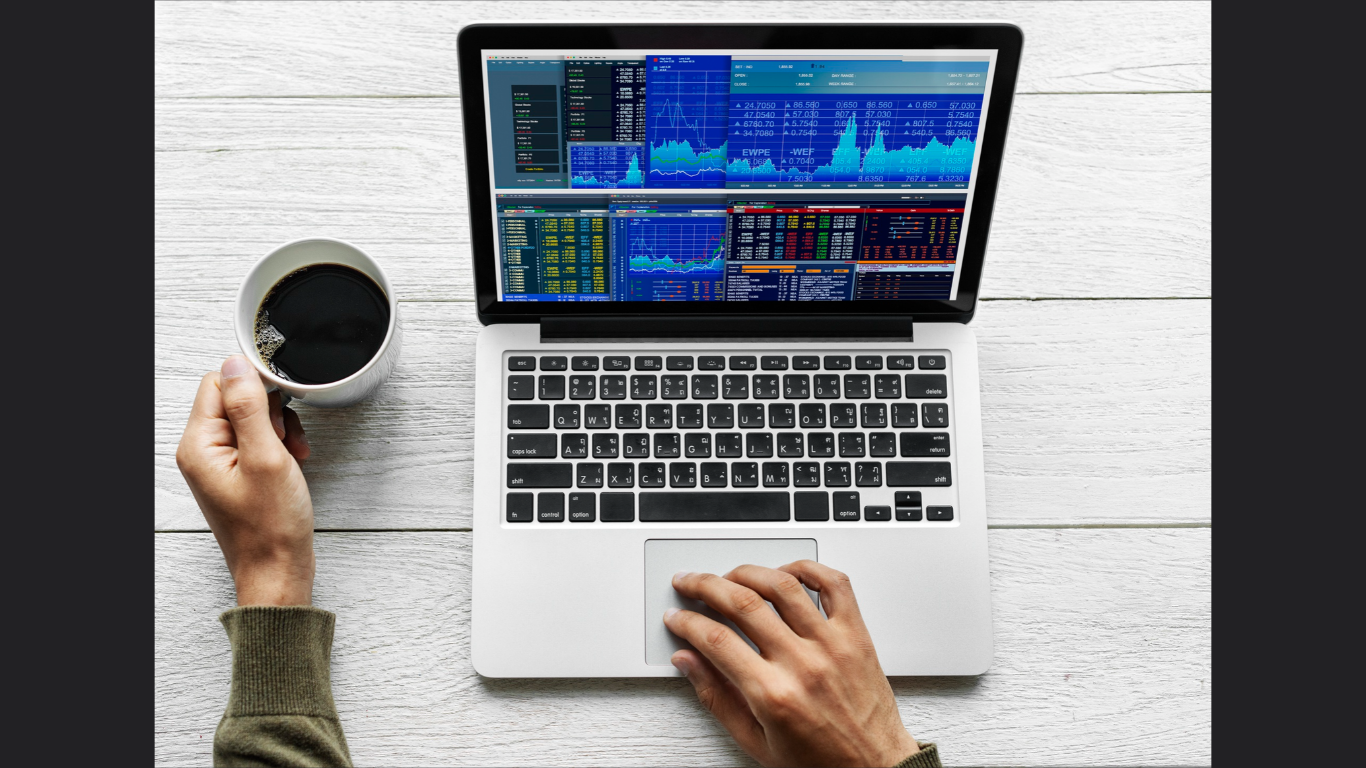
If you have spent any real time trading index futures, crude oil, or sovereign debt, you already know the uncomfortable truth: standard charting software is designed for an era of trading that no longer exists.
Most retail platforms still hand you the exact same toolset popularized in the late 1990s candlestick charts, lagging mathematical oscillators (RSI, MACD), and static Depth of Market (DOM) ladders where numbers flicker faster than the human eye can process. Meanwhile, institutional prop desks and high-frequency algorithms are trading the live Central Limit Order Book (CLOB), hunting stop clusters, and leaning on passive liquidity walls.
If you want to compete in modern derivatives markets, your software stack matters as much as your risk management.
Below is an objective breakdown of the best futures trading platforms for 2026, comparing execution architecture, data feeds, and the growing shift from traditional charts to order flow heatmaps.
The Big Divide: Clearing Broker vs Specialized Software
Before comparing platforms, it helps to clear up a common beginner mistake: conflating your broker with your analytical platform.
- Your Clearing Broker (e.g., AMP Futures, EdgeClear, Interactive Brokers): Holds your capital, handles margin requirements, provides clearinghouse guarantees, and routes orders to exchanges like the CME or Eurex.
- Your Analytical/Execution Platform (e.g., Bookmap, Sierra Chart, NinjaTrader): The actual software running on your screen that visualizes order flow, renders market depth, and sends execution commands to your broker via an API.
While some platforms bundle both into an “all-in-one” package, serious futures traders frequently separate the two picking a discount clearing broker with low day trading margins, and plugging it into institutional-grade charting software.
Platform Comparison at a Glance
Platform | Primary Strength | Order Book Visibility | OS Support | Best Suited For |
| Bookmap | Real-time liquidity heatmap, Level 3 MBO, iceberg tracking | High-definition continuous heatmap | Windows & Native macOS | Order flow traders, scalpers, institutional depth analysts |
| NinjaTrader | Multi-timeframe charting, automated bracket rules (ATM) | Static DOM ladder (requires 3rd party plugins for heatmaps) | Windows only | Discretionary swing/day traders and C# strategy builders |
| Tradovate | Cloud/browser simplicity, low upfront friction | Basic DOM ladder | Web, Mac, Windows, iOS/Android | Casual index futures traders wanting multi-device access |
| Sierra Chart | Raw backend power, custom C++ scripting, low resource footprint | Customizable footprint & numeric studies | Windows only | Quants, engineers, and technical backtesters |
1. Bookmap: Best for Real-Time Market Depth & Institutional Order Flow
For traders who rely on market microstructure, Bookmap remains in a league of its own. Rather than summarizing price into arbitrary 1-minute or 5-minute candlestick boxes, Bookmap renders the entire continuous auction as an intuitive, time-and-price visual heatmap.
Why It Stands Out
- Resting Liquidity Heatmap: Instead of guessing where support sits based on old swing points, you can physically see resting limit bids and offers stacked across every price tier in real time.
- Absorption vs Sweeps: Real-time volume bubbles show exact executed transactions. When a massive red volume bubble prints at a support shelf but price fails to drop, you are watching institutional limit buyers absorb market sellers live on your screen.
- Level 3 Market by Order (MBO): With a CME MBO feed, Bookmap tracks individual queue priority and flags algorithmic iceberg orders that attempt to hide size from the public book.
- Native macOS Support: While almost every legacy futures tool is trapped on Windows, Bookmap runs natively on Apple Silicon Macs without requiring Parallels or a VPS.
The Verdict: If your strategy involves scalping, reading the tape, or identifying institutional liquidity traps before they happen, Bookmap provides transparency that traditional candlestick packages simply cannot match. It consistently holds top-tier ratings across independent user communities and Trustpilot reviews for its data stability and visual clarity.
2. NinjaTrader: Best Traditional Charting & Automated Bracket Management
NinjaTrader is one of the most established names in retail futures. Acquired alongside its own clearing brokerage, it offers a mature desktop environment tailored for technical chartists.
Why It Stands Out
- Advanced Trade Management (ATM): NinjaTrader’s automated bracket orders are exceptional. You can pre-configure multi-target profit scales, automatic breakeven triggers, and trailing stops that execute instantaneously upon entry.
- Extensive Ecosystem: Thousands of commercial indicators, automated bots, and custom scripts are built on NinjaScript (C#).
- Affordable Margins: When using NinjaTrader Brokerage, day trading margins on Micro contracts (MES, MNQ) sit at competitive retail rates ($50 per micro).
The Trade-Off: The platform is Windows-only and heavily reliant on traditional candlestick charts and numerical DOM ladders. If you want visual heatmaps or advanced order flow, you generally have to bolt on expensive third-party plugins.
3. Tradovate: Best for Cloud Accessibility & Multi-Device Trading
Tradovate pioneered the modern cloud-first futures model. If you do not want to configure complex desktop data feeds, manage local databases, or install local software, Tradovate is the most accessible choice.
Why It Stands Out
- Trade Anywhere: Because the platform runs in a modern web browser, you can seamlessly transition from a MacBook to a Windows desktop to an iPad without losing your workspace layout.
- Simple Commission Structures: Offers flat membership tiers alongside traditional per-contract commission pricing.
- Clean Interface: The charting and DOM interfaces are modern, stripped of the clunky 2000s design language found in legacy software.
The Trade-Off: Web-based architecture cannot handle unthrottled Level 3 tick feeds. During periods of massive market volatility (like a surprise CPI print or FOMC rate decision), browser memory constraints can lead to display lag compared to native desktop engines.
4. Sierra Chart: Best for Quantitative Traders and C++ Backtesters
Sierra Chart is the choice of quantitative purists, engineering-minded day traders, and prop firm veterans who prioritize software efficiency above all else.
Why It Stands Out
- Uncompromising Performance: Written in raw C++, Sierra Chart consumes minimal system resources and can process dense historical tick archives without flinching.
- Total Customization: If you know how to code in C++ or use advanced spreadsheets, you can build custom mathematical studies, footprint variations, and custom DOM ladders.
- The Denali Data Feed: Sierra’s proprietary data service provides reliable, unthrottled tick data directly from the exchanges.
The Trade-Off: The user interface has a steep learning curve. Configuring charts, historical services, and custom studies requires patience and technical know-how. Like NinjaTrader, it is strictly Windows-based.
Micro Futures: The Great Equalizer for 2026
One of the best developments for modern futures traders has been the explosive growth of the CME Micro E-mini suite (MES, MNQ, M2K, MYM).
At one-tenth the size of standard E-mini contracts, Micro futures allow you to trade institutional derivatives with fractions of the capital:
- A 1-point move in the E-mini S&P (ES) equals $50.00, whereas that same 1-point move in the Micro E-mini (MES) equals $5.00.
Because both contracts trade on identical underlying pricing, savvy traders use platforms like Bookmap to read the massive, liquid order book of the full-size ES contract while executing their smaller positions in the MES. You get institutional market visibility without taking on full-size contract volatility.
Which Platform Matches Your Trading Style?
- If you trade pure price action, volume absorption, and market microstructure: Run Bookmap. Pairing its visual heatmap with an unthrottled data feed (like Rithmic or dxFeed) gives you an immediate window into what algorithmic participants are doing.
- If you trade traditional candlestick patterns and rely on automated multi-bracket orders: Choose NinjaTrader.
- If you prioritize trading on the go across Mac and mobile browsers: Opt for Tradovate.
- If you are a quantitative developer backtesting automated C++ algorithms: Choose Sierra Chart.
Don’t let outdated charting tools handicap your execution. Take advantage of platform trials, test how different tools handle high-volatility sessions, and pick the software that gives you real transparency into where liquidity lives.
Blog received via e-mail