A computer vision model and a hardware product aren’t the same thing. A model is a file that scores well on a benchmark. A hardware product is a physical device that must run this model reliably on a specific chip, within a power budget, for years, in conditions no one has tested in the lab. Most CV vendors are built to deliver the first. Far fewer are built to deliver the second.
This gap arises when a hardware startup or product team hires a CV specialist and later discovers that the company has never integrated a model into firmware, has no real ties to chip vendors, and can’t answer basic questions about power use or thermal behavior. As a result, the model works, but the product doesn’t ship.
This list highlights 6 reliable partners that work at the hardware-software boundary and have shipped physical products with embedded CV. Evaluate the vendors from this article and find your best computer vision development company.
The Missing Piece in CV Hardware Projects
Ask a CV vendor if they do “edge AI,” and almost all of them will say yes. Ask what chip they last deployed to, what the inference latency was at that chip’s clock speed, and how they handled thermal throttling during continuous operation, and the list gets short fast. “Edge AI” has turned into a marketing term for anything that isn’t a server call.
The real work means quantizing a model to fit a tight memory budget, writing the glue code between a vision pipeline and a real-time operating system, and tracking down why accuracy drops when a camera sensor heats up after two hours of use. That takes firmware and hardware engineering experience that most AI-first companies don’t have.
The six companies below were selected because they have documented delivery at this exact intersection: physical hardware, embedded systems, and computer vision combined into a single shipped product, not handed off in pieces to separate vendors.
Top Computer Vision Development Company: a Vendor’s List
Vendor lists in this space recycle the same names, ranked by Clutch score or marketing spend rather than by what those companies have shipped. This one takes a different approach. It’s organized as a reference: company, what they’re known for, and one fact you can verify. So, a buyer can scan it in under a minute and decide which profiles are worth a closer look.
The companies below all have documented computer vision delivery across different deployment contexts: embedded hardware, enterprise data platforms, manufacturing, and applied product engineering. No one is included solely on the strength of a service page. Each entry is backed by at least one verifiable project, client reference, or technical outcome.
| Company | Known for | Verifiable fact |
| SQUAD | Edge AI and smart camera engineering | 900+ shipped projects, 70+ physical devices, 6,500 m² in-house lab |
| Sirin Software | Embedded firmware with CV layered in | 2024 Clutch Global Award winner for IoT services, 4.8 Clutch rating |
| Indeema Software | AI embedded directly into IoT firmware | 120+ IoT projects delivered, 5.0 Clutch rating |
| Grid Dynamics | Production-scale visual intelligence for retail and manufacturing | Published tire recognition CV case study built on AWS |
| Devox Software | Manufacturing quality control CV | ISO 9001 and ISO/IEC 27001 certified, ~30% faster time to market via AI Solution Accelerator |
SQUAD
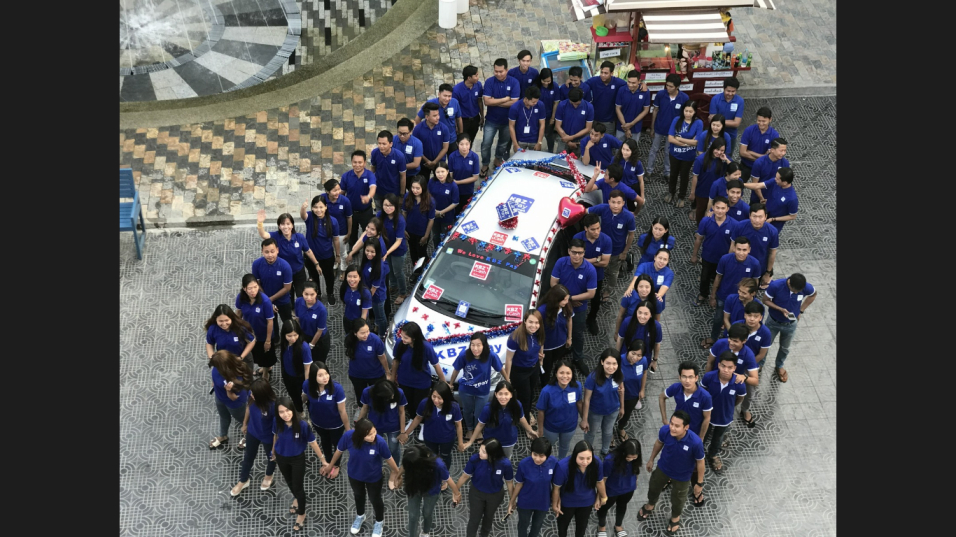
SQUAD is a computer vision development company built around the integration problem. The team owns the entire stack for a camera product: PCB design, firmware, edge AI model development, ISP tuning, cloud backend, and mobile app. This means there’s no handoff where one team trains a model, and another team has to make it work on the device. With 700+ engineers and a 6,500 m² Innovation Lab for thermal, image quality, and connectivity testing, the company has delivered 900+ projects and 70+ physical devices to production.
The CV-specific work covers model pruning, quantization-aware training, and hardware-aware optimization for chips like Qualcomm, Ambarella, SigmaStar, OmniVision, and ARM Cortex-M. These processors are used in security cameras, dashcams, and industrial sensors. In one documented engagement, the team built and optimized edge-computer-vision algorithms across more than 20 projects, delivering real-time multi-class motion detection and achieving a higher motion-detection rating on constrained hardware. For a hardware product team, this is the difference between a vendor who can talk about quantization on a sales call and one who has already done it on the specific chip your product uses.
Sirin Software
Sirin Software, headquartered in Florida with an R&D center in Kyiv, has operated since 2014 across hardware design, PCB layout, FPGA design, firmware development, IoT, and computer vision. The company positions its offering as AI and computer vision built on embedded systems. Sirin is a 2024 Clutch Global Award winner for IoT services, holds a 4.9 Clutch rating, and lists Microsoft and Infineon as partners.
Documented work includes firmware for a commercially released smart hose timer with cloud and mobile connectivity, an in-building radio communications system for first-responder networks, and a high-speed network intrusion detection tool using packet inspection technologies. Project costs range from $10,000 to over $1 million, reflecting a mix of smaller embedded builds and large product engagements. Sirin is a strong option for teams whose main need is firmware and hardware engineering, with CV as one capability inside a broader embedded system.
Indeema Software
Indeema Software is a global engineering company with more than 15 years in what it calls the Artificial Intelligence of Things: AI built directly into firmware and connected devices. The company has delivered 120+ IoT projects across energy, oil and gas, agriculture, healthcare, and smart home applications, supported by a 100+ person R&D hub and a 5.0 Clutch rating.
Its positioning is: embedding AI into firmware and smart devices enables on-device learning and decision-making, cuts cloud dependency, and improves performance and resilience. Documented work includes industrial equipment diagnostics using vibration signal analysis and air quality monitoring systems that combine sensor data with cloud platforms. For product teams where CV is one signal in a larger IoT sensor stack (e.g., vision combined with vibration, air quality, or other telemetry), Indeema’s IoT-first engineering background is directly relevant.
Grid Dynamics
Grid Dynamics is a digital engineering company with documented computer vision work across retail product discovery, manufacturing visual quality control, and an AI for Visual Process Monitoring Starter Kit that uses vision-language models to monitor retail, logistics, and manufacturing processes in real time. A published case study describes deep learning-based tire recognition that combines computer vision models with AWS infrastructure for production deployment.
This company stands apart from the more hardware-centric firms on this list because its CV strength is production-scale visual intelligence for operational monitoring, such as automated quality control on a manufacturing line or product discovery in e-commerce. For a team building a vision system that monitors an existing physical process (a production line, warehouse, or retail floor) rather than embedding AI into a new physical device, Grid Dynamics’ operational CV experience is the more relevant fit.
Devox Software
Devox Software is an ISO 9001 and ISO/IEC 27001 certified software development company with a dedicated computer vision practice for manufacturing quality control. Its CV service is built around cutting time-to-market by about 30% compared with a fully custom build from scratch, using an internal AI Solution Accelerator alongside standardized CI/CD, automated QA, and infrastructure-as-code practices.
In its technical material on resilient computer vision in manufacturing, Devox describes an operational pattern in which vision system touchpoints act as feedback triggers. Operators annotate anomalies directly on captured frames, and that data flows into a shared review process across production, engineering, and quality teams. This is a more mature view of post-deployment monitoring than most vendors offer. Devox is a strong fit for manufacturing and supply chain teams that need a vision-based quality control system built into existing production workflows, with ISO-certified handling of production imagery.
Where Each Company Fits
The five profiles above span a range of hardware involvement, from full PCB-to-cloud ownership to CV added to existing IoT or manufacturing workflows. The table below makes it explicit so you can match a vendor to your project before you dive into individual case studies.
| Company | Strongest fit | Integration depth | Best for |
| SQUAD | Full-cycle camera and edge device products | PCB to chip-level model deployment | New hardware products needing AI on the device |
| Sirin Software | Embedded firmware with CV as one layer | FPGA, PCB, firmware-first engineering | IoT products where CV supports a broader embedded system |
| Indeema Software | AIoT and sensor-fused systems | On-device AI embedded in firmware | Multi-sensor IoT products combining vision with other telemetry |
| Grid Dynamics | Operational visual intelligence at scale | Cloud-based CV for existing physical processes | Monitoring an existing line, floor, or process, not new hardware |
| Devox Software | Manufacturing quality control CV | ISO-certified data pipeline for production imagery | Manufacturing teams adding vision QC to existing operations |
Three Questions That Reveal Experience
- What was the last chip you deployed a model to, and what was the inference latency at its clock speed? A vendor with real embedded experience will give you a specific number on a specific processor. A vendor without it will fall back on vague phrases about “optimized models” and “edge-ready architectures.”
- How did you handle a case where the camera sensor’s output degraded under heat after long-term use? Every embedded camera vendor runs into this at some point. Cloud-only AI vendors don’t, because their models never run on physical hardware in real conditions.
- Who owns the firmware once the model is integrated—your team or ours, and for how long? Embedded systems need firmware updates throughout the product’s life, not just at launch. If a vendor can’t answer this clearly, they’ve likely never carried a hardware product through its full lifecycle.
Conclusion
A top computer vision development company for a hardware product is the one that has already taken a model through firmware integration, chip-specific optimization, and field deployment.
Here’s how the companies in this list line up:
- SQUAD: Owns the full path for new camera and edge-device products, from PCB and firmware to on-device model deployment and testing.
- Sirin Software: Brings strong embedded and IoT engineering, with computer vision added as one layer inside a broader embedded system.
- Indeema Software: Focuses on IoT-first engineering, where CV is one signal in a multi-sensor stack that also includes vibration, air quality, or other telemetry.
- Grid Dynamics: Best suited to teams that need production-scale visual intelligence to monitor an existing physical process, such as a line, warehouse, or retail floor.
- Devox Software: Fits manufacturing teams that want to add vision-based quality control to existing operations, backed by ISO-certified handling of production imagery.
When you talk to any vendor, ask for the specific chip and deployment. This one question will quickly show you who has done this work in the real world.
Article received via email