Temporary locations often present unique security challenges due to their rapidly changing environments and valuable onsite assets. Fast installation and adaptability are crucial for addressing theft, vandalism, and safety risks that can escalate quickly. Versatile surveillance strategies help overcome visibility and resource gaps common at construction zones, event sites, and remote operations.
Rapidly evolving projects and transient venues demand flexible approaches to safeguarding property and people. The use of mobile surveillance trailers offers organizations a pragmatic solution for monitoring short-term sites where traditional security systems lack practicality. These units combine essential technologies to support consistent oversight, even under changing conditions. For example, a laydown area on a construction site storing high-value equipment may need temporary monitoring as work progresses; during a multi-day festival, the trailers can be repositioned each night to watch over changing entry points and cash handling areas. Understanding the mechanics and benefits of such mobile security platforms helps organizations reduce losses and ensure compliance in dynamic environments.
Risks scale quickly at temporary and outdoor sites
Short-term worksites and event areas often face heightened security exposure. Limited lighting, moving boundary fences, and irregular patterns of visitor access can leave gaps that attract theft and vandalism. For instance, on a construction project, thieves may exploit concentrated night activity around equipment containers or newly delivered materials, especially if lighting is inconsistent or fencing is rearranged as tasks move. At an outdoor sporting event, the highest risk periods may be after hours when only a skeleton crew remains on site and perimeter controls are weakest.
For many businesses, inconsistent staffing during off-hours increases vulnerability, especially when combined with valuable equipment left in open spaces. Rapid changes on site—with tools or vehicles relocated daily, or temporary fencing shifting as the site expands—require security measures that can adapt responsively to unpredictable conditions typical at busy event gates or in utility asset yards located outside populated areas.
Understanding relocatable surveillance system components and setup
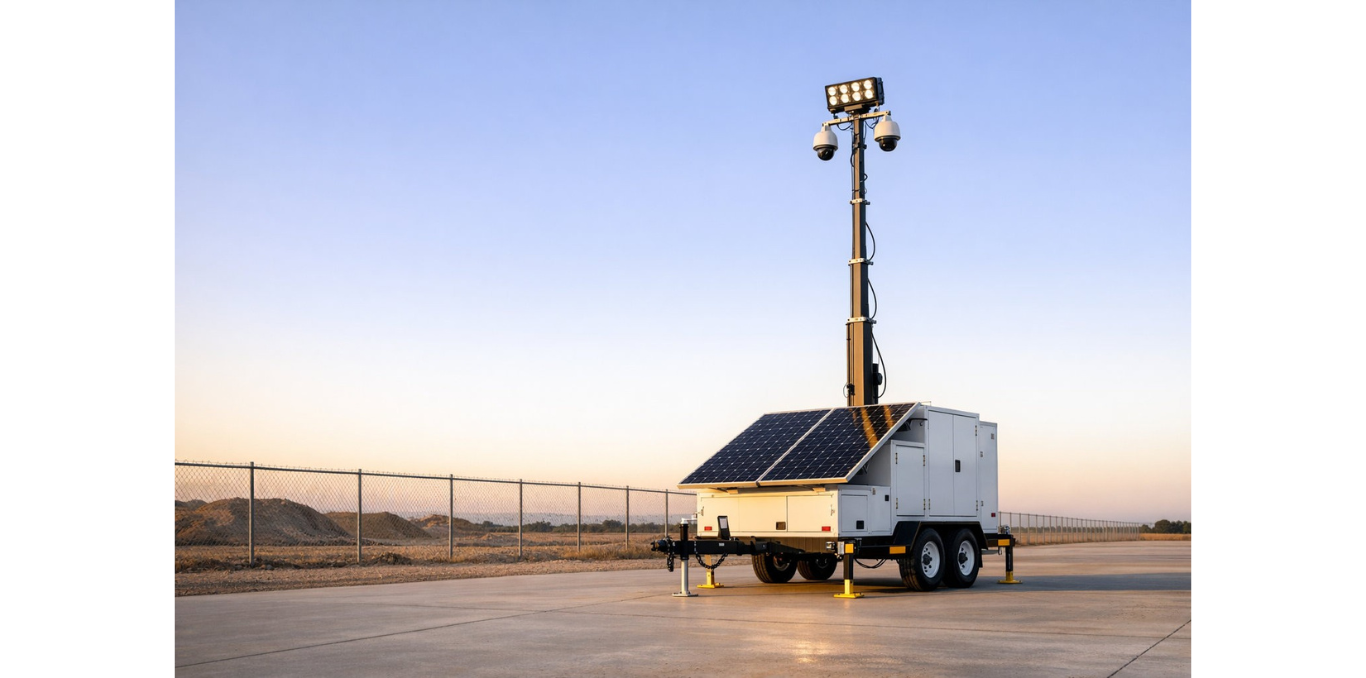
Unlike fixed camera installations, relocatable surveillance units feature an elevated platform, robust cameras, and independent power sources. Solar panels, batteries, or generators extend their operational range to areas without permanent utility connections, which is crucial for monitoring activities such as overnight work on isolated infrastructure or at a logistics overflow yard temporarily hosting excess vehicle inventory.
Connectivity options, such as cellular or wireless links, allow operators to access real-time video, manage alerts, and review footage remotely. For example, at a remote emergency staging area, managers can receive instant notifications if motion is detected near critical supply caches. Integrated floodlighting and motion detection help maintain actionable awareness throughout changing shifts and environmental conditions, supporting rapid response to site deliveries or unauthorized entry.
Key scenarios driving demand for temporary monitoring
Temporary deployments are particularly valuable on construction and infrastructure projects where assets are dispersed and boundaries change frequently. For example, as cranes and heavy vehicles cycle between zones on a large build, mobile surveillance can track equipment safety and deter unauthorized entries at different perimeter points. Outdoor festivals and sporting events also benefit from repositionable cameras that adapt to dense crowd movement, such as shifting from main gates during setup to stage-side or vendor cash handling areas as activity intensifies.
Remote utilities, staging areas during emergency response, and logistics overflow yards are further examples of sites where mobile monitoring helps reduce loss and supports rapid incident escalation. For instance, temporary monitoring at a water utility tower or isolated renewable energy facility helps deter copper theft and trespassing, while emergency response teams may use surveillance trailers at a pop-up field hospital to secure restricted access and sensitive supplies. In many of these cases, trusted site management professionals look for rapid installation and takedown without lengthy commitments.
Operational advantages extend beyond simple crime prevention
Mobile monitoring delivers multifaceted value for short-duration sites by enabling faster incident awareness and responses to emerging threats, such as reporting an attempted breach at a temporary generator setup or resolving access disputes during event pack-downs. In addition to deterrence, these platforms enhance contractor accountability with verifiable records of site activities—especially relevant when several subcontractors share a workspace, or when disputes arise over scheduled deliveries or work zones.
They also support dispute resolution, health and safety oversight, and documentation requirements that are increasingly standard in many industries. By providing reliable video logs, businesses can protect interests and uphold compliance in environments where consistent supervision is challenging. At logistics yards or festival set-up areas, documentation from mobile surveillance often helps clarify causes of property damage or verify reported incidents.
Choosing between temporary systems and other options often involves balancing budget constraints, risk profiles, and resourcing needs. Mobile surveillance trailers are regularly considered by managers seeking scalable coverage that evolves as the site’s operations or layout change—such as expanding a construction boundary or adding new access roads for a pop-up event.
Essential governance and deployment practices for compliance
Clear privacy notice practices are vital wherever surveillance is introduced, ensuring everyone on site is aware of monitoring activities. Secure storage and defined data retention periods protect sensitive footage, particularly in multi-contractor environments where access controls matter—such as when multiple event production teams require separate review permissions.
Effective implementation starts with a thorough site assessment and placement strategy, considering lines of sight, potential blind spots, and points of entry. For instance, installing units to watch over tool containers on a construction site or near ticket sales tents at an event can help address key risk areas. Connectivity planning, escalation workflows, and ongoing performance reviews help measure the system’s impact on incident reduction and overall site safety, while regular maintenance ensures continued coverage throughout rapid shifts in site layout. Careful adherence to industry frameworks, supported by transparent policies and performance metrics, maintains trust among contractors and stakeholders alike. Regular training and audit processes ensure all personnel handle recorded materials responsibly and in line with legal standards.
Article received via email