Local search connects nearby buyers to businesses the moment purchase intent peaks – making it one of the highest-converting channels available to SMBs.
Most small business owners put their marketing dollars into social media ads, Google PPC, and word-of-mouth referrals. All of those have a place. But the channel with the best long-term return – the one most SMBs underinvest in – is local search.
According to the SOCi Consumer Behavior Index (2024), 80% of US consumers search online for local businesses every week. Nearly a third do it daily. That’s not a trend worth watching. It’s an audience that’s already looking, right now, for what you sell.
This guide breaks down why local SEO converts better than most paid channels, what the ROI data actually says, and how to build a strategy that holds up over time.
Why local search intent is different from general SEO
Local search results appear in Google’s Map Pack, giving top-ranked businesses immediate visibility to nearby buyers who are ready to act.
Not all search traffic is equal. Someone searching for “best running shoes” is browsing. Someone searching “running shoe store in Arlington, VA” has already made most of their buying decision – they just need to know where to go.
That distinction matters financially. Google data (cited in BrightLocal’s 2026 statistics roundup) shows 76% of people who search for something nearby on their smartphone visit a business within a day. And 28% of those local searches end in a same-day purchase.
Local SEO targets exactly that audience – searches with geographic intent, whether that’s “near me” queries, city-specific searches, or neighborhood-level terms. According to Google, 46% of all searches on the platform carry local intent. That’s nearly 1 in 2 searches, signaling that location matters to the person asking.
For businesses that haven’t invested in this channel yet, the gap between potential and actual visibility is wide. Working with a Local SEO company in Northern Virginia is one example of how SMBs in competitive markets close that gap quickly – accessing proven local ranking strategies without the cost of building in-house expertise.
The revenue case: what the ROI data actually says
Local SEO isn’t just a marketing activity – it’s a financial decision. The numbers make that case directly.
First Page Sage data shows the average ROI for a local SEO campaign after three years exceeds 300%. That figure compounds because organic rankings don’t disappear when you stop paying for them, unlike PPC campaigns that go dark the moment the budget runs out. Paid ads buy attention; local SEO builds an asset.
The opportunity gap is also worth noting: only 35% of small- to medium-sized businesses maintain an active Google Business Profile, according to a 2025 SMB Marketing Report. That means most of your local competitors aren’t showing up where the buyers are looking. Early investment in local search has a compounding advantage precisely because adoption is still low.
Understanding how local search feeds into your broader conversion funnel is equally worth the time. This piece on building a revenue-driven marketing funnel covers how businesses connect top-of-funnel traffic to actual revenue outcomes.
Google Business Profile: the foundation of local visibility
Your Google Business Profile (GBP) is the single most important free asset in local SEO. It controls whether your business appears in Google Maps, the local pack, and knowledge panel results – the placements that capture the highest-intent clicks.
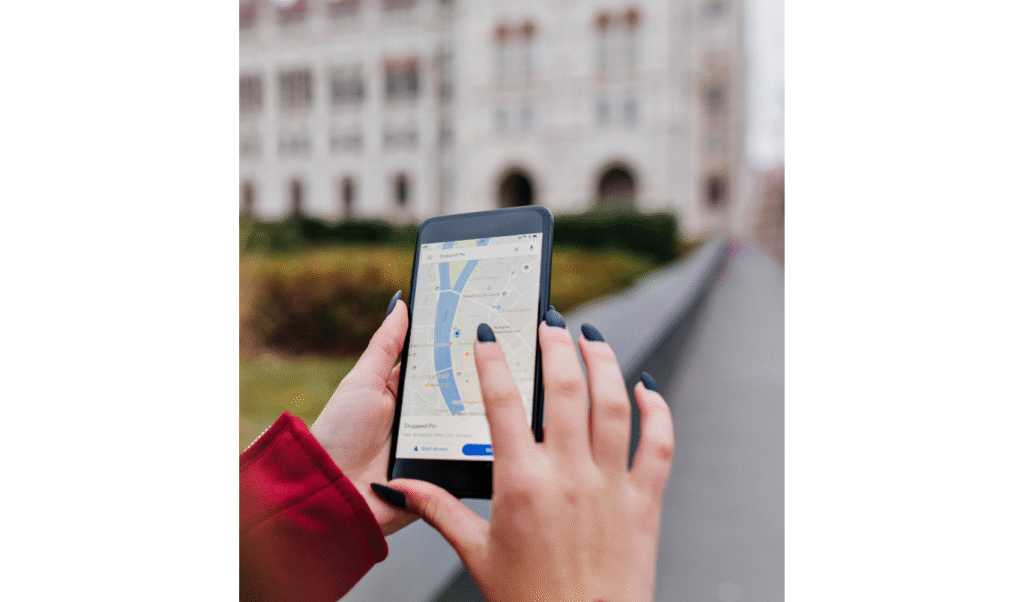
The impact of a complete profile is measurable. Google’s own data shows a fully optimized GBP makes customers 2.7x more likely to view a business as reputable and 50% more likely to consider a purchase. Yet only about a third of SMBs have one set up and actively maintained.
What “complete” actually means: accurate business name, address, and phone number (NAP consistency matters – mismatches hurt rankings), correct primary and secondary categories, at least 10 current photos, business hours kept up to date, Q&A answered, and regular posts. The Map Pack – Google’s top three local results – gets 42% of all clicks in local searches. Getting into those three spots is the primary goal of most local SEO work.
The Google Business Profile help center walks through the setup process in detail. Worth starting there if your listing is unclaimed or incomplete.
Reviews, reputation, and your revenue stack
Reviews affect local SEO in two distinct ways: they influence your rankings, and they directly affect whether a potential customer picks up the phone.
BrightLocal’s Local Consumer Review Survey (2026) puts the threshold clearly: 68% of consumers won’t consider a business with a rating below 4 stars. That’s not a soft preference. It’s a hard filter that blocks more than two-thirds of your potential customers before they’ve even read a word about what you offer.
The practical fix isn’t complicated, but it requires consistency. Ask every satisfied customer for a review – via email follow-up, text, or a card handed over at the point of sale. Respond to every review, positive or negative. BrightLocal’s same survey found 89% of consumers are more likely to choose a business that responds to its reviews over one that doesn’t.
You don’t need hundreds of reviews to compete in most local markets. What you need is a steady, ongoing stream and a genuine response habit. Businesses with 20 current reviews from the last six months will typically outrank a competitor sitting on 200 reviews from three years ago.
For more on how digital reputation fits into a wider growth strategy, this overview of proven marketing tips to expand your reach is a useful companion read.
Building authority through local backlinks
A Google Business Profile and solid reviews will get you far, but local backlinks are what separate businesses that rank in the top three from those stuck on page two.
Backlinks are links from other websites pointing to yours. Not all of them carry the same weight. Understanding dofollow and nofollow links helps business owners evaluate whether the links they’re earning actually move the needle in search rankings – or just add noise to their backlink profile.
The best sources for local authority links are local news sites, chambers of commerce, industry-specific directories, and community organizations. A feature in a regional business journal, a listing in your city’s chamber directory, or a sponsorship mention on a local nonprofit’s site all pass real link equity. These carry more weight than generic directory submissions because they’re editorially earned, geographically relevant, and typically from trusted domains.
One distinction worth keeping clear: local citations (NAP mentions on directories like Yelp and Apple Maps) aren’t the same as backlinks. Citations help with consistency and map-based rankings. Actual backlinks – editorial links with anchor text pointing to your site – are what build long-term domain authority.
For agencies or business owners who want to scale link acquisition without managing outreach internally, white label backlinks offer access to a specialist’s link-building network through a partner arrangement – without hiring a full SEO team.
A practical local SEO action plan
A strategy without steps doesn’t move anything. Here’s what the actual work looks like:
Claim and fully optimize your Google Business Profile first – if it’s incomplete, every other effort underperforms. Then audit NAP consistency across all your directory listings: Yelp, Apple Maps, Bing Places, and any industry-specific directories where your business is listed. Inconsistent addresses and phone numbers create ranking friction.
Build a review acquisition process that runs without you having to remember it manually. A short email or text sent 24 hours after a sale, with a direct link to your Google review page, is enough. Next, create location-specific content on your website – service area pages, local blog posts that reference neighborhood names and nearby landmarks. That signals geographic relevance to Google beyond your GBP.
Finally, start earning local backlinks. Get listed in your chamber of commerce, sponsor a local event, and pitch a regional news outlet with a story angle tied to your expertise. Google’s Think With Google research on micro-moments explains why showing up at the exact point of local intent drives conversions that paid campaigns often miss.
Businesses without a dedicated in-house SEO can also outsource this systematically. For a broader look at how to scale marketing without adding headcount, this guide on scalable marketing for growing businesses covers the decision framework well.
The bottom line
Local SEO isn’t a trend, and it’s not a technical nicety. It’s a durable competitive advantage for any business that serves customers in a defined geographic area.
The data is blunt: nearly half of all Google searches carry local intent, 76% of those searches lead to a store visit within 24 hours, and the average three-year ROI for a local campaign exceeds 300%. Meanwhile, most small businesses haven’t fully claimed their spot in local search. That gap won’t last.
The businesses putting in the work today – optimizing their profiles, earning reviews, building local authority – will be the ones filling the Map Pack when their competitors finally catch on.
Article received via email