Modern dietary supplement fulfillment center with organized shelving, climate-controlled storage areas, inventory management systems, and staff preparing orders in a clean warehouse environment.
The US dietary supplement market hit $74.15 billion in 2025, growing 7.1% year over year. The Nutrition Business Journal 2026 Supplement Business Report projects that figure approaching $99.96 billion by 2029. Globally, Mordor Intelligence estimates the market at $151.82 billion in 2026, with a projected climb to $187.22 billion by 2031.
Those numbers tell a straightforward story. The supplement industry is entering a rapid expansion phase that touches every distribution channel from DTC storefronts to Amazon marketplace to retail wholesale. But scaling creates a bottleneck that many brands underestimate: fulfillment.
Supplements are not ordinary consumer goods. They require climate-controlled storage, lot-level traceability, First-Expired-First-Out inventory rotation, and strict adherence to FDA regulations. A generalist 3PL that handles apparel and electronics cannot pivot to handling probiotic capsules without significant investment in compliance infrastructure. For supplement brand leaders, choosing the right fulfillment partner is becoming as consequential as the formulation itself.
The Supplement Market Demands Specialized Infrastructure
Climate-controlled supplement fulfillment warehouse with organized inventory zones and temperature monitoring.
The scale of market growth creates pressure on supplement fulfillment infrastructure that generalist logistics providers cannot easily absorb. When the US market alone is projected to add roughly $25 billion in value over four years, the volume of products moving through warehouses increases proportionally. This is not a gradual uptick. It is a structural market change demanding logistics partners with supplement-specific capabilities at scale.
According to the Nutrition Business Journal, the US market grew to $74.15 billion in 2025, driven by an aging population, wellness-focused millennials, and expanded distribution through social commerce platforms. Asia-Pacific is the fastest-growing region globally, with supplement adoption rising across India, China, and Southeast Asia. Brands expanding internationally need partners who understand both local regulatory frameworks and cross-border logistics.
What Makes Supplement Fulfillment Different From General E-Commerce
Quality control workstation with supplement bottles and label verification equipment.
Dietary supplement fulfillment requires identity testing, lot-level traceability, and stringent quality assurance that go well beyond standard e-commerce picking and packing operations.
Most e-commerce fulfillment operations use First-In-First-Out inventory rotation. Supplement warehouses need First-Expired-First-Out, a fundamentally different approach that prioritizes products near their expiration date. Supplements have finite shelf lives. A case of omega-3 softgels sitting in a non-specialized warehouse can lose potency before reaching a customer.
The differences extend further. Supplement orders often involve subscription models with recurring monthly deliveries. That demands WMS technology capable of managing recurring schedules, automated replenishment, and intelligent inventory allocation to prevent stockouts. When inventory mismanagement creates cascading supply chain failures, the effects ripple from warehouse to customer. As seen in broader logistics contexts, the backorder domino effect can disrupt operations well beyond the initial stockout point.
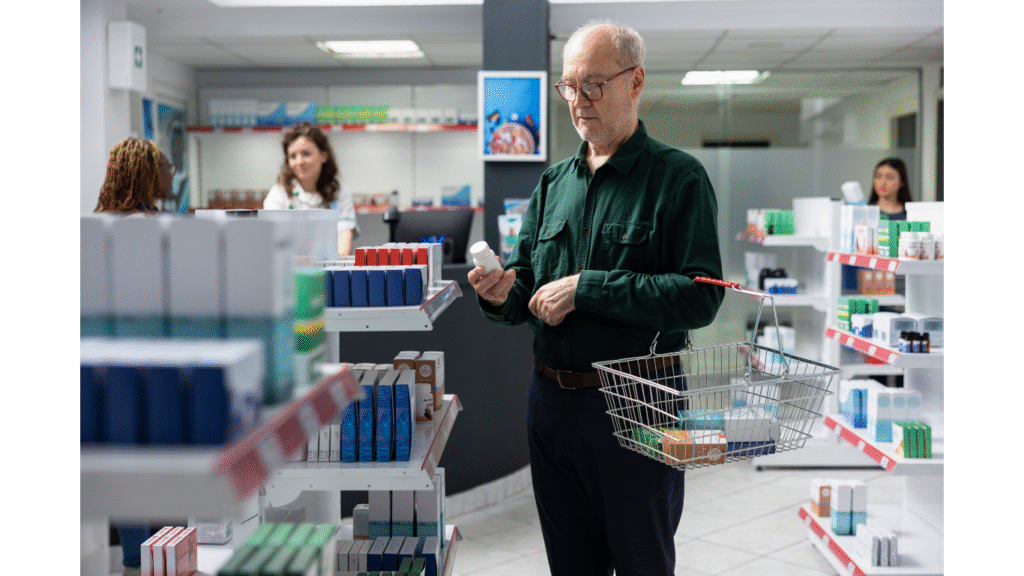
Temperature and humidity control add another layer. Probiotics, omega-3s, and softgel formulations degrade in heat above 77 degrees Fahrenheit or humidity above 60%. The FDA Small Entity Compliance Guide addresses holding and storage conditions for dietary supplements, requiring facilities to maintain environments that prevent contamination and potency loss. Generalist 3PL warehouses rarely invest in the zone-specific climate control that supplement inventory requires.
Regulatory Compliance Is the New Baseline
Supplement products inspected against regulatory compliance checklist.
FDA cGMP regulations under 21 CFR Part 111 require identity testing, lot-level traceability, and stringent quality control for all dietary supplement handling operations.
The regulatory framework for supplement fulfillment has tightened considerably. Title 21 CFR Part 111 governs all manufacturing, packaging, labeling, and holding operations for dietary supplements. Every facility that handles supplements must maintain detailed records, conduct identity testing, and implement recall-ready traceability systems.
Amazon raised the bar in Q1 2026 with a cGMP verification mandate. Supplement sellers on the platform must now submit third-party facility verification from approved organizations such as NSF, USP, Eurofins, UL, or Intertek within 90 days or face listing removal. This requirement directly affects any fulfillment partner handling Amazon-bound inventory.
The FDA continues to enforce compliance through Import Alert 54-14, updated January 22, 2026, which authorizes detention without physical examination for dietary supplement products from firms not meeting cGMP requirements. For brands importing ingredients or finished products, a non-compliant fulfillment partner creates direct regulatory exposure.
Vetting fulfillment partners is a compliance necessity. Vendor fraud prevention and compliance deserve the same scrutiny applied to other high-risk vendor relationships.
How To Evaluate a Supplement Fulfillment Partner
Selecting a fulfillment partner for supplement products requires looking beyond standard 3PL capabilities. The right partner should demonstrate cGMP-aligned facility certifications and FDA registration for supplement handling. They need WMS technology with lot-level tracking, real-time inventory visibility, and automated expiration-date flagging. Experience with supplement-specific SKUs matters more than general warehouse volume.
Scalability for seasonal demand spikes tied to New Year wellness cycles and influencer promotions is equally important. Industry trends from New Hope Network’s supplement industry analysis indicate that social commerce expansion through TikTok Shop is creating new distribution demands that fulfillment partners must accommodate, including flash-sale volume spikes that test operational capacity.
An integrated approach to the nutraceutical supply chain reduces friction points that erode margin and increase compliance risk. Companies investing in integrated supply chain models are better positioned to maintain quality control across the full product lifecycle, from ingredient sourcing through final-mile delivery.
The Fulfillment Decision Defines Market Positioning
The supplement industry’s trajectory is clear: sustained double-digit growth, expanding distribution channels, and tightening regulatory oversight. Brands that invest in the right fulfillment infrastructure now will capture market share as the sector approaches the $100 billion milestone.
Those that treat fulfillment as an operational afterthought risk inventory write-offs, compliance penalties, and lost customer trust. In a market where product quality and regulatory compliance are competitive differentiators, the fulfillment partner is not a vendor. It is a strategic lever that shapes the ability to grow.
The question facing supplement brand leaders is not whether to invest in specialized fulfillment. It is which partner can deliver the expertise, compliance infrastructure, and operational scale to support the next stage of growth.
Article received via email