Historical photos are fragile. They carry the weight of our past in every grain and scratch. As these physical copies fade, we must choose how to save them for the next century. You can now use tools like EzEnhancer.ai to bring these memories back to life in an instant. This choice sits between the speed of modern code and the slow care of human hands.
The debate over historical accuracy is growing as we reach 2026. Generative AI can rebuild a face that has been completely erased by water damage. You might use EzEnhancer AI Photo Restoration to fix a whole box of family slides in one afternoon. This technology looks at patterns to decide how a shadow should fall or how a fabric should look. It makes high quality restoration available to everyone without a high price tag.
Traditional conservators take a different path. They spend weeks on a single image to ensure every dot of color matches the era. They do not want a computer to guess the shape of a nose or the color of a dress. This manual work is a craft that values truth over beauty. It is a slow process that requires years of training and a deep knowledge of history.
Generative AI Photo Restoration
Generative AI uses neural networks to understand what a photo should look like. In 2026, these systems have moved beyond simple filters. They can now recognize specific historical contexts, such as clothing styles from the 1920s or the specific grain of 1940s film. When a photo is missing a piece, the AI fills it in by looking at millions of other images. It does not just blur the edges. It creates new pixels that look like the original ones.
This method is built for scale. If you have a thousand photos from a museum archive, a human cannot fix them all in a lifetime. The AI can process them in a few hours. It looks for common problems like mold spots, tears, and sun fading. The software then applies a fix that balances the light and brings back the sharp edges of the subjects.
Key Features of Generative AI
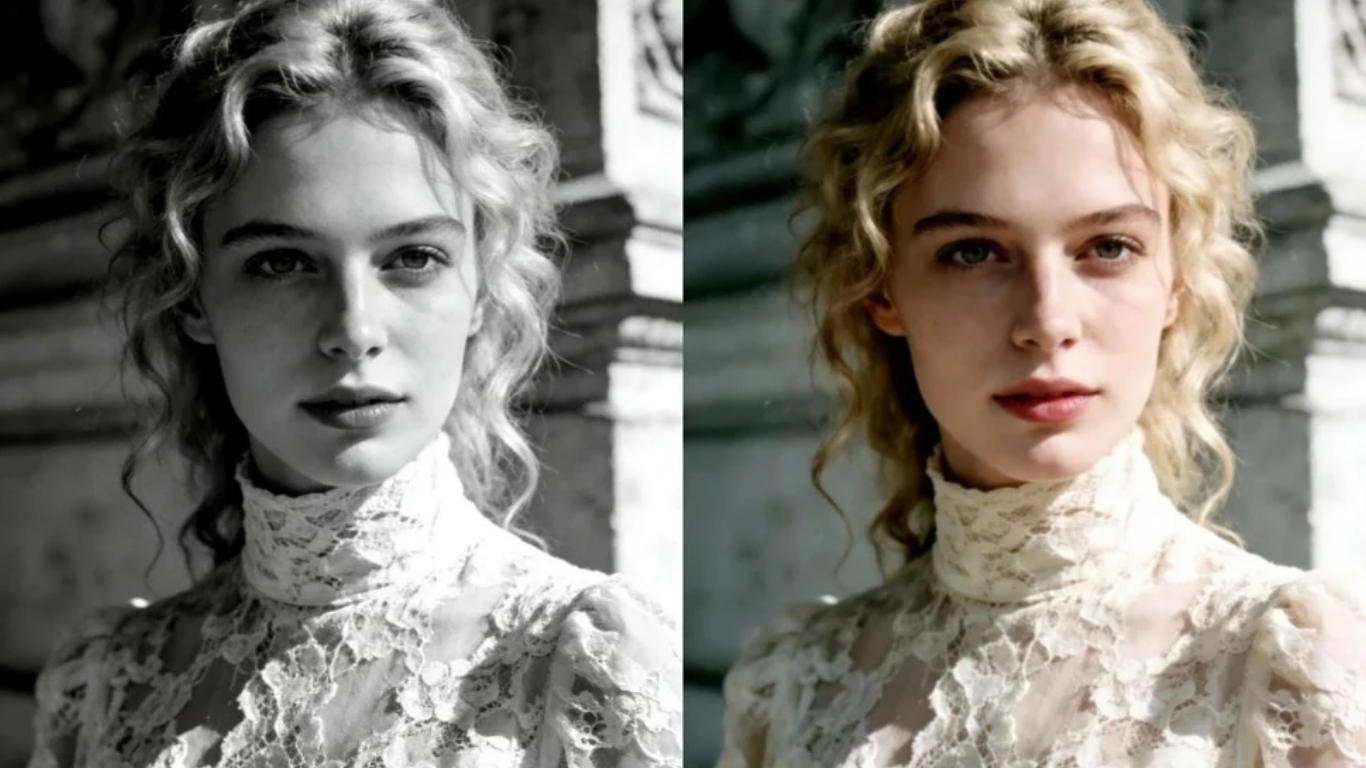
The main feature is automated reconstruction. The AI identifies faces and limbs, even if they are badly damaged. It uses a library of human features to rebuild eyes, teeth, and hair. Another feature is instant colorization. The AI studies the gray tones in an old photo and predicts the most likely colors based on the time period and lighting.
Noise reduction is also a major part of the process. Old photos often have a lot of visual static. The AI can separate this noise from the actual image details. It smooths out the background while keeping the texture of the skin or the fabric of a suit. This happens without the user needing to adjust a hundred different sliders.
Pros and Cons of Generative AI
Pros:
The speed is unmatched. You can finish a project in seconds that would take a human days. The cost is very low, often just a small monthly fee or a per-image price. It is very easy to use, so you do not need to be a tech expert to get great results. It can handle massive batches of photos at once.
Cons:
The AI can sometimes hallucinate details. This means it might add a button to a coat that was never there. It might slightly change the shape of a relative’s jaw if the damage is too heavy. It relies on its training data, so if it has not seen enough photos from a specific culture, it might make mistakes in the restoration.
Best For
Generative AI is best for family historians and hobbyists. If you have a shoebox full of old family photos, this is the right choice. It is also great for digital archives that need to make thousands of images viewable for the public quickly.
Traditional Photoshop Conservators
Traditional restoration is a manual art form. A conservator uses Adobe Photoshop as a digital canvas. They do not let the software make decisions for them. Instead, they use tools like the clone stamp and the healing brush to move pixels one by one. They often look at other photos of the same person or location to make sure they are being accurate.
These experts focus on preservation rather than just making the photo look new. They might leave a small crease if they feel that removing it would change the history of the object. They treat the digital file like a physical artifact. Their goal is to stop the decay and show the photo as it was on the day it was taken.
Key Features of Traditional Restoration
The most important feature is human judgment. A conservator can tell the difference between a coffee stain and a shadow. They use layers to keep the original image untouched while they work on a copy above it. This allows them to toggle back and forth to ensure they have not lost the original feel of the shot.
Research is another key feature. A professional will look up the specific uniform a soldier was wearing to get the medals right. They will check historical weather reports to see if the sky should be gray or blue. They use manual color grading to match the chemical look of old film stocks like Kodachrome or silver gelatin prints.
Pros and Cons of Traditional Restoration
Pros:
The accuracy is as high as it can possibly be. There is no guessing involved because the human does the research. The final product is a work of art that respects the original photographer. It is a verified process that museums and government archives trust for their most important documents.
Cons:
It is extremely expensive. You are paying for a professional’s time, which can be hundreds of dollars per hour. It is very slow. A single photo can take a week to finish if the damage is bad. You also need to find a skilled artist, as a bad manual restoration can look worse than a bad AI one.
Best For
This method is best for museums, high end galleries, and legal archives. If a photo is a one of a kind historical document, it needs a human touch. It is also for families who have one specific, very important photo they want to turn into a large print for their home.
Side by Side Comparison
The following table shows how these two methods stack up against each other in 2026.
| Feature | Generative AI | Traditional Conservator |
| Processing Time | Seconds to Minutes | Days to Weeks |
| Average Cost | Low | High |
| User Skill Level | Beginner | Expert |
| Historical Accuracy | Predictive | Verified |
| Batch Processing | Yes | No |
| Detail Creation | Algorithmic | Manual Research |
| Risk of Errors | High Hallucination Risk | Low Human Error |
| Software Required | Web Browser or App | Professional Desktop Suite |
Final Recommendation
Choosing between AI and a human depends on your goal. If you want to see your grandmother’s face clearly for the first time in years, Generative AI is the way to go. It is fast, cheap, and the results are usually beautiful. It is perfect for social media, digital albums, and general sharing. The technology in 2026 is so good that most people will never notice the small details the AI might have invented.
If you are working on a project for a museum or a history book, you should hire a traditional conservator. The risk of an AI hallucinating a historical detail is too high for serious academic work. A human expert provides a level of truth that a machine cannot yet match. They ensure that the photo remains a factual record of the past rather than a pretty recreation.
For most people, a hybrid approach works best. Use AI to do the heavy lifting and clean up the bulk of the damage. If there is a specific part of the photo that looks wrong, you can then take that file to a professional for a final touch up. This saves money while keeping the accuracy high. The future of photo restoration is not about one replacing the other, but about using the right tool for the right job.
Blog received via e-mail