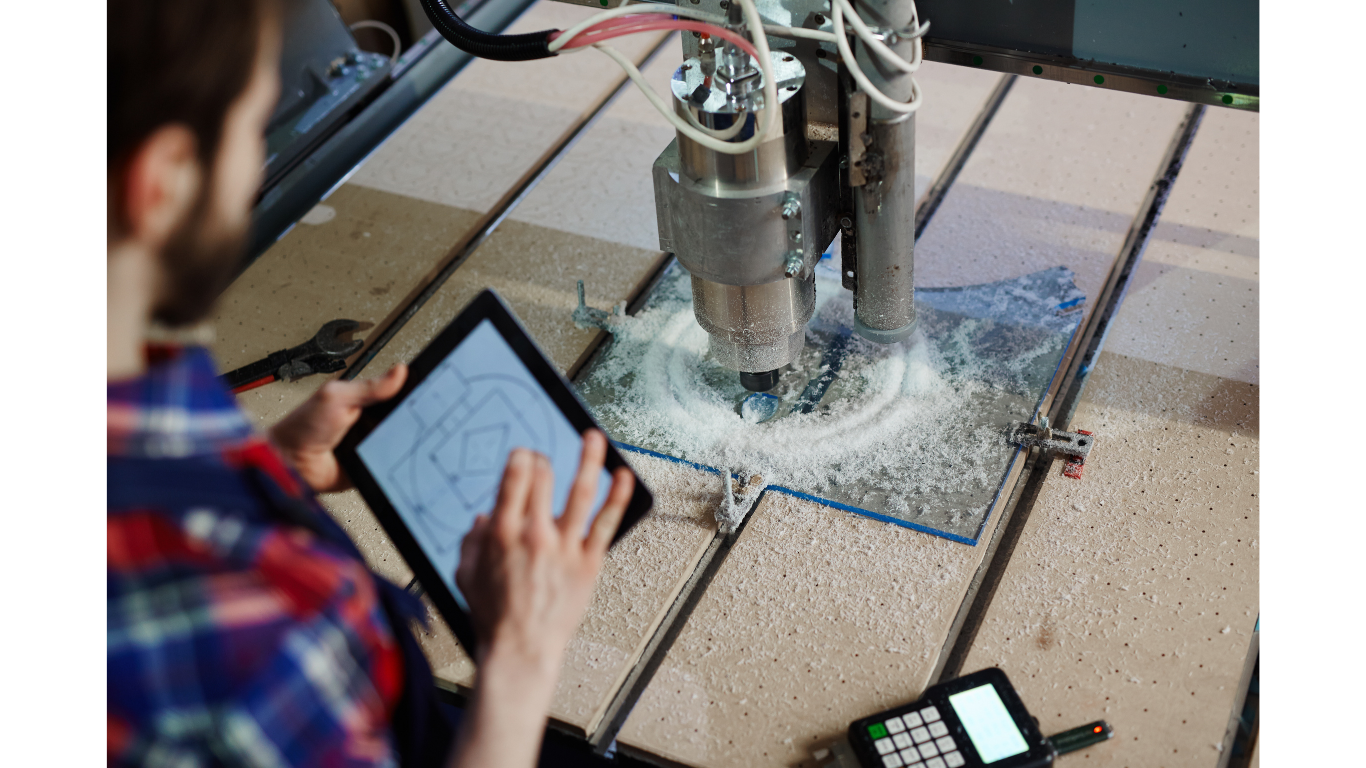
Manufacturing typically involves working with materials with high dimensional accuracy. Die cutting is one of the most common strategies for manufacturing parts in bulk. It establishes uniformity from different types of materials and helps industries that rely on precision and consistency. This article explains how this process works and its importance in production environments.
What Is Die Cutting?
Die cutting is the process of using a die to create shapes. This process includes forming, cutting, or shaping materials such as paper, plastic, rubber, fabric, or metal. It gives manufacturers an instant process for high-speed production of the same units. Cutting is a great way to ensure that different types of products remain dangling and to reduce waste during the manufacturing process; hence, many industries need it.
Types of Die Cutting Methods
There are various types of die cutting manufacturing methods, which differ from each other according to the type of material, production needs, etc. A flatbed die-cutting machine has a flat surface that is best suited for die-cutting thicker materials. On the flip side, rotary die cutting uses a cylindrical die and is best for continuous, high-speed cutting. Laser cutting uses a high-precision beam of light, enabling fine detailing and minimal material distortion.
The Benefits of Die Cutting
There are many advantages of die cutting in production facilities. It improves efficiency by enabling the manufacturing of thousands of parts in a single operation. Another significant benefit is consistency, where each piece exhibits identical traits. The process maximizes the use of material and, therefore, reduces waste. The flexibility of die cutting is appreciated by manufacturers because it allows different shapes and sizes without compromising speed or accuracy.
Material Suitability and Limitations
Die cutting is suitable for a wide range of materials, such as paper, cardboard, plastic, metal, and foam. The response of every material under pressure and its particular shape of die is varied. Higher speeds can be used for thin materials, while thick or dense materials require slower operation with heavier-duty equipment. Choosing the material correctly during die cutting will yield good results without errors or damage.
Quality Control in Die Cutting
Achieving and preserving the high quality of the end product requires constant monitoring during die cutting. Worn dies also affect the product’s accuracy. Regular calibration of presses and feed systems ensures that every piece meets the specified dimensions. The use of automated inspection tools can further reduce the percentage of errors by quickly identifying problems that might lead to delays or defects.
Applications Across Industries
The functionality of die cutting is an extra advantage for several sectors. It is used by packaging manufacturers to produce boxes, labels, and inserts that have exact measurements. The automotive industry uses die cutting for gaskets and seals, as well as for interior products. Electronics leaders are directly involved in designing insulators and flexible circuits. Die cutting is also trusted by the textile and medical industries for fabric cutting, pattern creation, and the production of sterile medical products.
Sustainability and Waste Reduction
Die-cutting efficiently can help minimize wastage. The die layout is planned carefully to minimize waste after the dies are cut. Some manufacturers recycle offcuts into new products or packaging material. As companies take the resource-conservation approach, fewer costs are incurred, and environmental impact is also reduced.
Conclusion
In present-day manufacturing, die-cutting remains an important process. It provides high volumes of accurate, repeatable parts, which is why it has become a staple of many processing industries. Bytaking a closer look at the process, the major components, and how it can be broadly used, we may understand its importance. Die cutting continues to enable efficiency, quality, and sustainability in manufacturing environments as production demand increases.
Article received via email