For many facility managers, the hardest part of office hygiene is not the occasional deep clean but the daily routine that keeps workspaces consistently presentable. A practical cleaning schedule should reflect how people use the building, including busy lifts, shared kitchens, meeting room turnover, security procedures, and access restrictions.
Once you understand these requirements, you can brief internal staff or coordinate with local commercial cleaners in Sydney who are familiar with CBD access, contractor sign-ins, lift bookings, and after-hours cleaning. The goal is to create a repeatable schedule that can still adapt as staffing levels and workplace needs change.
Map Foot Traffic and Space Types
Start with a walkthrough during both busy and quiet periods. Identify where dirt, fingerprints, spills, and clutter appear first. Entrances, lift bays, kitchens, bathrooms, and hot-desking areas usually need more frequent attention than private offices or low-traffic corridors.
For example, a law firm with back-to-back client meetings may need boardrooms reset several times a day. A busy call centre may require more frequent cleaning of shared keyboards, desks, microwaves, and other high-touch surfaces.
Mapping these patterns helps you decide where cleaning time should be concentrated instead of applying the same frequency to every area.
Prioritise High-Touch Areas, Restrooms, and Kitchens
Cleaning frequency should match hygiene risk. Door handles, lift buttons, railings, switches, shared equipment, and other frequently touched surfaces often require regular cleaning and disinfection.
Use suitable products and follow manufacturer instructions, including recommended contact times. Colour-coded microfiber cloths can also help reduce cross-contamination between kitchens, bathrooms, and work areas.
Restrooms should include toilet and urinal cleaning, mirrors, partitions, floors, soap dispensers, and paper supplies. Kitchens need regular attention to benchtops, refrigerator handles, microwave controls, sinks, and food preparation areas.
The more frequently an area is touched or exposed to moisture and food, the more often it should be cleaned.
Decide Between Daytime and After-Hours Cleaning
After-hours cleaning reduces disruption and makes it easier to vacuum, mop, clean restrooms, and use larger equipment. However, cleaners may require access cards, alarm instructions, and booked lift access.
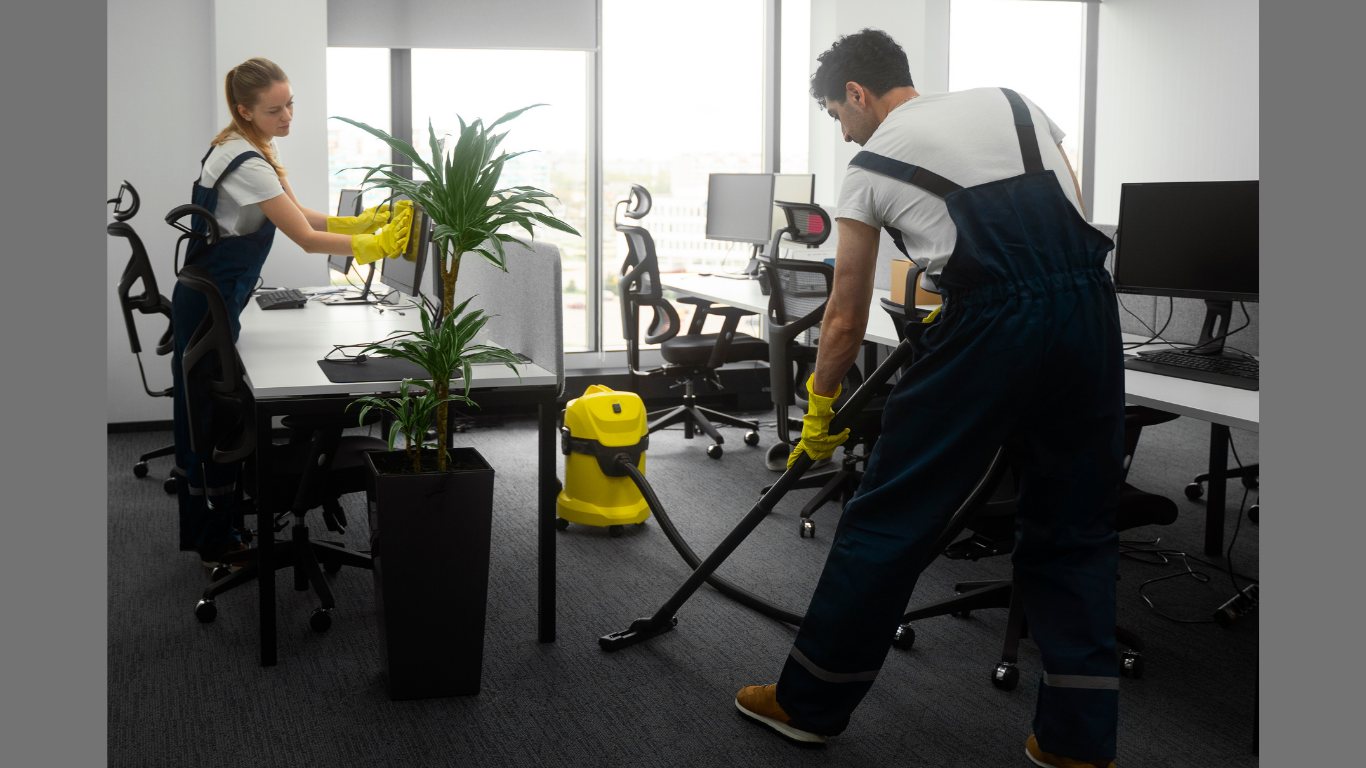
Day porter services can be useful for midday restroom checks, kitchen cleaning, rubbish collection, entrance glass, and meeting room resets. When cleaning during working hours, equipment should be positioned carefully to avoid noise and trip hazards.
Some workplaces benefit from a combination of both approaches. A morning or evening clean can handle major tasks, while a porter manages high-use areas during the day.
Match Cleaning Methods to Each Surface
Different surfaces require different products and equipment. Carpet tiles may benefit from low-moisture cleaning for faster drying, while periodic hot water extraction can remove deeper dirt from corridors and high-traffic areas.
Hard floors such as vinyl or sealed concrete can be cleaned efficiently with suitable floor machines. Entrance mats should also be vacuumed and washed regularly because they trap grit that can damage flooring.
Always consider material compatibility. Natural stone generally requires pH-neutral products, while stainless steel and other finishes may be damaged by harsh chemicals.
Drying time is another factor. Carpet cleaning should be scheduled early enough to allow adequate ventilation and drying before the office is fully occupied again.
Use Checklists and Review the Schedule Regularly
Clear checklists make standards easier to maintain. Record key tasks such as restroom cleaning, kitchen wiping, rubbish removal, floor care, and consumable restocking.
Weekly inspections can identify recurring issues such as dirty entrance glass, dusty skirting boards, overflowing bins, or worn mats.
The schedule should also change with workplace conditions. Rainy periods may require extra entrance cleaning, while flu season can justify more frequent attention to shared surfaces.
Review the plan regularly and move cleaning time away from areas that remain consistently clean toward places where problems repeatedly occur.
Building a Schedule That Works Long Term
A successful office cleaning schedule should match the actual way your workplace operates. Focus on traffic patterns, hygiene risks, surface types, access requirements, and cleaning times that minimise disruption.
With clear procedures, regular inspections, and flexible scheduling, you can maintain a cleaner and more professional workplace without wasting time on unnecessary tasks.
Article received via email