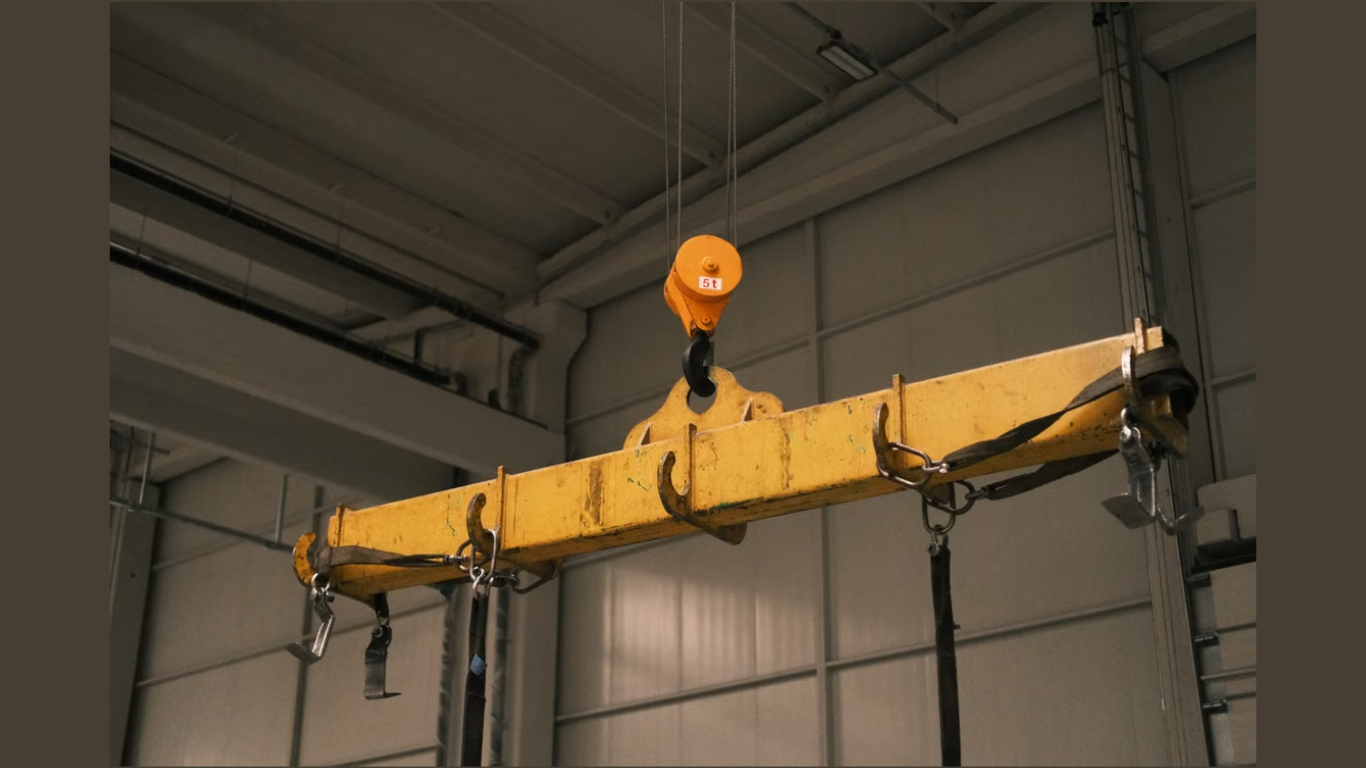
Cargo securement and lifting gear belong in the same purchasing conversation, but they are used for different jobs. A tie-down restrains a load in transit. A sling supports and controls a load during a lift. Mixing up those functions is a straightforward way to create a preventable incident.
Specify the task before the product
For transport, define the load mass, dimensions, centre of gravity, vehicle type, friction conditions, route, required restraint method, and anchor points. Then determine the required lashing capacity and the correct number and arrangement of straps. Buyers sourcing cargo-control equipment should also evaluate webbing material, buckle design, end fittings, corrosion protection, label readability, packaging, and how the product will be inspected in the field.
For lifting, the lift plan is the controlling document. It should identify the load weight, verified lifting points, sling angle, hitch type, sharp edges, environmental exposure, and competent-person responsibilities. The working load limit marked on a sling applies only under the stated configuration; angle, choke use, wear, knots, heat, chemical exposure, and edge contact can reduce capacity significantly.
Match sling design to the lifting plan
Textile slings are valued for flexibility and load protection, but selection must still consider the load surface and handling method. Polyester webbing slings can be specified in multiple configurations and capacities, yet no single sling should be treated as a universal solution. Edge protection, clear identification, inspection access, and retirement criteria belong in the procurement specification.
Build inspection into purchasing
Procurement is not finished when equipment arrives. A robust programme includes:
- Product identification and traceability records.
- Incoming inspection against the approved specification.
- A user-facing inspection guide and removal-from-service criteria.
- Training for the actual application, not only general handling.
- A process for quarantine, replacement, and incident feedback.
Evaluate the cost of a poor specification
A low purchase price can be expensive if labels fade, hardware corrodes, performance varies, or replacements are hard to obtain. A premium product also fails if it is used outside its rated configuration. Give suppliers a clear load case, then require the site team to confirm suitability before every operation.
Safe material handling depends on a simple principle: restrain for transport, lift with rated lifting equipment, and never assume capacity without considering the complete configuration.
Separate purchasing specifications from operational instructions
A good purchase order describes the product that will be supplied; it does not replace the lift plan or transport restraint plan. The purchasing team should provide the product standard, dimensions, rated markings, materials, end fittings, required documentation, packaging, and sampling requirements. Operations should then create task-specific instructions that account for the actual load, vehicle, crane, attachment points, personnel, and site conditions.
This separation helps prevent a common failure: a worker sees a rated product and assumes it is appropriate for every configuration. The same sling behaves differently in straight, basket, choke, and angled arrangements. The same tie-down can be misused if it is routed over sharp edges, anchored to unsuitable points, or tensioned without considering load movement. Clear markings, training, and supervisory checks are essential controls.
Build supplier evaluation around evidence
For repeat purchasing, ask suppliers how they control webbing, stitching, hardware, labels, and lot traceability. Request samples that represent the proposed production configuration, not an unapproved equivalent. Inspect the legibility of labels and instructions after normal handling, because identification is central to safe use. If the destination market requires particular documentation, confirm it before the order rather than after shipment.
Turn incidents into specification improvements
Near misses, damage reports, and repeated user errors should be reviewed by purchasing as well as operations. They may reveal that a different length, end fitting, label format, edge protector, bundle quantity, or instruction sheet is needed. This feedback loop improves the next order and reduces the chance that site teams compensate for a poor specification with improvised methods.
The safest equipment programme is not the one with the most products on a catalogue page. It is the one in which the product, task, training, inspection, and replacement process all support the same controlled method of work.
Blog received via e-mail