Quick Answer: To size a solar generator for essential home backup, determine its output power, battery capacity, and solar panel wattage separately. Start by listing the appliances that must run during an outage. Use their combined running power and startup surges to establish output requirements. Calculate battery capacity from the energy needed during periods without sufficient solar input, accounting for conversion losses and a battery reserve. Then size the solar panels around daily energy consumption and local sunlight conditions.
Key Takeaways
- Size storage for the entire low-sun window, including conversion losses and a battery reserve.
- Check continuous output and appliance startup surges separately from battery capacity.
- Estimate solar production for your location and season, not from panel wattage alone.
- Match panel voltage, current, and connections to the station’s input requirements.
- Track charge through day and night; a daily total can hide an earlier shortfall.
- More storage buys time, but sustained backup requires closing any recurring energy deficit.
What Size Solar Generator Do You Need for Essential Home Backup?
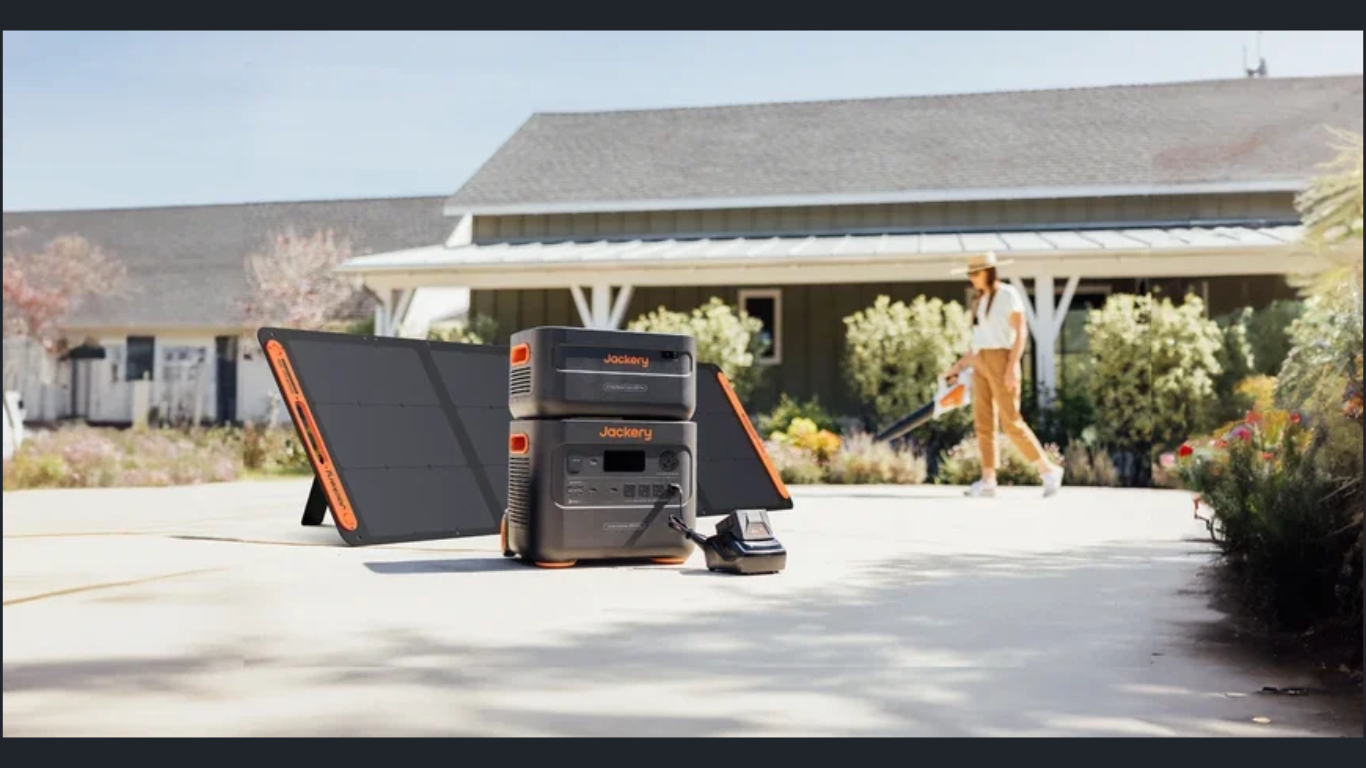
A solar generator pairs a power station with solar panels, so it can keep selected essentials running and recharge from the sun while the grid is down. Its size comes from a short sequence of checks:
- List the essentials and the energy each uses per day.
- Set the backup target and identify periods with insufficient solar input.
- Calculate battery capacity for that window.
- Estimate daily solar energy for your location and season.
- Check the panels against the station’s allowed input.
- Track the battery through day and night.
Rated output is a separate check, since extra capacity or panel wattage does nothing for an appliance the station cannot run.
How Much Battery Capacity Covers Your Backup Window?
Cover the Stretch Until Solar Can Carry the Load
Count the whole period from the start of the outage until solar input can carry the loads again, days and nights together, so no night is counted twice. For a conservative estimate with no solar contribution:
Rated capacity ≈ energy used in that window ÷ efficiency ÷ usable share of the battery
Suppose a refrigerator, router, lights and phones use 1,200 Wh at the devices over a 24-hour storm with no usable sun. With 85% efficiency and a 20% reserve, both assumptions, and a full battery at the start, the estimate is 1,200 ÷ 0.85 ÷ 0.80 ≈ 1,765 Wh.
A longer low-sun window calls for more storage, which expansion batteries may supply more easily than a larger main unit. Starting below full shortens the window, so the battery is best kept charged between outages.
Check Output and Startup Needs Alongside Capacity
Whatever the capacity, everything running at once must fit within the station’s rated output, and a refrigerator’s compressor needs a brief startup surge that the station must also support. Startup figures come from the appliance maker.
How Much Solar Power Do You Need to Replenish the Battery?
Estimate Daily Solar Energy for Your Location and Season
Panel ratings come from standard test conditions, 1,000 W/m² of sunlight at a 77°F cell temperature, so real output is usually lower. A simple estimate is panel wattage × equivalent full-sun hours × the share of panel output stored in the battery. With 400 W of panels, 4 hours and an assumed 0.75, about 1,200 Wh reaches the battery.
Working backward, the example’s daily use, 1,200 ÷ 0.85 ≈ 1,410 Wh at the battery, would take about 470 W of panels to balance, before allowing for poorer weather.
The PVWatts calculator can help estimate local solar conditions, but its AC-energy results do not directly show how much energy reaches a portable station’s battery, and losses it already includes should not be counted twice. For backup planning, use figures for the season you are preparing for, such as winter; monthly averages say little about the days right after a storm.
Match Panels to the Allowed Input Configuration
Panel voltage, current, connectors and count must fit what the station allows, up to its input limit. On the Jackery Explorer 1000 v2, for example, two solar inputs accept 16 to 60 V, up to 10.5 A each and 400 W combined; the panel and connector configuration must also follow the manual. With 1,070 Wh and a 400 W limit, it falls short of this example’s needs and serves only to show the rules.
Will the Battery Last Through Day and Night?
Before relying on a solar generator through a multi-day outage, track the battery period by period, dividing loads by 0.85. Assume 700 of the daily 1,200 Wh are used by day and 500 at night, with a full 2,000 Wh battery and a 400 Wh reserve:
| Period | Solar into battery (Wh) | Battery used by loads (Wh) | Battery at end (Wh) |
|---|---|---|---|
| Day 1, storm | 0 | 820 | 1,180 |
| Night 1 | 0 | 590 | 590 |
| Day 2, sunny | 1,200 | 820 | 970 |
| Night 2 | 0 | 590 | 380, below reserve |
Figures are rounded. A sunny day replaces only 1,200 of the 1,410 Wh used daily, and the lowest charge before solar input builds up matters as much as each period’s closing balance. More storage can carry a home through a longer outage but cannot sustain a repeated daily deficit; closing it takes lower loads, another charging source or more solar input within the station’s limit.
FAQs About Solar Generators for Home Backup
Can a Solar Generator Power Your Whole House?
This method sizes selected essentials. Whole-house backup depends on a system’s output, voltage, storage and connection, whatever the product is called. Powering home wiring needs equipment designed for it and a transfer switch installed by a qualified electrician under the National Electrical Code and local rules.
Can Portable Solar Panels Stay Outside During an Outage?
That depends on the panel’s rating and manual, including its operating temperature range. Secure panels against wind, keep cables clear of doors and walkways, and store them as the manual describes during severe storms.
Final Thoughts
Sizing a solar generator for home backup means matching battery capacity to the periods when solar input falls short and panel wattage to local, seasonal solar within the station’s input limits. Track the battery through day and night, and check output separately. If the plan covers only phones and lights, a smaller station may be enough.
Blog received via e-mail